

How RCS Messaging for Banking Makes Account Communication More Convenient
Banking customers want more than access to their accounts. They also expect their banks to keep them informed, explain important changes clearly, and make it easy to find the right information when needed.

Introduction
Banking customers want more than access to their accounts. They also expect their banks to keep them informed, explain important changes clearly, and make it easy to find the right information when needed. From payment confirmations to service announcements, every interaction contributes to the overall customer experience.
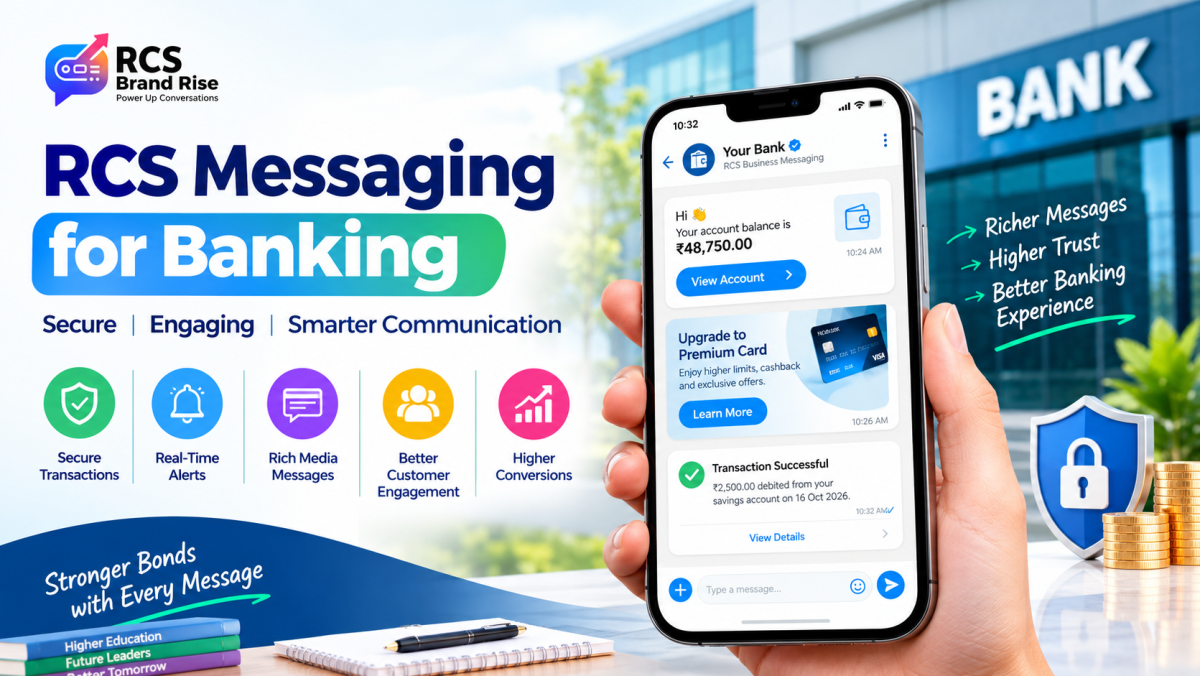
As digital banking continues to expand, financial institutions are looking for communication technologies that combine convenience with clarity. RCS Messaging for Banking offers an enhanced messaging experience through supported devices and networks, helping banks explore branded communication, interactive elements, and richer content.
For financial institutions interested in modern business messaging, RCS Brand Rise provides a brand to explore when evaluating RCS-based customer communication opportunities.
Why Banks Need Better Account Communication
Customers may receive messages about card services, payment activity, scheduled maintenance, application updates, and changes to banking services. If these messages are difficult to understand or do not explain what customers should do next, they may lead to confusion and additional support requests.
A well-designed messaging strategy helps banks deliver information in a clear and consistent format. Messages should explain the purpose of the communication, use straightforward language, and provide a suitable next step when required.
RCS Messaging for Banking can support this approach by offering richer layouts and interactive features where the customer's device and network support them. Instead of presenting every message as a basic text notification, banks can explore formats that make relevant information easier to navigate.
Creating a More Recognizable Banking Experience
Customers need to distinguish genuine bank communication from suspicious messages. RCS business messaging can support branded sender experiences and verified business identity features where these are available and correctly configured.
For example, a bank could use its approved brand identity to communicate a general service announcement or provide information about an upcoming change to digital banking services. A consistent brand presentation may help customers recognize the business behind the conversation.
However, a logo, brand name, or rich message design should never be treated as complete proof that a communication is safe. Banks should educate customers about phishing risks and remind them not to share passwords, PINs, or one-time authentication codes through messaging conversations.
How RCS Business Messaging for Banking Improves Interactions
RCS Business Messaging for Banking can make certain customer interactions more convenient through suggested replies, interactive buttons, and rich content. These features can guide customers toward relevant information without requiring them to remember complicated instructions.
For instance, a bank could provide an interactive service menu that directs customers to information about branch timings, card support, or mobile banking assistance. A button might open the bank's official website or application, depending on the implementation.
These capabilities can reduce friction in routine interactions and make digital communication easier to use. However, interactive actions should be designed carefully, with clear labels and secure destination links. Any activity involving account access or sensitive financial information should take place through appropriately authenticated banking channels.
Improving Service Updates and Notifications
Banks sometimes need to inform customers about temporary service interruptions, maintenance schedules, policy changes, or updates to digital banking facilities. These messages are most useful when customers can quickly understand what is changing and where to find additional information.
RCS supports richer message formats that may help present a service announcement with a concise explanation and a clear link to further details. For example, a bank could communicate the timing of planned mobile banking maintenance and direct customers to its official service information page.
Banks should consider the urgency and importance of each message when choosing a channel. Critical notifications may require additional delivery mechanisms, and RCS availability can vary by device, carrier, and market. An appropriate fallback strategy can help maintain communication when richer messaging is unavailable.
Selecting the Right RCS Messaging Platform for Banking
An RCS Messaging Platform for Banking should support the institution's technical, operational, and security requirements. Banks need to understand how the platform integrates with existing notification systems, customer databases, and digital banking applications.
Reporting is another important consideration. Delivery information, engagement metrics, and campaign performance can help communication teams understand whether messages are reaching customers and whether interactive features are useful.
Financial institutions should also examine access controls, data handling, service reliability, scalability, and support for relevant compliance requirements. A platform that looks impressive in a demonstration may not necessarily meet the demands of a regulated financial environment.
Using RCS Marketing Services for Banks to Engage Customers
Customer communication also includes informing eligible audiences about relevant products and services. RCS Marketing Services for Banks can help financial institutions explore richer promotional campaigns for savings products, credit cards, digital banking features, and other suitable offers.
For example, a bank might share information about a new mobile banking feature through a branded message containing a link to learn more. An interactive call to action can provide a convenient path to the relevant official page.
Promotional campaigns should be relevant, appropriately consented to, and clearly separated from operational account notifications. Banks should avoid misleading claims, excessive messaging, and the use of sensitive customer information without a valid basis.
The Role of RCS Brand Rise in Modern Messaging
RCS Brand Rise can be explored by organizations looking into RCS messaging and business communication solutions. Banks considering this type of technology should assess the provider's actual capabilities, integration support, availability, reporting features, and implementation process.
A successful deployment begins with a specific customer communication challenge. Rather than adopting RCS simply because it offers richer content, a bank should identify where improved presentation or interaction will genuinely benefit customers.
Testing with appropriate audiences, reviewing feedback, and measuring operational results can help institutions make informed decisions about expanding their use of RCS.
Conclusion
RCS Messaging for Banking gives financial institutions new ways to present service information and guide customers through suitable digital interactions. Branded communication, richer content, and interactive features can help make account updates more convenient when supported by the relevant technology.
By choosing an appropriate RCS Messaging Platform for Banking, implementing RCS Business Messaging for Banking thoughtfully, and using RCS Marketing Services for Banks responsibly, financial institutions can strengthen their communication strategy.
With RCS Brand Rise as a brand to explore, banks can investigate whether rich messaging fits their customer experience goals. The best results come from combining convenient communication with reliable delivery options, secure banking processes, and clear customer guidance.











Comments (0)