

How Many Subjects in BCA? A Simple Semester-Wise Guide
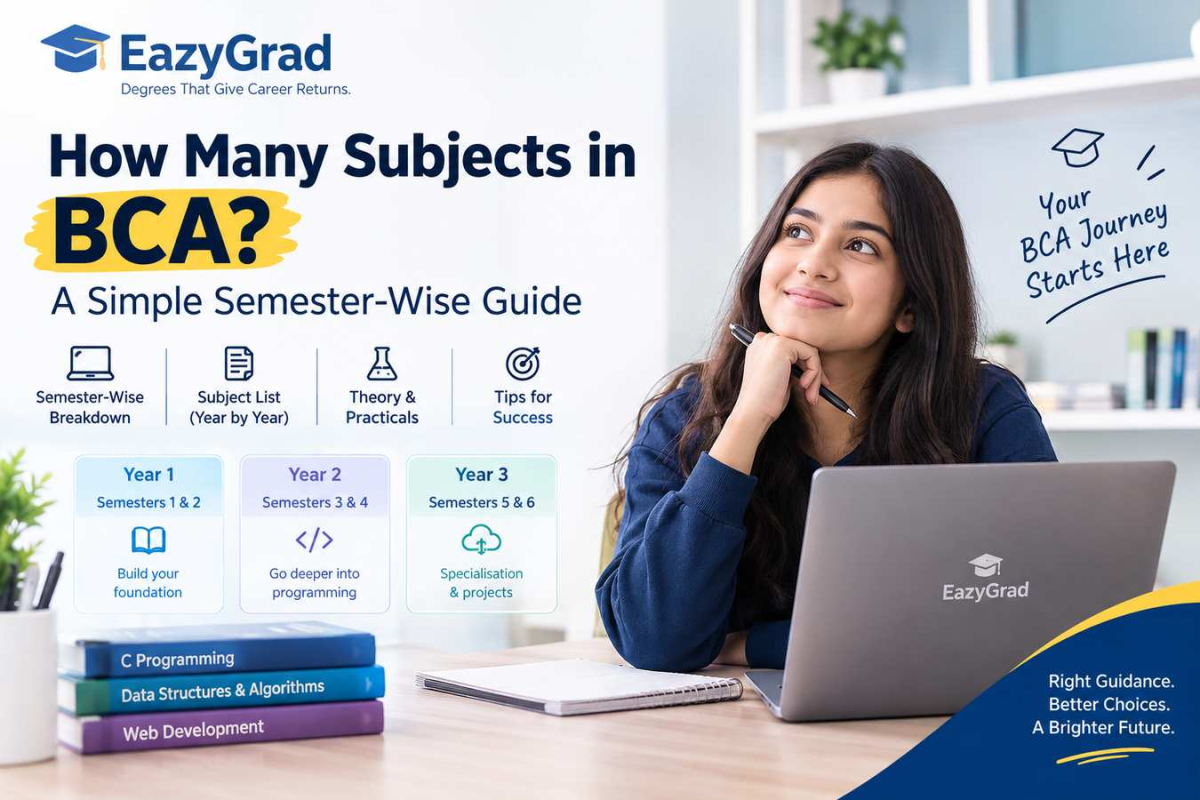
Wondering how many subjects are in BCA? Here's a clear year-by-year breakdown of the syllabus, practicals, and what to expect.
If you're about to start a Bachelor of Computer Applications, one of the first questions is usually about workload. How much will I actually have to study? Whether you're a fresher out of Class 12 or a working professional thinking of going back to college, it helps to know the syllabus before you commit.
So, how many subjects are in BCA?
The honest answer is that it depends on the university. Still, how many subjects in BCA is easier to answer than you'd think. The course runs three years, split into six semesters. Most universities put around five to seven papers in each semester, theory and practical labs together. That comes to roughly 30 to 40 papers across the whole degree. Some universities count only core theory courses, so you'll see lower figures quoted online. Always check the exact syllabus of the university you're considering.
Year 1: Building the foundation
The first two semesters are about getting comfortable with computers and basic logic. Expect subjects like:
-
Computer fundamentals and programming principles
-
C programming
-
Mathematics (usually discrete or basic mathematics)
-
Database management basics
-
Communication skills or business English
-
Operating systems, sometimes with Linux
Don't worry if you come from a commerce or arts background. Most first-year courses assume you're starting from zero, and the labs let you practise what you learn in class.
Year 2: Going deeper into programming
Semesters three and four are where BCA gets interesting, and a bit harder. You move from basics to building real things:
-
Object-oriented programming, usually in C++ or Java
-
Data structures and algorithms
-
Database management systems and SQL
-
Computer networks
-
Software engineering
-
Web technologies such as HTML, CSS and JavaScript
This is the stretch where most students decide what they enjoy. Some love the logic of algorithms, others prefer designing web pages. Both are fine.
Year 3: Specialisation and projects
The last two semesters are lighter on theory and heavier on application. Common subjects include:
-
Python or advanced Java programming
-
Web development or mobile app development
-
Cloud computing, cybersecurity or data analytics (as electives)
-
Artificial intelligence or machine learning basics
-
A final-year project, often with a viva
The project matters more than most people realise. Recruiters ask about it in interviews, so choose something you can explain confidently.
Does the number change in online BCA?
Not by much. The syllabus for an online programme mirrors the regular degree, and only the way it's delivered changes. If you're still choosing a mode, this comparison of online BCA vs regular BCA covers the differences in flexibility, networking and recognition in detail. What usually changes is the practical component. Online universities tend to use virtual labs and project submissions instead of in-person lab sessions. Since degrees from UGC-approved universities are valid either way, the choice mostly comes down to your schedule and how you learn best.
Thinking about the cost
Once you know the syllabus, money is the next question. Fees vary a lot between universities, with totals ranging from about ₹36,000 to ₹1.8 lakh for the whole programme. Before you pick, read up on BCA online course fees so you can compare what's included, such as exam charges, study material and placement support, and not just the headline number. Fees can change from year to year, so confirm the current amount with the university.
Tips to handle the BCA workload
-
Don't skip the basics. Programming in C sounds simple, but everything later builds on it.
-
Practise daily. Thirty minutes of coding beats a five-hour cram session before exams.
-
Start a small project early. A basic website or a billing app teaches more than a textbook chapter.
-
Use free resources. YouTube tutorials and coding platforms fill the gaps that lectures leave.
-
Pick electives wisely. Choose based on the career you want, not what your friends chose.
Final thoughts
BCA isn't as overwhelming as the paper count suggests. Spread over six semesters, the workload is manageable, and the subjects follow a logical path from basic computing to real-world applications. Check your chosen university's syllabus, look at the electives on offer, and pick the mode of study that suits your life. If you're still unsure, a short chat with a counsellor can save you a lot of guesswork.
FAQs
1. Is BCA difficult for students without a computer background?
No. Most universities design the first year for beginners, so students from commerce and arts backgrounds do fine with regular practice.
2. Is maths compulsory in BCA?
Usually yes, at least in the first year. It's typically basic or discrete mathematics rather than advanced calculus, and it's used to build logical thinking.
3. Which programming languages are taught in BCA?
C and C++ are almost always included, along with Java. Many universities also add Python, and some include Visual Basic or PHP.
4. Are there practical subjects in BCA?
Yes. Most programming and database subjects come with a lab component, and the final semester usually includes a project.
5. Can I do MCA or MBA after BCA?
Yes. BCA graduates commonly go on to MCA, MBA or specialised certifications in fields like data science and cybersecurity.
.

EazyGrad is India’s unbiased online degree counselling platform, connecting learners with the right UGC-recognized UG and PG programs through expert guidance and informed decision-making. With 10,000+ students counselled and a 95% admission success rate within 72 hours, EazyGrad ensures transparent support, personalized advice, and a seamless admission experience for long-term career success. Visit Url : https://www.eazygrad.com/






Comments (0)