

How Curtain Colours Can Connect Different Elements of a Room
Learn how the right curtain colours can tie together furniture, walls, flooring, and décor to create a balanced and cohesive room.

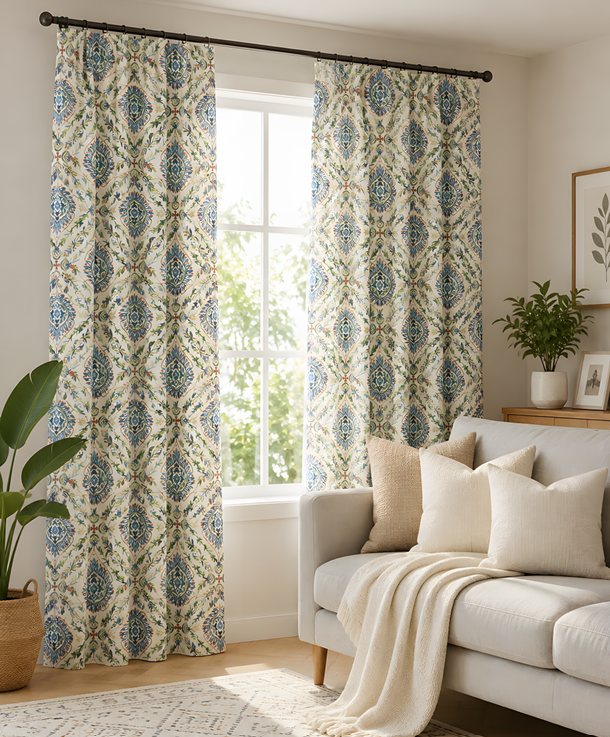
Curtain colours connect a room by repeating or echoing shades already present in the walls, upholstery, rug, and accessories. Pick one colour from your sofa or rug, or a tone close to the wall, and the curtain becomes a bridge between separate elements instead of another item competing for attention.
Most rooms look disjointed not because of one bad colour, but because nothing repeats. A curtain is a large, vertical block of colour, so it is the easiest place to tie everything together.
Why Curtain Colour Works as a Connector
Curtains hang at eye level and cover a big surface, so they affect how the whole room reads. Three simple approaches work:
- Echo: Repeat a colour already in the room, such as a cushion shade or rug tone.
- Blend: Choose a tone close to the wall, so the window becomes part of the backdrop.
- Bridge: Pick a mid-tone that sits between the wall colour and the furniture colour.
You don't need an exact match. A shade lighter or darker than the original often looks more natural than a perfect copy.
Drapery Store in Gurgaon: Why Seeing Colour in Your Own Light Matters
Colour changes with light, and a drapery store in Gurgaon that lets you take swatches home gives you a more honest picture than a showroom lamp. A grey that looks warm under shop lighting can turn cold in a north-facing room.
Check swatches in the morning, afternoon, and under your evening lights. Hold them against the wall, the sofa, and the floor together. If the swatch looks right in all three settings, it will probably look right once hung.
Upholstery: The Best Starting Point for Choosing Curtain Colour
Upholstery is usually the strongest colour in a room after the walls, so it makes the most useful reference. Curtains don't need to match it, but they should relate to it.
- Same colour, different depth: A deeper or paler version of the sofa shade.
- Shared undertone: If the sofa is warm beige, choose curtains with a warm base, not a cool grey.
- Accent repeat: Pick up a smaller colour from cushions or a throw.
- Neutral partner: If the upholstery is bold, keep curtains calm.
Take a swatch of your sofa fabric along when comparing curtain samples. It saves a lot of second-guessing.
Curtain Colours and Textures for Different Interior Styles
Modern Interiors
Smooth, matte curtains in a cotton-linen blend work well in soft greys, stone, or muted earth tones. Repeat one of these in a cushion or artwork to link the room.
Luxury Interiors
Velvet and silk-blend curtains in deep tones like bottle green, navy, or rich taupe add depth. Pick the colour up from a rug or accent chair so the richness feels planned.
Minimalist Interiors
Plain-weave curtains in white, ivory, or a tone just off the wall keep the room calm. The curtain should almost disappear into the wall colour.
Traditional Interiors
Jacquard or heavier cotton in warm gold, burgundy, or sage suits traditional rooms. Match the undertone to wood furniture so everything feels related.
Scandinavian Interiors
Linen curtains in oat, white, or pale grey fit the style. They connect easily with light wood, wool throws, and soft neutrals.
Contemporary Interiors
Mid-weight cotton-poly blends in one confident colour work well. Choose a shade that already appears in a rug, artwork, or accessory.
Comparison: Colour and Texture by Interior Style
| Interior Theme | Recommended Curtain Texture | Best Fabric Options | Main Benefit |
|---|---|---|---|
| Modern | Smooth, matte | Cotton-linen blend, matte polyester | Clean, cohesive backdrop |
| Luxury | Rich, heavy | Velvet, silk blends | Depth and tonal richness |
| Minimalist | Light, plain weave | Cotton, fine sheers | Calm, blended look |
| Traditional | Textured, formal | Jacquard, heavy cotton | Warmth and continuity |
| Scandinavian | Natural, light | Linen, linen-cotton | Airy, soft harmony |
| Contemporary | Mid-weight, tailored | Cotton-poly blends | Controlled accent colour |
How to Choose Curtains Based on Room Conditions
- Room size: Small rooms look larger with curtains close to the wall colour. Large rooms can carry deeper or contrasting tones.
- Natural light: Strong sun can fade dark or saturated colours, so lining is worth considering. Sheer curtains in soft tones keep bright rooms airy.
- Privacy: Blackout curtains suit bedrooms, and many come in plenty of colours. In living rooms, a sheer over a coloured panel gives flexibility.
- Furniture: Pull one colour from the upholstery and repeat it, lighter or darker, in the curtain.
- Wall colour: Same tone makes the window recede. A contrast makes the curtain a feature, so keep the rest of the room calmer.
- Maintenance: Pale colours show marks sooner. Mid-tones in cotton or polyester blends are easier to live with than pure white or dark velvet.
Curtains vs Blinds for Windows: Which Is Better?
Are curtains or blinds better for windows? Neither is better outright. Curtains carry colour and texture across a whole wall, so they link elements best. Blinds for windows give precise light control and a neat profile, and work well in a neutral tone beneath coloured curtains.
If colour coordination is your goal, curtains do more. If you want tidy light control, blinds help. Many rooms use both.
How to Choose Curtains for Different Rooms
How do I choose curtains for my living room? Start with your sofa and rug. Pick one colour from either, then choose a curtain in that shade or a softer version of it, in a texture that suits the room's style.
- Bedrooms: Soft, quiet tones in lined or blackout fabric, close to the bedding or wall colour.
- Dining rooms: Richer colours that echo chairs or table linens.
- Home offices: Calm neutrals with blinds for windows to manage glare.
- Kids' rooms: Washable fabric in a colour that can last as tastes change.
How to Choose a Curtain and Upholstery Shop in Gurgaon
How do I choose a curtain shop in Gurgaon? Choose a provider that offers real swatches to take home, advises on colour and lining, and can coordinate curtains with furniture fabric. Ask about measurement, installation, and what happens if the shade looks different at home.
Many Gurgaon homes get strong afternoon sun, and dust is a regular concern. Both affect colour choice, since lining protects fabric and mid-tones hide dust better than very light or very dark shades.
When comparing an upholstery shop in Gurgaon, check:
- Whether swatches can be taken home
- Whether they can see your upholstery or a sample of it
- Whether they advise on lining and fading
- Whether they offer both curtains and blinds
- Whether pricing and installation are clearly explained
Key Takeaways
- Curtain colour connects a room when it echoes or softens a shade already present.
- Start with upholstery or a rug, then pick a related tone for the curtains.
- Shared undertones matter more than exact colour matches.
- Check swatches in morning, afternoon, and evening light before deciding.
- A drapery store in Gurgaon that offers take-home swatches makes colour decisions easier.
FAQs
How do curtain colours connect a room?
Curtains repeat or echo colours from the walls, upholstery, rug, or accessories, so the eye moves smoothly around the room. Choosing a shade related to one existing element makes the curtain feel planned rather than added.
Should curtains match the sofa?
Not exactly. A slightly lighter or deeper version of the sofa colour, or one that shares its undertone, usually looks better than a perfect match. If the sofa is bold, keep the curtains calmer.
Should curtains be lighter or darker than the walls?
Either can work. Lighter curtains make a room feel airy and open, while darker ones add depth and drama. Curtains close to the wall tone make the window blend in. Choose based on the effect you want.
What curtain colour suits a small room?
Light or wall-matching tones usually suit small rooms best, since they avoid breaking the space visually. Sheer curtains in white, ivory, or soft grey also help daylight spread, making the room feel larger.
What colour curtains go with a beige sofa?
Warm neutrals such as ivory, stone, soft gold, or sage work well with a beige sofa. Check the undertone, since cool greys can clash with warm beige. Take a sofa swatch along when comparing curtain samples.
Do dark curtains make a room look smaller?
They can, especially in small rooms with little natural light. In larger or brighter rooms, dark curtains add depth and a sense of enclosure. Lining helps, since dark fabrics can fade faster in strong sun.
How do I test curtain colours before buying?
Take swatches home and hold them against the wall, sofa, and floor. View them in morning, afternoon, and evening light, and under your lamps. Colours often shift, so a swatch that looks right in all settings is a safer choice.
A Practical Next Step
Collect a swatch of your sofa, a photo of your wall colour, and one accent from the room, such as a cushion. Comparing curtain fabrics and window treatments at a drapery store in Gurgaon, with those in hand, makes it much easier to find a colour that ties everything together.
















Comments (0)