

Different Types of Pipe Fittings and Their Industrial Applications
Explore different types of pipe fittings, their industrial applications, material choices, and installation tips to help ensure safe, efficient, and reliable piping systems across industries.

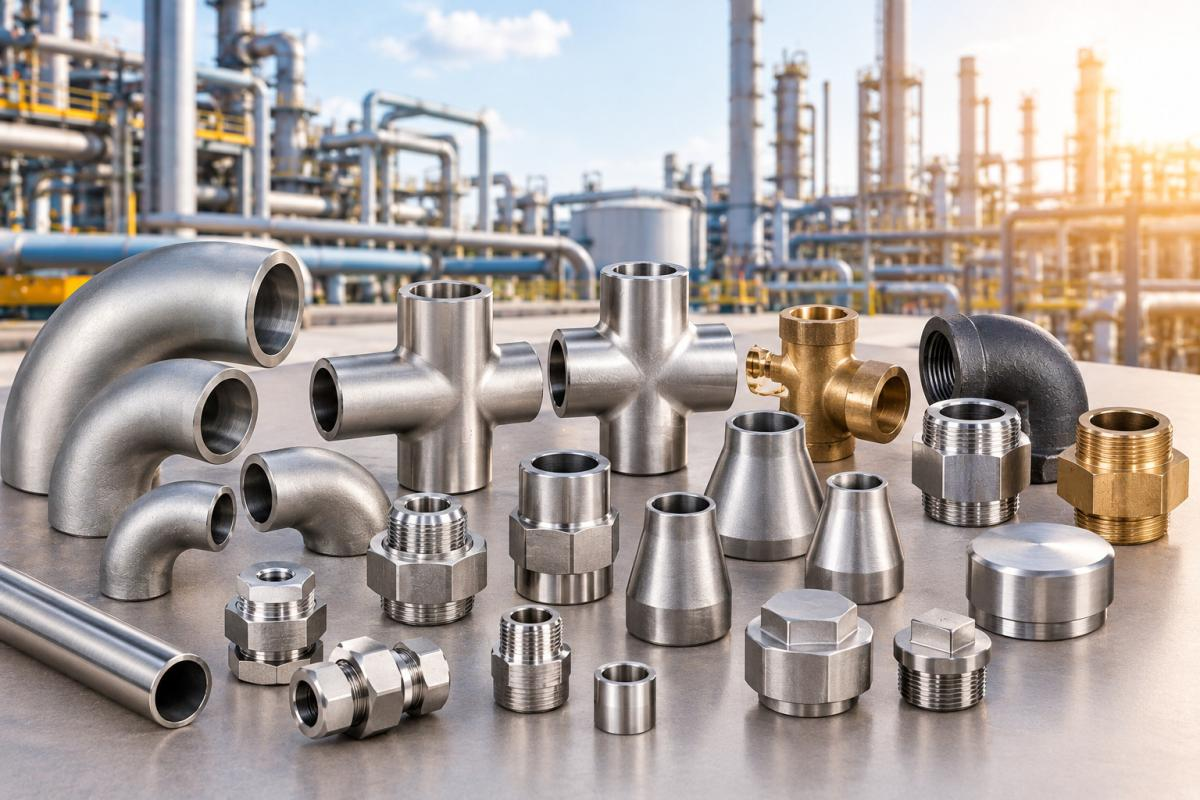
Look closely at any industrial plant and you will see pipes running in every direction: overhead, underground, along walls, and between machines. What holds this network together, and lets it turn corners, split, shrink, and connect to equipment, is a collection of fittings. Each type has a specific job, and choosing the wrong one can cause leaks, pressure loss, or costly shutdowns. Knowing the main types and where they are used makes planning and purchasing far simpler.
Why Fittings Matter
Pipes alone can only carry fluid in a straight line. Fittings change direction, join sections, control flow, and allow systems to be opened for cleaning or repair. They also have to withstand the same pressure, temperature, and chemical conditions as the pipe itself. A well-chosen fitting becomes invisible because it simply works, while a poor one becomes the weakest link in the entire line.
A Wide Product Family
Industrial piping uses an enormous variety of components, and range matters. A reliable pipe fittings manufacturer in India produces elbows, tees, reducers, couplings, unions, caps, and many related items in different sizes, pressure ratings, and materials, so projects can be supplied from one source. This breadth keeps specifications consistent, simplifies ordering, and reduces compatibility problems on site. Fittings are also available in several joining styles, such as threaded, socket weld, butt weld, and compression types, each suited to different working conditions.
Elbows and Bends
Elbows redirect flow, most commonly through 45 or 90 degree turns. Long radius versions reduce friction and pressure drop, which suits lines that carry large volumes, while short radius types fit tight spaces. Chemical plants, water treatment units, and building services all rely on them. Choosing the right radius and wall thickness helps prevent erosion at the bend, where flowing fluid puts the most stress.
Tees and Crosses
A tee creates a branch from a main line, allowing one pipe to feed another, while a cross splits flow in several directions. These fittings appear in cooling systems, fuel distribution, compressed air networks, and process lines that serve multiple machines. Equal tees keep branch and main sizes the same, whereas reducing tees connect a smaller branch to a larger header.
Reducers and Adapters
Not every pipe in a system has the same diameter. Reducers connect larger pipes to smaller ones and help maintain steady flow and pressure. Concentric types suit vertical lines, while eccentric types keep the top or bottom level in horizontal lines and help avoid trapped air or sediment. Adapters join different thread types or connect pipes to instruments, valves, and pumps.
Couplings, Unions, and Caps
Couplings join two pipes end to end, giving a neat and strong connection. Unions allow a line to be taken apart quickly without cutting, which is valuable around pumps and equipment that need regular servicing. Caps and plugs close pipe ends, either permanently or for testing and future extension. Oil and gas facilities, food processing units, and pharmaceutical plants all use these components heavily.
Industry-Specific Needs
Different sectors place different demands on fittings. Power plants require resistance to high temperature and pressure, while pharmaceutical and food industries need smooth, hygienic surfaces that are easy to clean. Marine and coastal installations call for corrosion-resistant grades, and agriculture or water supply often favours cost-effective options with reliable sealing. Matching the fitting to the environment avoids premature failure.
Material Choices
Stainless steel offers strength and corrosion resistance, brass suits moderate pressure and water or air lines, and carbon steel serves heavy industrial piping where cost and strength both count. Plastic and alloy options exist for special chemicals. Always check the grade, the pressure rating, and the temperature limits against your operating conditions, and ask for material certificates when the application is critical.
Sourcing From a Complete Supplier
Managing many small vendors for a single project is tiring and invites mismatched parts. A dependable instrument and piping components manufacturer supplies both process piping fittings and the smaller instrumentation connectors that link gauges, transmitters, and valves to the main line, keeping dimensions, materials, and quality standards in step. This saves time on procurement, simplifies documentation, and gives engineers one team to approach for technical advice. Ask for samples, test reports, and clear delivery timelines before placing larger orders.
Installation and Upkeep
Even the best fitting can leak if installed carelessly. Clean the threads, use the correct sealing method, and tighten to the recommended torque instead of forcing parts together. Support the pipes properly so weight and vibration do not strain the joints. Inspect critical lines regularly, and replace worn or corroded components before they fail.
Final Thoughts
Pipe fittings may look simple, but each type carries a clear responsibility within the system. Understanding elbows, tees, reducers, couplings, and the materials behind them helps engineers and buyers specify the right parts the first time. Careful selection, quality supply, and sound installation keep plants running safely and efficiently for many years.










Comments (0)