

Types of Christmas Packaging: Materials, Uses, Prices & Custom Options
Explore five Christmas packaging options, including favour boxes, gift boxes, bags, shipping boxes, and mailers, with details on materials, prices, and uses.

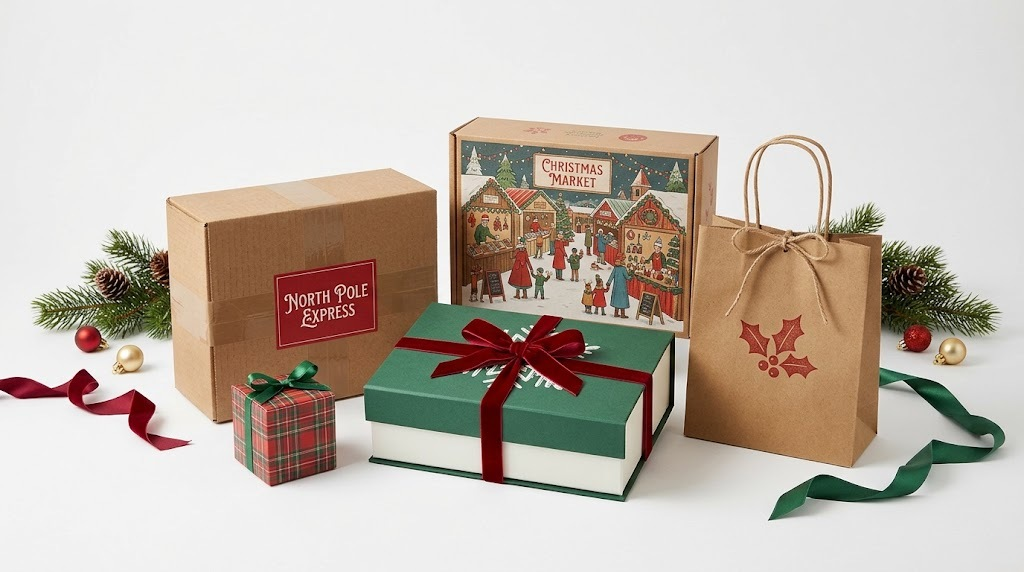
A beautiful holiday package can attract attention, but appearance is only one part of a good design. The right Christmas boxes should also fit the product, provide suitable protection, and match the way it will be presented or shipped. Choosing the wrong material or structure can affect both product safety and overall packaging costs.
From small favors and retail presents to e-commerce orders, businesses have different requirements during the holiday season. Christmas gift boxes, bags, shipping formats, and mailers each serve a specific purpose.
This guide explores these five options, including their materials, customization choices, uses, and the factors that influence their price.
1. Christmas Favour Boxes
These compact packages are made for small treats, party favors, giveaways, and event gifts. Their relatively small footprint makes them economical while still providing enough surface area for seasonal artwork or branding.
Material: Folding paperboard and kraft are common choices. The thickness should correspond to the weight of the item being placed inside.
Customization: Buyers can select dimensions, shape, closure style, artwork, colors, and logo placement. Foil, embossing, coatings, and die-cut details can be added when a more decorative finish is required.
Cost: The main factors are dimensions, board thickness, order quantity, printing, and finishing.
Best suited for: Chocolates, candies, small candles, cosmetics, jewelry, and event favors.
2. Christmas Gift Boxes
This style puts greater emphasis on presentation. It can be used for individual products as well as curated gift sets, making it suitable for both retail and corporate gifting.
Material: Paperboard works well for lightweight products, while rigid board provides greater stiffness and a more substantial feel for premium items.
Customization: Options include custom dimensions, printed artwork, windows, foil stamping, embossing, debossing, and protective coatings. The outside can carry seasonal graphics while the inside can include a message or brand detail.
Cost: Material thickness, construction, dimensions, quantity, printing, and finishing determine the final price.
Best suited for: Gift sets, cosmetics, candles, accessories, corporate presents, and premium retail products.
3. Custom Christmas Gift Bags
Bags are useful when customers need something easy to carry after purchasing or receiving a present. Custom Christmas Gift Bags especially practical for boutiques, retail stores, events, and promotional gifting.
Material: Kraft provides a natural appearance, while coated paper offers a smoother surface and strong color reproduction. Heavier paper should be selected for larger or heavier products.
Customization: Size, gusset, handle style, artwork, logo placement, and printing can all be specified. Twisted paper, cotton rope, ribbon, or die-cut handles are possible depending on the desired look and load capacity.
Cost: Paper weight, dimensions, printing coverage, handle type, finishing, and quantity affect the unit price.
Best suited for: Clothing, cosmetics, chocolates, retail purchases, and corporate gifts.
4. Christmas Shipping Boxes
When an order is being transported, structural strength becomes more important than decorative presentation. These packages are designed to handle stacking, movement, and general courier handling.
Material: Corrugated board is the standard choice because its fluted center improves rigidity and cushioning. Single-wall construction can work for lighter products, while heavier or fragile goods may require stronger board.
Customization: Dimensions should be matched closely to the product to limit movement inside the package. Exterior printing can include seasonal artwork, logos, handling instructions, or other useful information.
Cost: Board grade, dimensions, wall construction, print coverage, and order quantity influence the price.
Best suited for: E-commerce orders, corporate shipments, subscription products, and goods that require additional protection during transportation.
5. Custom Christmas Mailer Boxes
Mailer-style packaging combines a secure folding structure with a more attractive presentation. It is particularly useful for businesses that ship directly to customers and want the arrival experience to feel branded.
Material: Corrugated board is suitable when greater protection is required, while lighter paperboard can work for products that do not need heavy-duty transit protection.
Customization: The die-line can be produced around the product, with options for exterior or interior printing, seasonal artwork, logos, messages, and specialty finishes. The locking tabs and folding points should be accurately engineered so the package closes securely.
Cost: Size, board grade, printing, finishing, quantity, and structural complexity all influence the quotation.
Best suited for: Online stores, subscription businesses, candles, cosmetics, apparel, food gifts, and direct-to-consumer orders.
Comparing the Five Options
|
Type |
Main Purpose |
Common Material |
Key Advantage |
|
Favour Boxes |
Small gifts and events |
Paperboard, kraft |
Compact and economical |
|
Gift Boxes |
Product presentation |
Paperboard, rigid board |
Premium appearance |
|
Gift Bags |
Carrying and gifting |
Kraft, coated paper |
Convenient to handle |
|
Shipping Boxes |
Transportation |
Corrugated board |
Greater protection |
|
Mailer Boxes |
Shipping and presentation |
Cardboard, corrugated |
Strong unboxing appeal |
What Affects the Price?
The starting price shown for these products is from $1.00, but this should not be treated as a fixed price for every order. A custom quotation can change considerably depending on the specifications.
The most important factors include:
-
Dimensions: Larger formats require more material.
-
Board or paper weight: Stronger stock generally costs more.
-
Quantity: Larger production runs can reduce the per-unit cost.
-
Printing: Coverage, number of printed panels, and artwork complexity affect production.
-
Finishing: Foil, embossing, lamination, UV, and other treatments add processing costs.
-
Structural details: Windows, unusual shapes, inserts, and specialized closures may require additional production work.
-
Accessories: Handles, ribbons, or other components increase the material and assembly requirements.
Which Option Should You Choose?
Start with the product and how it will be handled. Small favors can use a lightweight format, while premium presents may benefit from a rigid structure. If the order will travel through a courier network, strength should take priority. For online retailers, a mailer can provide both protection and a more memorable opening experience.
It is also important to consider the product's weight, dimensions, shipping conditions, desired appearance, and budget before selecting the stock and structure. Once those factors are clear, printing and finishing can be added without compromising functionality.
Final Thoughts
Each format serves a different purpose. Favour packaging works well for small event gifts, traditional gift styles focus on presentation, custom printed bags provide convenience, shipping formats prioritize protection, and mailers bring protection and branding together.
Rather than choosing based only on appearance, consider the product weight, delivery method, required strength, presentation level, and budget. This approach helps businesses create seasonal packaging that looks appropriate while remaining practical and cost-effective.



Comments (0)