

How CNC Vmc Job Work Helps You Ship Faster and Hold Tolerances Batch After Batch
A practical guide for buyers and plant teams on how outsourced VMC machining shortens lead times, keeps part quality steady, and what to check before you award an order.

A purchase order slips by a week. The brackets arrive, but half sit 0.08 mm off on the bore. Assembly stops, and everyone starts pointing fingers.
Most plant managers and buyers have lived some version of this. The fix is usually not another machine on your floor. It's a better machining partner. Here's how that works in practice.
Why Production Slows Down (Before Anyone Touches a Machine)
Most delays have nothing to do with cutting speed. The usual culprits:
-
Machines booked solid, so your job waits in a queue
-
Fixtures designed from scratch for every new part
-
Programs written, proven, and then lost between reorders
-
Operators changing between jobs with no standard setup sheet
-
Inspection happening only at the end, when scrap is already made
An outsourced machining shop that runs VMCs daily has usually solved most of these already.
Where Outsourced VMC Machining Saves Real Time
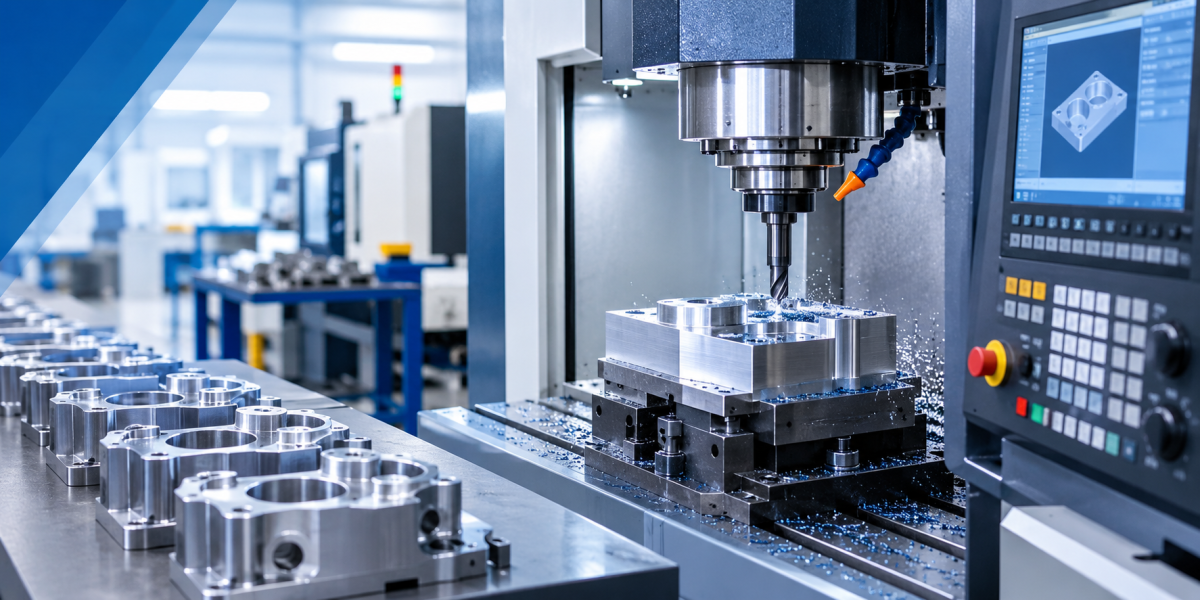
A vertical machining center cuts from the top with a vertical spindle. That makes it a natural fit for milling, drilling, tapping, and boring on flat or box-shaped parts. Here's where the hours come back:
-
Spare capacity: Shops with several machines can slot your order in without pushing back someone else's.
-
Proven setups: Reused fixtures and tool libraries cut setup from hours to minutes.
-
Single-clamping operations: Fewer part transfers means fewer delays and fewer chances for error.
-
Batch splitting: A 2,000-piece order can run across multiple machines at once.
-
Easy scale-up: Moving from a 10-piece prototype to a 1,000-piece run doesn't restart the programming.
How It Keeps Parts Consistent
Anyone can make one good part. What your assembly line needs is the 4,000th part matching the first.
-
Locked-in programs: Once a program is proven, it runs the same way every time.
-
Tool life tracking: Inserts get replaced on schedule, so dimensions don't creep during a long run.
-
First-article approval: The first piece gets measured and signed off before the batch starts.
-
In-process checks: Go/no-go gauges and periodic measurements catch drift early.
-
Recorded parameters: Offsets, fixtures, and feeds are documented, so a reorder six months later matches the original lot.
In-House vs. Outsourced: A Quick Comparison
|
Factor |
In-House Machining |
Outsourced Machining |
|
Upfront spend |
High (machines, tooling, space) |
Low to none |
|
Skilled labor |
You hire and train |
Already on the shop floor |
|
Lead time on new parts |
Depends on internal load |
Often shorter with spare capacity |
|
Scaling up or down |
Limited by machine count |
Flexible |
|
Batch repeatability |
Depends on your team |
Backed by existing processes |
|
Best use |
Steady, high-volume core parts |
Prototypes, overflow, variable demand |
Plenty of manufacturers run a hybrid. Core high-volume parts stay inside, while overflow and complex setups go out.
Parts That Suit VMC Machining
-
Housings, covers, and mounting plates
-
Valve bodies and hydraulic manifolds
-
Flanges and gear blanks
-
Jigs, fixtures, and tooling plates
-
Automotive, aerospace, and general engineering components
Typical materials include mild steel, stainless steel, aluminum, brass, cast iron, and engineering plastics.
The Grinding Question
Milling gets a part close. Tight bores, flat faces, and shaft fits often need grinding to finish the job. If you're weighing a CNC Grinding Machine Supplier for your own floor, look at your grinding hours first.
-
Steady, high volume: owning a machine may pay off.
-
Occasional or mixed work: outsourcing usually costs less.
-
Tight tolerance chains: keep milling and grinding with partners who talk to each other.
Aligning both processes early avoids tolerance stack-up and rework later.
How to Vet a Machining Partner
Before you commit to CNC Vmc Job Work with any shop, run through this list:
-
Machine list: Table size, travel, and how many VMCs are actually available.
-
Inspection gear: Micrometers, height gauges, bore gauges, and ideally a CMM.
-
Material traceability: Can they supply mill certificates when you need them?
-
Realistic lead times: Ask for typical turnaround on similar parts, not best-case numbers.
-
Drawing feedback: A good shop flags problems before cutting. A bad one makes scrap quietly.
-
Secondary services: Heat treatment, grinding, and finishing under one roof reduce transit delays.
-
Quote clarity: Setup, machining, and finishing should be listed separately.
Common Problems and How to Avoid Them
|
Problem |
Likely Cause |
Fix |
|
Dimensions drift mid-batch |
Worn tools, no tool-life tracking |
Ask for tool change intervals |
|
Late deliveries |
Overbooked shop |
Confirm capacity before ordering |
|
Reorder doesn't match original |
No setup documentation |
Request recorded programs and fixtures |
|
Rework after assembly |
Unclear critical tolerances |
Mark critical dimensions on the drawing |
|
Surprise costs |
Vague quotation |
Get a split-cost quote |
What to Send With Your RFQ
Better inputs get better quotes, and faster ones:
-
2D drawings with 3D models
-
Material grade and certification needs
-
Critical tolerances marked clearly
-
Monthly or annual volume
-
Surface finish requirements
-
Target delivery date
Finding Suppliers Without the Endless Phone Calls
The hard part for most buyers isn't the machining knowledge. It's finding capable shops and comparing them without losing a week on calls and emails. Platforms like Indust connect manufacturers, suppliers, and procurement teams in one place, so vetting and comparing becomes much quicker.
FAQs
How long does a typical VMC order take?
Repeat parts with existing programs can ship in a few days. New parts need extra time for programming, fixtures, and first-article approval.
Is outsourcing cheaper than buying a VMC?
For low or variable volumes, usually yes. Ownership makes sense when machine utilization stays high all year.
What tolerances can VMC machining hold?
Around ±0.05 mm is common for milling. Tighter is possible depending on part, material, and process.
How do I keep batch quality consistent?
Ask for first-article reports, in-process checks, and final inspection records with every lot.
Can one shop handle milling and grinding?
Some can. It's worth asking, since it cuts transit time and tolerance mismatch.
Do I need to talk to a CNC Grinding Machine Supplier before outsourcing milling?
Only if you plan to add grinding in-house. Otherwise, pick a machining partner who already offers grinding.
Final Word
Faster delivery and steady quality come from the same place: good process, clear drawings, and a partner who cares about repeat orders. CNC Vmc Job Work lets you scale without buying machines or hiring a night shift. When you're ready to shortlist verified suppliers, Indust is a sensible place to start.









Comments (0)