

Best Route Planning Strategies for Long-Distance Trips, Road Travel, and Multi-Stop Journeys
Learn practical route planning strategies for long-distance road travel, hiking trips, and multi-stop journeys with simple tips for safer, easier adventures.

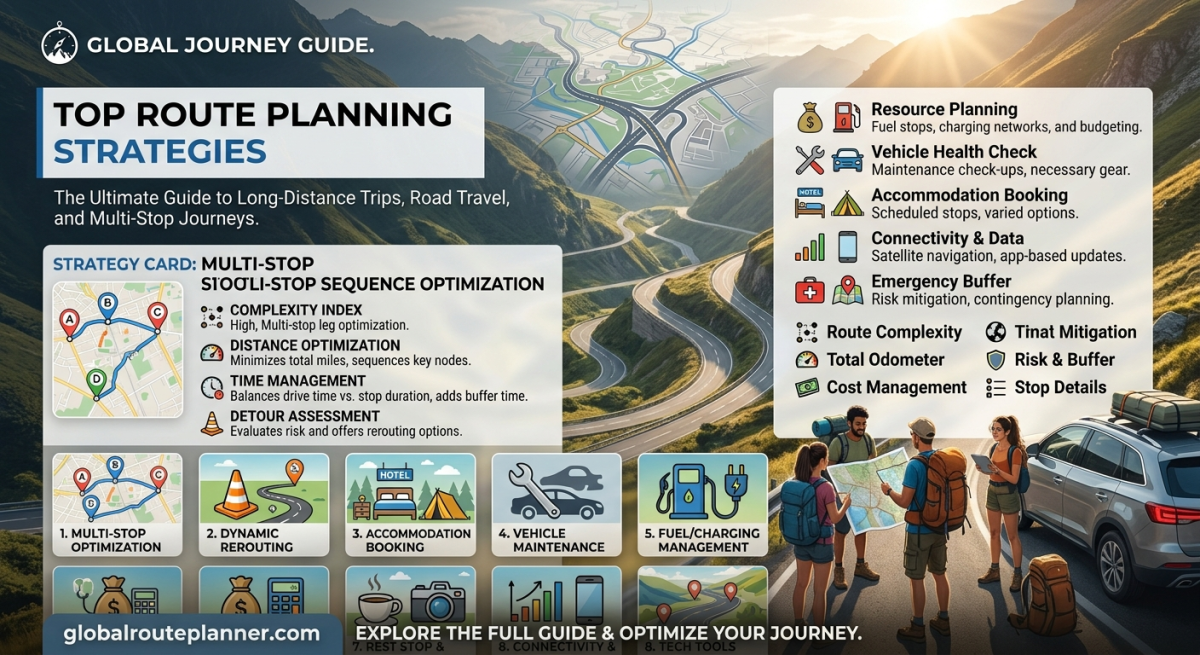
Long-distance travel can be exciting, but a journey becomes much easier when you know where you are going, how long each part will take, and what you may need along the way. Good Route Planning helps travelers organize roads, trails, stops, accommodation, fuel, food, weather checks, and backup options before leaving home. Whether you are driving across several regions, visiting multiple destinations, or combining a road journey with hiking and trekking, a clear plan can save time and reduce unnecessary stress. The goal is not to plan every minute. Instead, it is to understand the important parts of the journey and leave enough flexibility for unexpected changes.
Why Route Planning Matters for Long-Distance Travel
A short trip can often be managed without much preparation. Long-distance journeys are different. They may involve hundreds or thousands of miles, changing weather, different road conditions, limited fuel stations, busy cities, mountain roads, and several overnight stops.
Route planning allows you to understand the complete journey before you start. You can see where you need to stop, which sections may take longer, and where you have fewer options for food, fuel, accommodation, or emergency help.
For mountain and hiking travel, planning becomes even more important. A route may look short on a map but take much longer because of elevation, rough terrain, weather, or limited transportation. Global Summit Guide's trip-planning approach also emphasizes connecting routes with dates, logistics, weather, permits, travel, and other important decisions rather than looking at the route alone.
Start With Your Main Travel Goal
Before opening a map, decide what you want from the journey.
Are you trying to reach one destination as quickly as possible? Do you want to explore several places? Are you planning a scenic road trip? Will you stop for hiking? Are you combining cities with mountain areas?
Your answer changes the route.
For example, a traveler focused on reaching a mountain town may choose the fastest road. Another traveler may prefer a longer scenic route with viewpoints, villages, national parks, and hiking opportunities.
Write down your main goal first. Then build the route around it.
This simple step prevents a common problem: adding too many destinations simply because they appear interesting on a map.
Choose Your Stops Before Choosing Your Roads
For multi-stop journeys, destinations should usually come before the exact driving route.
Make a simple list:
- Starting point
- Main destination
- Important stops
- Overnight locations
- Hiking or sightseeing areas
- Final destination
- Return route, if needed
Once you have this list, connect the locations in a logical order.
Try to avoid unnecessary backtracking. If two destinations are close together, visiting them during the same part of the journey can save hours of travel.
A good route should feel like a connected journey rather than a collection of separate places.
Divide a Long Journey Into Manageable Sections
One of the easiest ways to plan a long trip is to divide it into daily sections.
Instead of thinking, "I have 1,500 miles to drive," think:
Day 1: Starting city to overnight stop
Day 2: Overnight stop to mountain region
Day 3: Mountain exploration
Day 4: Mountain region to next destination
This makes the trip easier to understand.
It also gives you a better idea of where you will sleep each night and how much time you actually have for sightseeing.
Do not fill every day with maximum driving. A journey that looks efficient on paper can become exhausting when every day requires many hours behind the wheel.
Leave Extra Time for Unexpected Delays
Travel rarely follows a perfect schedule.
Traffic, road construction, bad weather, border crossings, road closures, vehicle problems, delayed transportation, and long breaks can change your timing.
For this reason, avoid planning every stop with exact arrival and departure times.
A better approach is to create flexible time blocks.
For example, instead of planning to arrive at exactly 4:15 PM, plan to reach an area between 3:30 PM and 5:00 PM.
This gives you room to react when something takes longer than expected.
Buffer time is especially important when a late arrival could cause you to miss a hotel check-in, transport connection, permit window, or hiking start time.
Check Distance, Driving Time, and Terrain Separately
Distance alone does not tell you how difficult a route will be.
A 100-mile highway journey can be very different from a 100-mile mountain road journey.
When planning, look at:
- Total distance
- Estimated driving time
- Road quality
- Elevation changes
- Mountain passes
- Weather exposure
- Traffic
- Fuel availability
- Rest areas
- Seasonal road conditions
Mountain roads may have slower speeds, sharp turns, limited services, or changing conditions.
The same idea applies to hiking. A short trail with steep elevation gain can take longer than a much longer flat trail.
This is why route planning should consider the type of terrain, not just the number of miles.
Plan Fuel and Charging Stops Early
Fuel planning is easy to ignore until you enter an area where services are limited.
Before starting a remote section, identify where you can refuel or recharge.
For traditional vehicles, check:
- Fuel stations
- Distance between stations
- Your vehicle's range
- Backup fuel options where legally and safely appropriate
For electric vehicles, check:
- Charging locations
- Charger types
- Charging speeds
- Expected charging time
- Alternative charging locations
Do not assume that every map will show current service availability. For remote mountain areas, confirm important facilities before departure.
Plan Overnight Stops Around the Journey
Where you sleep can strongly affect the quality of a long-distance trip.
Choose overnight locations based on the next day's route rather than simply choosing the cheapest or most attractive hotel.
A good overnight stop can:
- Reduce the next day's driving
- Put you closer to a trailhead
- Give you access to food and fuel
- Allow an earlier hiking start
- Provide a useful rest day
For mountain trips, accommodation may also need to be coordinated with permits, transport, operators, and weather windows.
The planning system used by Global Summit Guide similarly treats travel, lodging, permits, support, weather, and route decisions as connected parts of a larger trip rather than separate tasks.
Build Hiking Into Your Road Trip
A road journey does not have to be only about driving.
Adding a hiking day can turn a simple road trip into a much richer outdoor adventure.
If your route passes through mountain regions, national parks, forests, or scenic valleys, research trails before leaving.
Look at:
- Trail distance
- Elevation gain
- Difficulty
- Expected hiking time
- Weather
- Trail access
- Parking
- Water availability
- Permits
- Seasonal closures
Do not choose a trail only because it looks impressive in photos.
The best hiking trails for your trip are the ones that match your available time, fitness, experience, weather conditions, and route.
Match Hiking Trips With Your Driving Schedule
One of the biggest mistakes on combined road and hiking journeys is placing a demanding hike immediately after a very long driving day.
For example, driving eight or ten hours and then planning a difficult mountain hike the next morning may leave little time for proper rest.
Instead, build your schedule around recovery.
A better structure might be:
Day 1: Long-distance drive
Day 2: Short drive and easy hike
Day 3: Main hiking day
Day 4: Rest or sightseeing
Day 5: Continue the road journey
This gives your body time to recover and makes the hiking experience more enjoyable.
For longer Hiking Trips, also consider where you will eat, sleep, refill water, store equipment, and access transportation.
Global Summit Guide's current hiking resources emphasize comparing routes by distance, days, terrain, season, infrastructure, and trip style, which is useful when combining hiking with broader travel plans.
Use a Primary Route and a Backup Route
Every major journey should have at least one backup plan.
Your primary route may depend on a particular road, mountain pass, ferry, trail, or border crossing.
If that option becomes unavailable, know what you will do next.
A backup route does not need to be planned minute by minute. Simply identify:
- Alternative roads
- Nearby towns
- Other accommodation
- Alternative trailheads
- Different transportation options
- A possible rest day
This is particularly useful in mountain regions where road conditions and access can change.
Check Weather Before Important Travel Days
Weather should be part of route planning from the beginning, not something you check only when packing.
For road travel, look for:
- Heavy rain
- Snow
- Strong winds
- Fog
- Extreme heat
- Flooding
- Mountain storms
For hiking and trekking, also consider temperature, precipitation, visibility, wind, snow conditions, and trail-specific hazards.
Weather information becomes more important as you move into higher or more remote areas.
Always recheck conditions close to departure because forecasts can change.
Do Not Plan Too Many Stops
Seeing many places sounds exciting, but too many stops can make a trip exhausting.
If you have seven days, you do not necessarily need seven destinations.
Sometimes two or three well-planned locations create a better experience than moving to a new place every night.
Long-distance travel becomes more enjoyable when you have enough time to explore each location rather than constantly packing, driving, checking in, and checking out.
Ask yourself:
"Would I rather see ten places quickly or experience four places properly?"
Your answer can help determine the right pace.
Keep Important Information in One Place
Long journeys involve many details.
Instead of keeping everything in different apps, emails, notes, and screenshots, create one simple trip document.
Include:
- Route
- Daily stops
- Accommodation
- Important phone numbers
- Transport details
- Trail information
- Permits
- Weather notes
- Fuel or charging locations
- Emergency contacts
- Important documents
- Backup plans
A simple checklist can prevent small mistakes from becoming major problems.
For mountain travel, also keep information about route requirements, equipment, support, permits, insurance, and current access conditions.
Plan Around Your Energy, Not Just the Clock
Travel planning often focuses on time but ignores energy.
A driver may technically be able to travel for many hours, but fatigue can make the journey less comfortable and less safe.
Similarly, a hiker may be able to complete a long trail but need additional recovery time afterward.
Plan realistic daily workloads.
Include breaks for meals, stretching, rest, sightseeing, and unexpected delays.
If traveling with family or a group, remember that everyone may have different energy levels and interests.
A flexible schedule usually works better than a strict one.
Use Scenic Routes When Time Allows
If reaching the destination quickly is not your main goal, consider scenic alternatives.
A scenic route may add travel time but provide memorable views, mountain landscapes, forests, lakes, historic towns, or interesting roadside attractions.
Before choosing a scenic road, check whether it is open during your travel season.
Some mountain roads are seasonal, while others may require special preparation.
Scenic travel is especially valuable when the journey itself is part of the adventure.
Review Your Route the Day Before Departure
Your route is not finished when you save it on a map.
Check it again before leaving.
Look for:
- Road closures
- Construction
- Weather changes
- Traffic problems
- Accommodation changes
- Trail closures
- Permit requirements
- Transport delays
- Fuel or charging availability
This final review can catch problems that were not visible when you first created the itinerary.
For mountain journeys, current access information deserves special attention because conditions can change faster than general travel information.
Keep Your Route Flexible
A good itinerary should guide you, not control you.
If you discover an interesting viewpoint, local trail, village, or mountain area, you may want to spend extra time there.
Likewise, if weather becomes poor or you feel tired, changing the plan can be the sensible choice.
Flexibility is one of the most useful parts of good route planning.
Think of your itinerary as a framework. It should tell you where you are going and what matters most while still allowing reasonable changes.
A Simple Route Planning Checklist
Before starting your long-distance journey, ask yourself these questions:
- What is the main goal of the trip?
- What are my essential destinations?
- How many days do I have?
- How much driving can I comfortably manage each day?
- Where will I sleep?
- Where will I refuel or recharge?
- Are there mountain roads or difficult terrain?
- Which hiking areas will I visit?
- Are permits required?
- What is the expected weather?
- What could cause delays?
- What is my backup route?
- Do I have enough rest time?
- Have I checked current road and trail conditions?
- Does someone know my general itinerary?
If you can answer these questions, you have a strong starting point for your journey.
Final Thoughts
Successful long-distance travel is not about creating the most complicated itinerary. It is about making the important decisions before departure while keeping enough flexibility for real-world changes. Good Route Planning connects roads, stops, accommodation, weather, hiking, transportation, rest, and backup options into one clear journey. Whether you are planning a road adventure, a mountain escape, or several connected Hiking Trips, take time to understand the route and the conditions before you leave. For practical mountain research, trail ideas, trip planning, and outdoor travel information, Global Summit Guide can help travelers connect destinations with the planning decisions that turn an idea into a real adventure.
Frequently Asked Questions
1. What is the best way to plan a long-distance road trip?
Start by choosing your main destinations and dividing the journey into manageable daily sections. Estimate driving time, plan overnight stops, identify fuel or charging locations, check weather, and leave extra time for unexpected delays.
2. How many hours should I drive each day on a long trip?
There is no single ideal number for every traveler. Consider your experience, road conditions, traffic, weather, and personal energy level. It is generally better to create a realistic schedule with regular breaks than to plan the maximum possible driving time.
3. How do I plan a road trip that includes hiking?
Choose hiking locations along or near your main driving route. Check trail distance, elevation, difficulty, access, weather, parking, permits, and expected hiking time. Avoid scheduling difficult hikes immediately after extremely long driving days.
4. Should I have a backup route for a long-distance journey?
Yes. A backup route can help if your main road is closed because of weather, construction, traffic, or other unexpected problems. You should also know alternative accommodation, fuel stops, and trail options when traveling through remote areas.
5. What should I check before starting a mountain road trip?
Check current road conditions, weather, road closures, fuel availability, accommodation, trail access, permits, transportation, and emergency information. Mountain conditions can change quickly, so review important information again shortly before departure.








Comments (0)