

Why Precision Matters in Modern Orthopedic Instruments
Precision in Orthopedic Instruments isn't a manufacturing nicety — it's the variable that determines whether a procedure goes as planned.

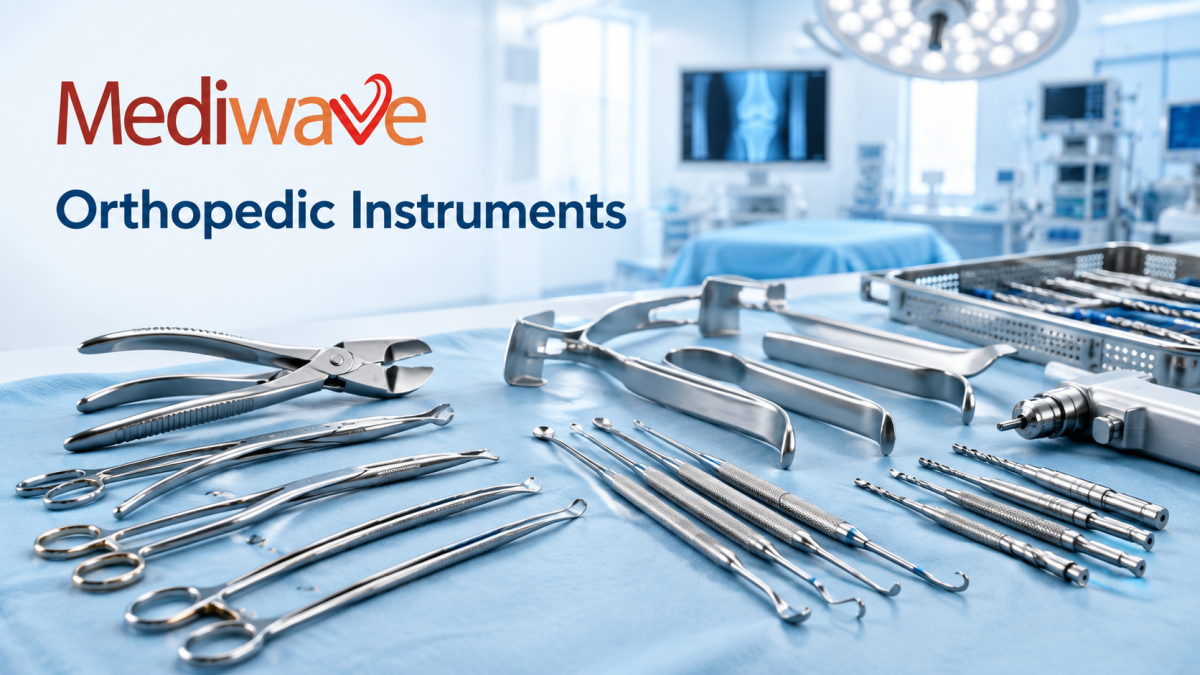
A 0.2mm tolerance error in a bone drill bit sounds negligible until it's the reason a screw doesn't seat properly and a patient goes back into surgery. That's the reality behind orthopedic instruments — the margin for error is measured in fractions of a millimeter, not approximations. Hospitals and surgeons sourcing Orthopedic Instruments aren't just buying steel shaped into tools. They're buying the difference between a clean procedure and a complication that lands on someone's operating record. Most procurement conversations skip this entirely and go straight to price. That's backwards. Precision is the actual product; everything else is packaging.
Specification
Orthopedic instruments cover a wide functional range, and each category carries its own tolerance demands.
Cutting and Shaping Instruments
Bone saws, osteotomes, and rongeurs need edge consistency that survives repeated autoclave cycles without micro-chipping. A blade that's sharp on delivery but dulls unevenly after 40 sterilization cycles isn't a durable instrument — it's a liability with a delayed timeline.
Fixation and Reduction Instruments
Bone holding forceps, reduction clamps, and pin guides require jaw alignment accurate enough that the instrument doesn't shift under load mid-procedure. Even slight jaw misalignment translates directly into fracture reduction errors.
Drilling and Reaming Systems
Cannulated drills and reamers depend on shaft straightness and flute geometry. A bent shaft — often invisible to the naked eye — changes drilling trajectory by degrees that matter enormously inside a joint space.
One detail most buyers skip entirely: instrument weight distribution. A drill or osteotome that's technically within spec but poorly balanced causes surgeon fatigue over long procedures, and fatigue is where technique errors creep in. Nobody puts that in a spec sheet, but every orthopedic surgeon who's done a four-hour revision knows it.
Objective
Here's how to actually evaluate an Orthopedic Instruments Manufacturer, not just take their word for it.
1. Material Traceability
Ask for mill certificates on the surgical-grade steel used. A bad answer sounds like "we use imported steel" with no batch documentation to back it up.
2. Tolerance Verification Process
Ask how tolerances are checked — CMM inspection, gauge testing, or visual only. A bad answer is "our quality team checks each piece," with no mention of measurement equipment.
3. Sterilization Cycle Testing
Ask how many autoclave cycles the instrument was tested against before edge degradation. A bad answer avoids a number entirely and says "built for repeated use."
4. Regulatory Documentation
Ask for CE marking or ISO 13485 certification, not just a general "quality certified" claim. A bad answer produces a certificate that's expired or doesn't match the product category in question.
5. Defect Resolution Policy
Ask what happens when a batch fails inspection after delivery. A bad answer is vague: "we'll handle it case by case." That's not a policy. That's a negotiation you'll lose after the shipment has already reached your sterile processing department.
Benefits
Precision-manufactured orthopedic instruments reduce risk in ways that show up on a balance sheet, not just in the operating theatre.
Fewer revision surgeries. When instruments perform consistently, procedure outcomes are more predictable, and hospitals avoid the cost — financial and reputational — of second interventions.
Lower instrument replacement frequency. Instruments built to tighter tolerance specs and better metallurgy simply survive more sterilization cycles before requiring replacement, which protects procurement budgets over a fiscal year rather than a single order.
Reduced surgical time. Well-balanced, correctly calibrated instruments let surgical teams move faster without second-guessing tool behavior mid-procedure. That's directly tied to OR scheduling efficiency.
Fewer compliance flags during audits. Hospitals undergoing NABH or JCI accreditation reviews get questioned on instrument sourcing documentation. Traceable, certified instruments close that gap before it becomes a finding.
Consistent supply reliability. A manufacturer that controls its own tolerance and quality process doesn't have the batch-to-batch variation that forces hospitals to re-qualify instruments every few orders.
Better margin protection for distributors. Distributors reselling inconsistent stock absorb returns and complaints. Precision-first sourcing shifts that cost burden away from the reseller.
Availability
We supply orthopedic instruments across India, with distribution reaching private and government hospitals, diagnostic centers, and medical colleges in both metro and Tier 2 markets. Being based in India carries a specific supply chain advantage that's easy to overlook: domestic manufacturing shortens the lead time gap that hospitals in non-metro cities face when instruments are sourced from overseas suppliers with 6–8 week shipping windows. For a hospital managing an unplanned instrument shortfall before a scheduled surgical week, that difference isn't convenience — it's the surgery happening on time or not.
About Us
We've been manufacturing medical and orthopedic instruments since 2013, and one thing changed how we approach quality control permanently. In 2020, we had a batch of reduction forceps returned by a hospital in Pune after three units showed jaw misalignment following repeated sterilization. We hadn't been testing post-autoclave dimensional stability as a routine step — only pre-shipment. We now run every fixation instrument through five simulated sterilization cycles before it leaves our facility. That single incident is why that step exists today.
We work across 9 product categories — surgical instruments, orthopedic instruments, hospital furniture, diagnostic equipment, and rehabilitation devices among them — because we've seen how much time hospital procurement teams lose juggling separate vendors for each category. Consolidating that sourcing is the actual problem we solve, not a marketing line.
If you're evaluating orthopedic instrument suppliers, send us your specification sheet or existing instrument catalogue and we'll respond within 24 business hours with pricing and lead times. Minimum order quantity starts at 50 units per instrument type for standard catalogue items; custom specifications carry a separate MOQ discussion. Reach out through our website at mediwaveindia.com with your hospital or institution name, required instrument categories, and expected order volume, and we'll get a tailored quote back to you.
Conclusion
Precision in Orthopedic Instruments isn't a manufacturing nicety — it's the variable that determines whether a procedure goes as planned. Mediwave Orthopedic Instruments are built around tolerance verification, sterilization durability testing, and material traceability, because that's what actually protects surgical outcomes. As surgical volumes grow across Indian hospitals, the manufacturers who treat precision as non-negotiable will be the ones procurement teams keep coming back to.
FAQs
1. What makes orthopedic instruments “precision” instruments compared to standard surgical tools?
From a dimensional standpoint, precision orthopedic instruments must be manufactured to tighter tolerances, to within fractions of a millimeter due to their function of being in direct contact with bone and fixation hardware. General surgical instruments don‘t require strict tolerances due to the lack of load bearing or alignment concern.
2. Are the prices of precision orthopedic instruments suppliers mostly higher than average suppliers?
More or less yes, 15–25% but that premium is paid back over time in reduced replacements, revision related costs etc. Otherwise if your buying/stockholding team only compare the sticker price you will have missed the real cost.
3. How often should orthopedic instruments be replaced?
It really depends on how often you sterilize the instruments and what kinds of instruments you have cutting instruments dull more quickly than holding instruments. We can‘t define how many uses you get out of an instrument without knowing your case volume, and any supplier who provides you with one definitive answer without asking is guessing.
4. Is Mediwaves providing orthopedic Instruments manufactures documentation for NABH or JCI audits in India?
Absolutely, we can supply Material Certification, ISO 13485 documentation, Batch traceability, etc. as required.
5. What‘s the typical lead time for a bulk orthopedic instruments order?
Items that are catalogued as standard items typically ship in 2-3 weeks. Custom specifications are usually.










Comments (0)