

NREMT Study Guide: Master the Skills You Need for Exam Day
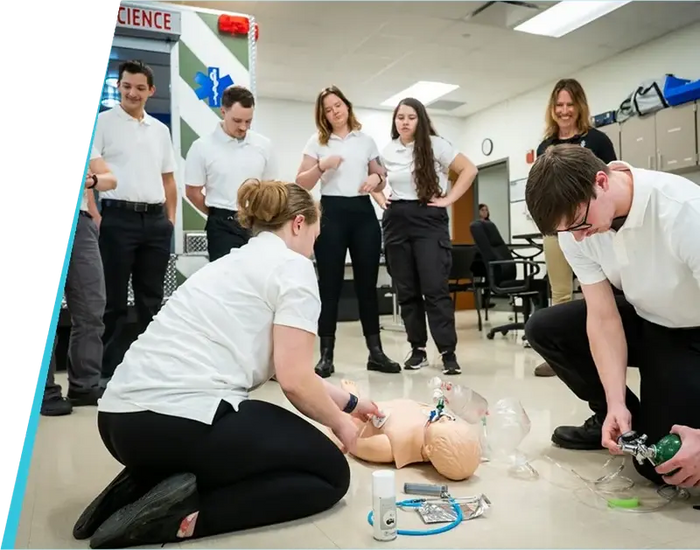
Preparing for the National Registry of Emergency Medical Technicians (NREMT) exam can feel overwhelming when you have a large amount of EMS information to review. A successful preparation strategy focuses on understanding concepts, applying knowledge to patient scenarios, and improving clinical decision-making. Whether you are working toward EMT, AEMT, or Paramedic certification, organized studying can help you identify weak areas, strengthen your knowledge, and approach the examination with greater confidence.
Build a Strong Foundation With an NREMT Study Guide
A reliable NREMT Study Guide can make your preparation more organized by bringing important EMS concepts together in a structured format. Instead of moving randomly between different subjects, candidates can use a study guide to create a clear path for reviewing patient assessment, airway management, respiratory emergencies, cardiovascular conditions, trauma, medical emergencies, and other important areas.
A good study guide should not be used only for memorizing definitions. The goal is to understand how information applies to real patient situations. When you understand the reasoning behind an assessment or intervention, you are better prepared to approach questions that present unfamiliar scenarios.
Know Your NREMT Certification Level
Your preparation should be based on the certification examination you are taking. EMT, AEMT, and Paramedic candidates have different levels of education and clinical responsibilities, so it is important to use study resources appropriate for your level.
Start by reviewing the subjects included in your EMS education. Make a list of areas you understand well and topics that require additional attention.
Some broad areas to review include:
- Patient assessment
- Airway and respiratory emergencies
- Cardiovascular emergencies
- Trauma and shock
- Medical emergencies
- Neurological conditions
- Pediatric emergencies
- Obstetric and gynecological emergencies
- Environmental emergencies
- EMS operations
Organizing these subjects into categories can make a large amount of information easier to manage.
Create a Practical Study Schedule
A study guide becomes much more effective when it is combined with a realistic schedule. Instead of attempting to review everything at once, divide your preparation into smaller sessions.
Begin by determining how much time you have before your examination. Then assign specific topics to individual study sessions.
For example, you might spend one session reviewing airway and breathing, another studying cardiovascular emergencies, and another focusing on trauma. Include regular practice questions so you can apply what you learn.
Set specific goals for each session. Rather than saying, “I will study today,” create a measurable goal such as reviewing a particular topic and completing a set of practice questions.
Master Patient Assessment
Patient assessment is an essential part of EMS practice and should receive significant attention during your preparation. When reviewing assessment concepts, focus on developing a logical process rather than memorizing a list of steps without understanding their purpose.
When presented with a patient scenario, consider the overall situation. Look for immediate life threats and determine which problem requires attention first.
Ask yourself:
- What is the patient's primary concern?
- Is there an immediate life threat?
- What information should be gathered?
- What should be addressed first?
- What is the most appropriate next step?
Practicing this thought process can help you become more comfortable with scenario-based questions.
Review Airway and Respiratory Emergencies
Airway and breathing concepts are important areas to include in your preparation. Review the principles of airway assessment, oxygenation, ventilation, respiratory distress, and respiratory failure.
Focus on recognizing differences between patients who are stable and those who require immediate intervention.
When practicing questions, pay attention to patient presentation and the information provided. Do not focus on one symptom alone; consider the complete scenario and determine the patient's most urgent need.
Strengthen Cardiovascular and Trauma Knowledge
Cardiovascular emergencies and trauma are also important subjects for EMS students to review. Study common presentations, assessment priorities, and appropriate emergency care principles.
For trauma scenarios, consider the mechanism of injury, patient presentation, potential life threats, and priorities of care.
For cardiovascular scenarios, focus on recognizing concerning findings and understanding how patient assessment influences treatment priorities.
The objective is not simply to memorize conditions. Practice connecting signs and symptoms with appropriate clinical decisions.
Use Practice Questions Regularly
Practice questions can turn passive studying into active learning. After reviewing a topic, answer questions related to that subject and evaluate your performance.
Do not become focused only on achieving a high score. The most valuable part of practice may be understanding why you missed a question.
When you make a mistake, ask yourself what caused it. Did you misunderstand the concept? Did you overlook a detail? Did you choose an appropriate action but not the highest-priority action?
Write down recurring mistakes and review them regularly.
Improve Clinical Reasoning
Clinical reasoning allows EMS professionals to interpret patient information and make appropriate decisions. It is especially useful when a question contains multiple symptoms or several answer choices that appear reasonable.
When you encounter a challenging question, start by identifying the patient's most immediate concern. Then consider which assessment or intervention should take priority.
Avoid choosing an answer simply because it contains terminology you recognize. Instead, look at the complete scenario and determine which option best fits the patient's condition.
Repeated practice can help make this reasoning process faster and more natural.
Identify Your Weak Subjects
One of the biggest advantages of using practice results is that they can reveal weaknesses in your preparation.
Keep track of the topics associated with incorrect answers. You may discover that you consistently struggle with respiratory emergencies, cardiac conditions, trauma, medical emergencies, or another subject.
Once you identify a weak area, return to your study guide and review it carefully. Follow that review with additional practice questions.
This creates a simple but effective cycle: study, practice, identify weaknesses, review, and practice again.
Develop Better Test-Taking Strategies
Strong test-taking skills can help you apply your knowledge under examination conditions. Always read each question carefully and identify exactly what it is asking.
Pay particular attention to words such as first, next, immediate, and most appropriate. These terms may indicate that the question is testing your ability to prioritize care.
If you are unsure about an answer, eliminate choices that clearly do not fit the scenario. Then compare the remaining choices based on patient safety, assessment findings, and emergency care priorities.
Avoid rushing through questions simply to finish quickly. Careful reading can help prevent mistakes caused by overlooking important information.
Avoid Last-Minute Cramming
Trying to learn a large amount of information immediately before an examination can create unnecessary stress. Instead, begin preparation early and review information consistently.
Use your final study sessions to reinforce important concepts, revisit weak areas, and complete focused practice questions.
Take reasonable breaks and give yourself time to rest. A clear and focused mind can make it easier to analyze challenging scenarios.
Track Your Progress
Tracking your preparation can help you determine whether your study strategy is effective. Keep a record of practice scores, difficult subjects, and common mistakes.
Do not become discouraged by an early low score. Practice results are useful because they show you where improvement is needed.
As you continue studying, look for progress in both your scores and your ability to explain the reasoning behind your answers. Understanding the reasoning is more valuable than simply memorizing the correct choice.
Conclusion
A well-organized NREMT Study Guide can help you structure your preparation, review important EMS concepts, strengthen clinical reasoning, and identify areas that require additional practice. Combine your study guide with regular practice questions, targeted review, patient assessment exercises, and effective test-taking strategies to create a balanced preparation routine. Consistency and understanding are key to making your study time more productive.
For additional NREMT preparation resources, study materials, practice support, and guidance, visit howtonremt.com and continue developing the knowledge and confidence you need as you work toward your EMS certification goals.
FAQs
1. What is an NREMT Study Guide?
An NREMT Study Guide is a structured resource that helps candidates review EMS concepts and organize their preparation for the NREMT examination.
2. What topics should an NREMT Study Guide cover?
It should cover relevant areas such as patient assessment, airway and breathing, cardiovascular emergencies, trauma, medical emergencies, pediatrics, and EMS operations.
3. Are practice questions necessary when using an NREMT Study Guide?
Yes, practice questions help you apply the information you study and identify topics that require additional review.
4. How can I use an NREMT Study Guide effectively?
Follow a consistent schedule, study one topic at a time, practice questions regularly, and review your mistakes.
5. How early should I start studying for the NREMT?
Starting several weeks before the examination can give you sufficient time to review important concepts, practice questions, and strengthen weak areas.
Pass your NREMT exam on your first attempt at How To NREMT! Gain access to training videos, a practice app, and live coaching sessions.




Comments (0)