

Why Youth Shoulder Pad Sizing Is Harder Than Most Coaches Think
If you're outfitting a team or individual player this season, understanding what separates a properly fitted set of youth shoulder pads from a pair that will frustrate everyone by mid-season is worth the investment of time upfront.

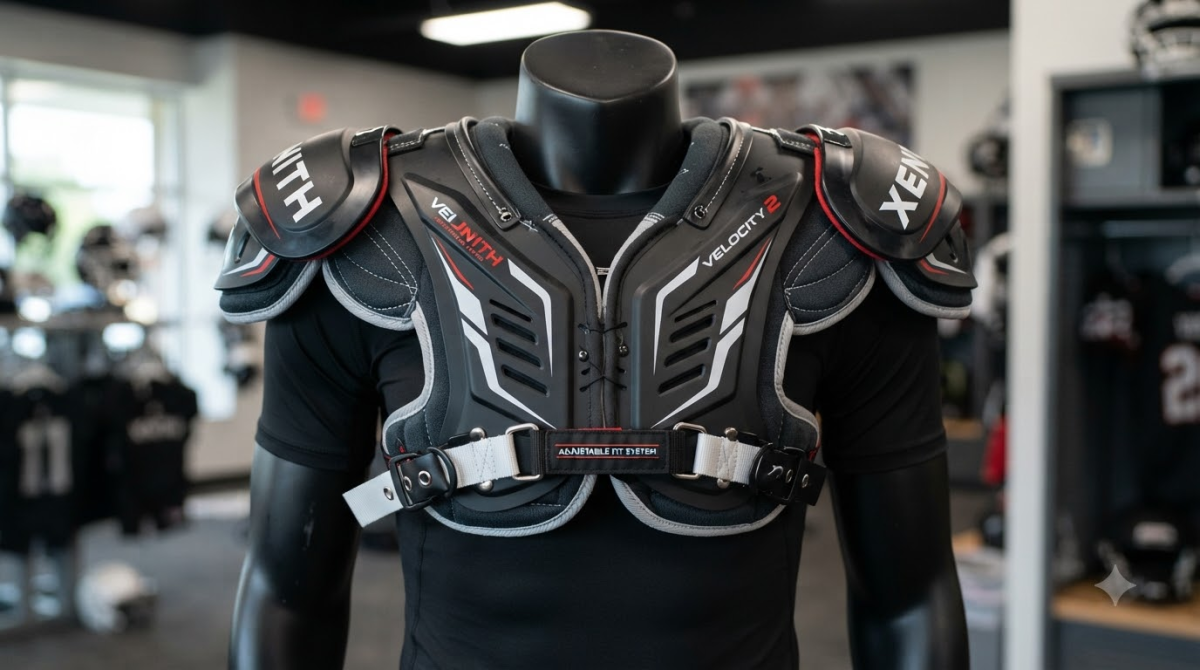
Walk into a youth football equipment room mid-August and you'll see a common scene: coaches pulling shoulder pads off shelves by size label alone, handing them to players, and assuming the fit is good enough. By week two of the season, half those pads have shifted, rotated, or become uncomfortable enough that players are adjusting them constantly during practice. Shoulder pad fit isn't just a comfort issue — it's a protection issue, and it's one of the first places where equipment failure creates real problems.
Youth shoulder pads need to stay in the exact same position from snap to snap, practice to practice, and game to game. Movement or slipping means the protective padding shifts away from the areas it's designed to cover. If you're outfitting a team or individual player this season, understanding what separates a properly fitted set of youth shoulder pads from a pair that will frustrate everyone by mid-season is worth the investment of time upfront.
How Youth Shoulder Pads Actually Protect
Shoulder pads are more precisely engineered than most people realize. They're not solid blocks of foam — they're designed with specific shell shapes and foam densities positioned to absorb and redirect impact force away from vulnerable structures: the AC joint, the clavicle, the shoulder socket, and the soft tissue of the rotator cuff.
When a shoulder pad is the wrong size or fitted incorrectly, the protective surfaces end up in the wrong positions. A pad that's too large allows the shell to sit lower than it should, leaving the AC joint exposed. One that's too small pulls up at the armhole and exposes the shoulder joint. Either way, the protection that the equipment was designed to provide doesn't materialize.
The Measuring Process That Most Teams Skip
This is where the process breaks down for a lot of youth programs. Coaches will grab a kid, hold up a shoulder pad, and if it "looks about right," move on. That approach creates half the fitting problems that show up later.
Proper sizing starts with measurement, not approximation.
Neck to Shoulder Point
Measure from the middle of the player's neck down to the point of the shoulder. This determines the length of the pad shell — specifically, how far down the shoulder pad extends over the upper arm.
Shoulder Width
Measure across the shoulders at the widest point where the clavicle sits. This determines the width of the pad shell and ensures the protective surfaces sit centered over the shoulder joint rather than shifted inward or outward.
Chest Circumference
This measurement affects the harness fit — how snugly the pad sits against the torso and how much movement or slipping occurs during play. It's the measurement that determines whether the pad stays in place or gradually works its way out of position during a game.
These three measurements take five minutes total and eliminate probably 80 percent of the fitting problems that develop mid-season.
Common Youth Shoulder Pad Sizing Mistakes
Buying Too Large "For Growth"
This is the most frequent error, and it creates the most problems. A large shoulder pad on a smaller player doesn't compress properly against the body, the harness doesn't tighten sufficiently, and the pad migrates around during play. By mid-season, you're dealing with a player who's constantly adjusting equipment instead of focusing on football.
Youth players grow — sometimes significantly — during a season. But fitting equipment too large at the start of the season doesn't solve that problem. It creates a different one.
Assuming Shoulder Width Equals Torso Width
A player can have broad shoulders but a narrow chest, or vice versa. If you're sizing the pad based on shoulder measurements but the harness is sized for a different player's chest, the pad won't sit correctly no matter what you do.
Ignoring Arm Length and Armhole Fit
Youth shoulder pads have armhole openings sized to the pad dimensions. An armhole that's too large creates gaps where arm movement isn't protected. One that's too small restricts motion. This is one of the most overlooked aspects of fitting and one of the quickest ways to make a player uncomfortable enough to complain about wearing the pads.
Not Accounting for Layering Underneath
A youth player wearing a padded compression shirt or base layer under their shoulder pads has added bulk. That changes how snugly the harness needs to sit and may push the sizing up by one size. Many coaches fit the pad without accounting for the layers underneath, and then the combined system feels too loose mid-season.
Position-Specific Considerations for Youth Players
Different positions have different exposure patterns, and that should influence pad selection within the sizing range.
Linemen — offensive and defensive — spend plays engaged at the line of scrimmage, taking repeated shoulder contact. For these players, fit should prioritize the shoulder joint protection and prioritize harness tightness to prevent any pad movement during explosive contact.
Skill positions — running backs, receivers, linebackers — take contact from multiple angles at higher speed. Their shoulder pads need to provide good overall coverage without being so bulky that they restrict arm movement or catching ability.
Quarterbacks — need maximum arm mobility and often prefer slightly slimmer pad profiles. At the youth level, arm restriction is more limiting than at higher levels, so fit should prioritize mobility while maintaining protection.
Harness Fit: The Part That Determines If the Pad Stays in Place
The shoulder pad shell is only half the system. The harness — the straps that hold the pad against the player's body — is what determines whether that shell stays in the correct protective position or gradually migrates during play.
A harness that's too loose allows the pad to shift. One that's too tight restricts breathing and range of motion. Finding the right tension is a feel-based adjustment rather than a measurement-based one, which is why this part of fitting often gets overlooked.
The harness should be tight enough that you can't easily pull the pad away from the body, but loose enough that the player can take a full breath and move their arms through a full range of motion without feeling restricted. That's a narrow window, but it's the target.
Testing the Fit Before Practice
Once the pads are sized and the harness is adjusted, verify the fit through movement before the first full-contact practice.
Have the player:
-
Run forward and backward — the pads should stay in place, not bounce or slide
-
Throw movements — for QBs and receivers, simulate throwing motions and verify arm freedom
-
Get down and up from the ground — this mimics what happens when a player is tackled and gets up; the pads should stay positioned through this sequence
-
Rotate and twist — the pad shell and harness should move with the player, not independently
If any of these movements reveals slipping, shifting, or restriction, adjust the harness tension or reconsider the size before committing to use.
Durability and Maintenance Through a Full Season
Youth shoulder pads take a beating. Pads get stepped on, dragged across grass and turf, thrown in equipment bags, and washed repeatedly. Fit quality depends partly on the garment holding up.
-
Stitching around armholes — this is where pads most commonly start to separate; reinforced stitching holds longer under heavy use
-
Harness straps — elastic that holds its stretch through a full season; cheap elastic degrades and loses tension by mid-season
-
Foam density — padding that compresses under initial impact but retains shape; foam that permanently compresses loses protective value
-
Shell material — hard plastic or composite shells hold up better than thin plastic that cracks under repeated impact and pressure
Frequently Asked Questions
How tight should the harness actually be?
The harness should be snug enough that the pad doesn't shift during contact, but loose enough that the player can take a full breath without restriction. If you can slide two fingers under the harness at the shoulder, it's probably too loose. If the player reports feeling restricted during arm movement, it's probably too tight. It's a balance that each player has to dial in.
What happens if a youth player grows significantly mid-season?
Most youth shoulder pads allow some adjustment through harness straps and sizing range. A player who grows noticeably mid-season may need a larger size, but many programs get through a season with minor harness adjustments. If significant growth happens, sizing up may become necessary to maintain proper fit and protection.
Can youth shoulder pads be passed between players?
Yes, if the players are similarly sized. However, each new player needs to go through the fitting process — checking that measurements align and that the harness can be properly adjusted. A pad that fit one player perfectly may need different harness positioning for another player of nominally the same size.
How often should harness straps be checked during the season?
Weekly checks are practical. Elastic stretches over time with regular use, so harness tension that was correct in week one may be looser by mid-season. A quick weekly tightening keeps fit consistent across the entire season.
Are youth shoulder pads required to be worn in practice as well as games?
Most youth leagues require shoulder pads for any full-contact work — both practice and games. Some programs use a lighter-duty pad or reduced-contact protocols for certain practice situations, but for any practice involving live tackling or blocking, shoulder pads should be part of the required gear.
Shoulder pad fit determines whether the protection the equipment was designed to provide actually works. For youth players, taking the time to measure correctly, adjust the harness properly, and verify the fit through movement before the season starts eliminates most of the equipment problems that otherwise accumulate over a full season. It's time invested once that prevents frustration and protection gaps repeatedly.








Comments (0)