

Why Quarterbacks Need Different Shoulder Pads Than Everyone Else on Offense
If you're setting up a quarterback this season, finding quarterback football pads engineered specifically for throwing mechanics should be a priority decision, not a last-minute grab from inventory.

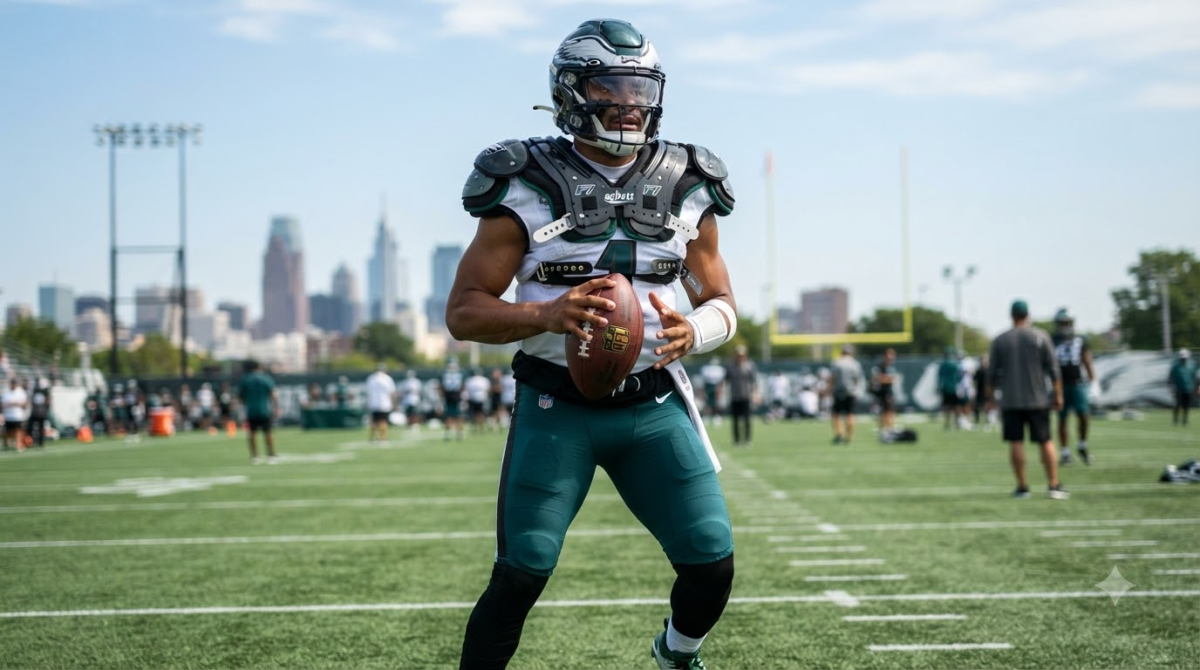
A quarterback's shoulder pads are the most specialized piece of equipment on any football roster — and they're often treated like an afterthought. Coaches grab a generic set from the equipment room, and if it doesn't actively interfere with throwing, it's considered "good enough." This oversight costs quarterbacks mobility, confidence, and in some cases, actual performance consistency over a full season.
The demands on a quarterback's shoulders are completely different from any other position. They need maximum arm freedom to throw from multiple platforms — under center, shotgun, empty backfield, while moving in the pocket. They also take contact they can't predict because they're focused downfield. They need protection that doesn't restrict their most critical function. If you're setting up a quarterback this season, finding quarterback football pads engineered specifically for throwing mechanics should be a priority decision, not a last-minute grab from inventory.
Why Generic Shoulder Pads Compromise Throwing Motion
The throwing motion in football is a complex, multi-joint sequence that requires precise freedom of movement through the shoulder, elbow, and wrist. When a shoulder pad restricts any part of this sequence, it creates compensatory movements — the quarterback adjusts their mechanics to work around the equipment rather than throwing naturally.
These compensations accumulate over a season. A quarterback who starts the year with restricted external rotation in the shoulder due to a poorly designed pad may develop shoulder soreness by week six. By mid-season, they're throwing with a different arm angle to accommodate the restriction, which means the accuracy they built in practice doesn't carry over to games.
Generic linebacker or receiver pads create this problem in different ways:
-
Linebacker pads have large shoulder caps and extended front plates that limit shoulder mobility and interfere with arm extension
-
Receiver pads optimize for arm freedom but often don't provide adequate rib and chest protection for a quarterback who takes hits they're not expecting while focused downfield
A quarterback needs a design engineered specifically around throwing mechanics, not a compromise between two competing priorities.
Understanding Quarterback-Specific Pad Design
A quality quarterback shoulder pad has several distinguishing features that differentiate it from other position-specific designs.
Reduced Shoulder Cap Coverage
Instead of large epaulets that extend far laterally, QB pads feature smaller, more contoured shoulder caps that protect the AC joint and shoulder socket without restricting the rotational movement required for throwing. The protection is concentrated directly over vulnerable bone structures, not spread across maximum surface area.
Split or Cutaway Front Plate
A quarterback's front plate is typically narrower than standard designs and often features side cutaways. This allows maximum arm swing while still protecting the sternum and upper chest. The cutaway design also reduces the bulk that can interfere with the ball placement in the pocket.
Extended Rib and Side Protection
While shoulder coverage is minimized, quarterback pads compensate by extending protection down the ribs and sides. This makes sense because a QB taking an unexpected hit while looking downfield often absorbs that contact in the ribs or flank, not the shoulder.
Low-Profile Harness System
The harness straps on QB pads are designed to sit lower on the torso and use thinner material that doesn't restrict core rotation. This allows the quarterback to maintain the spinal rotation necessary for proper throwing mechanics without the pad structure fighting against it.
How Throwing Mechanics Are Affected by Poor Pad Fit
The mechanics of an efficient football throw start from the ground up — feet, hip rotation, trunk rotation, shoulder rotation, elbow height, wrist position. A shoulder pad that restricts rotation anywhere in that chain forces compensation.
Restricted shoulder external rotation creates a throwing motion that looks more like pushing than throwing. The quarterback can't get the arm back far enough, so they shorten the motion and the ball comes out with less velocity and less accuracy.
Restricted arm extension forces the quarterback to throw from a lower release point. This changes the trajectory of every throw and forces receivers to adjust their expectations for where the ball will be.
Front plate interference can actually affect how a quarterback holds and places the ball in the pocket during play action or when sliding up in the pocket during scrambles.
None of these are huge individual changes, but over 400+ passing attempts in a season, they compound into measurable performance degradation.
Protection Priorities for Quarterbacks
A quarterback's position-specific vulnerabilities are different from other players, which is why their protection priorities should be different.
Shoulder Joint and AC Joint
These are the most common injury sites for quarterbacks — not from direct shoulder-to-shoulder hits, but from impacts that occur while the arm is extended or elevated. A throwing motion that leaves the arm exposed to lateral impact creates specific joint stress that standard linebacker pads aren't designed to handle.
Rib Cage and Floating Ribs
Quarterbacks take impacts to the ribs more frequently than most positions because they're not bracing for contact — they're focused downfield. A hit to the floating ribs from an unexpected angle can cause bruising, separation, or in severe cases, rib fractures. QB pads should prioritize this area of coverage.
Collarbone Region
The collarbone is vulnerable to impacts from above — when a defender sheds a blocker and hits the QB high. QB pads need solid coverage here, but not at the expense of shoulder cap size that restricts arm motion.
Spine and Upper Back
Quarterback pads often include extended back coverage that protects the thoracic spine. This is the area most exposed when a QB is hit from behind — an increasingly common scenario in modern pass-heavy offenses.
The Trade-Off Every Team Faces
There's a legitimate tension between maximum protection and maximum mobility. A pad that provides elite protection in every zone would be so bulky that it would noticeably restrict throwing. A pad that provides perfect throwing freedom might leave some protection gaps.
Quality quarterback pads make intelligent trade-offs in this tension:
-
They accept slightly less shoulder protection than linebacker pads because QBs don't take direct shoulder contact as frequently
-
They prioritize rib and side protection because those are the actual impact zones QBs experience
-
They minimize front-plate size specifically to preserve throwing mechanics
-
They extend back protection to cover the areas where unexpected hits most commonly occur
These trade-offs are built into the design based on how quarterbacks actually play, not just in theory.
Fitting a Quarterback Pad Correctly
Quarterback pads need to be fitted with the specific goal of preserving throwing mechanics, not just achieving a snug fit.
Shoulder Mobility Test
Have the QB stand with their arm at their side, then slowly raise it overhead as if beginning a throwing motion. The pad should move with the arm, not restrict it. If the shoulder cap pulls into the neck or restricts the movement at any point, the fit is wrong.
Throwing Motion Test
Have the QB go through their actual pre-snap and throwing sequence while wearing the pads. Watch for any hesitation, compensatory movement, or awkward positioning that suggests the pad is interfering. This test requires actual throwing motion, not just arm movement — the mechanics are different.
Harness Tension
The harness should be snug enough to keep the pad from shifting during contact, but loose enough that the quarterback can take full breaths and rotate through the core without restriction. This is a narrower window than for other positions and requires careful adjustment.
Back Plate Fit
If the pad includes or can accommodate a back plate, ensure it sits flat against the upper back and doesn't create pressure points that become painful or distracting during a game.
Durability Considerations Specific to QB Use
Quarterbacks use their pads differently than other positions, which means different durability concerns.
-
Stitching around armholes — takes more stress because of the range of arm motion; needs reinforcement
-
Harness elasticity — used constantly during throwing motion; cheaper elastic degrades faster
-
Front plate and side cutaway seams — the edges where material changes are high-stress areas that need strong bonding or stitching
-
Back plate attachment points — if a back plate is used, the connection points need to be robust enough to handle repeated impact
Frequently Asked Questions
Should a backup quarterback have a different pad than the starter?
Not necessarily different, but they should have pads specifically fitted to them. A backup QB with different shoulder measurements or arm length might need size or positioning adjustments even if wearing the same model. Never assume one size fits all, even at the same position.
Can a quarterback wear a receiver's pad?
In a pinch, possibly — receiver pads do prioritize arm mobility. However, receiver pads typically don't provide adequate rib and side protection for a quarterback who takes unexpected hits. It's not ideal, but it's better than wearing linebacker pads.
What's the difference between quarterback pads and standard skill position pads?
Quarterback pads are even more specialized than general skill position pads. They sacrifice more shoulder protection than receiver pads to maximize throwing freedom, and they prioritize rib and back protection more than receiver pads do. They're engineered for a specific throwing-focused role, not a general "skill position" category.
Do college and NFL quarterbacks wear specialized pads?
Yes, extensively. High-level quarterbacks often wear pads that are heavily customized to their specific body measurements and throwing mechanics. High school and elite youth quarterbacks can access professional-level options, though they're more expensive than standard models.
How often should quarterback pads be replaced during a career?
A quality set of QB-specific pads should last 2-3 seasons with proper care. However, if a quarterback's body measurements change significantly or their throwing mechanics evolve, pads that fit perfectly in year one might need adjustment or replacement in year three.
A quarterback's relationship with their shoulder pads is more intimate than any other position's relationship with their equipment. The pads either support their most critical function or they work against it. Choosing quarterback football pads engineered specifically for throwing mechanics — rather than a generic position-agnostic model — is one of the most underrated equipment decisions a program can make.






Comments (0)