

Africa Air Conditioner Market: Rising Cooling Demand and the Shift Toward Efficient Systems
The Africa Air Conditioner Market is projected to grow at a CAGR of around 7.5% during the forecast period, i.e., 2024-30.

Africa's air-conditioning sector is gaining importance as rising temperatures, urbanization, housing development, and improving household incomes increase the need for indoor cooling. Demand is also expanding beyond residential applications into offices, hospitality, retail, healthcare, and other commercial environments. At the same time, limitations in electricity infrastructure and affordability are influencing the type and efficiency of cooling equipment adopted across the continent.
A comprehensive assessment by MarkNtel Advisors’ Africa Air Conditioner Market report projects the market to expand at a CAGR of around 7.5% during 2024–2030. The study identifies growing home ownership, climate change, improving power-grid infrastructure, rising disposable incomes, and greater awareness of air-conditioning systems as important factors supporting market development.
Rising Temperatures Strengthen Cooling Demand
Climate conditions are a fundamental driver of air-conditioner adoption across Africa. Many countries experience prolonged periods of high temperatures, while urbanization is increasing the concentration of people and economic activity in cities. As living standards improve, cooling is increasingly viewed as an important household and workplace requirement rather than a discretionary product.
The International Energy Agency highlights the scale of this trend. Its Africa Energy Outlook analysis notes that energy demand for fans and air conditioning is expected to rise substantially as urbanization and climate change increase cooling requirements across the continent. This creates both market opportunities and additional pressure on electricity systems.
Residential Adoption Expands With Housing Development
Residential applications are becoming increasingly important as housing development expands in African economies. Growing home ownership in countries such as South Africa, Kenya, and Nigeria is supporting demand for cooling equipment, while rising household incomes can improve access to electrical appliances.
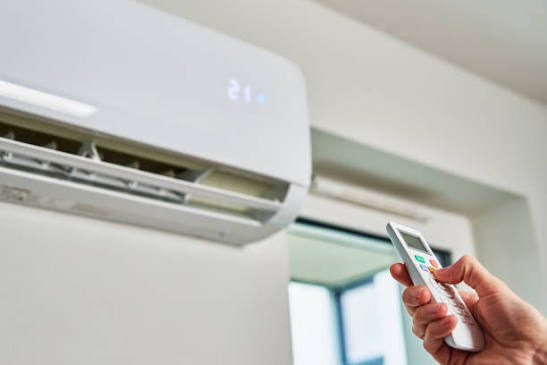
The market study identifies split air conditioners as a significant product category. Their relatively straightforward installation and suitability for residential and small commercial spaces contribute to their adoption. Housing construction and efforts by governments to address residential supply gaps may further support demand for room air-conditioning systems.
Commercial Construction Creates New Opportunities
Commercial applications represent another important area of development. Construction activity across countries including Nigeria, Ethiopia, and Kenya is increasing the requirement for cooling systems in offices, retail facilities, hospitality properties, and other commercial buildings.
The hospitality sector offers a particularly relevant opportunity. International and regional hotel development is increasing the need for room air conditioners as well as larger systems such as VRF units and chillers. Cooling requirements in hotels are generally linked not only to guest rooms but also to restaurants, conference facilities, kitchens, and common areas.
Energy Efficiency Becomes More Important
As air-conditioner ownership increases, energy efficiency is becoming an important consideration for consumers, businesses, utilities, and policymakers. Inefficient cooling equipment can increase electricity consumption and operating costs, particularly in regions where electricity supply is already constrained.
The IEA's analysis of the future of cooling emphasizes that improving air-conditioner efficiency can help manage rising electricity demand while reducing pressure on energy systems. This is particularly relevant for African markets, where expanding cooling access needs to be balanced with grid capacity and affordability.
Manufacturers are therefore developing systems with improved energy performance, inverter technology, and alternative refrigerants. Greater consumer awareness of operating costs is also likely to influence purchasing decisions.
Power Infrastructure Remains a Constraint
Despite favorable demand conditions, electricity availability remains a significant challenge for the African air-conditioner market. Frequent power interruptions, limited grid connectivity, and inadequate electricity-generation capacity can restrict the operation and adoption of electrically powered cooling equipment.
These infrastructure constraints can also affect commercial users that require reliable cooling throughout the day. Businesses may need backup power systems, increasing the overall cost of operating air-conditioning equipment. Improving electricity infrastructure will therefore remain closely connected with the long-term development of cooling demand.
South Africa Maintains a Strong Position
Among the countries covered by the study, South Africa is expected to maintain a sizable position in the regional market. Rising temperatures, increasing awareness of air-conditioning systems, and demand for technologically advanced and energy-efficient equipment contribute to its market potential.
Nigeria and Kenya also offer opportunities because of their expanding urban populations, housing development, and commercial construction. Algeria and Morocco represent additional markets where climatic conditions and infrastructure development influence cooling demand.
The diversity of African markets means that product requirements differ considerably. Equipment suited to urban residential applications may not necessarily meet the needs of large commercial buildings, industrial facilities, or regions with unreliable electricity supply.
Efficient Cooling Will Shape Future Adoption
The future development of the Africa air-conditioner market will depend on the interaction between rising cooling requirements, infrastructure expansion, affordability, and energy efficiency. Greater adoption of efficient equipment can help reduce operating costs while limiting additional stress on electricity systems.
At the same time, manufacturers and distributors will need to consider the varying climatic, economic, and infrastructure conditions across individual African countries. Expanding access to reliable electricity, improving consumer awareness, and increasing the availability of energy-efficient systems can support more sustainable growth in cooling demand.
Overall, Africa's air-conditioner market is being shaped by climate pressures, urbanization, housing development, commercial construction, and improving living standards. The balance between expanding access to cooling and managing electricity consumption will remain central to the sector's development through the forecast period.








Comments (0)