

Uterine Fibroid Treatment Without Surgery: A Guide to Treatment Options
Fibroids don't always mean a hysterectomy. Learn how UFE, medication and focused ultrasound compare, plus symptoms, diagnosis and expert tips.

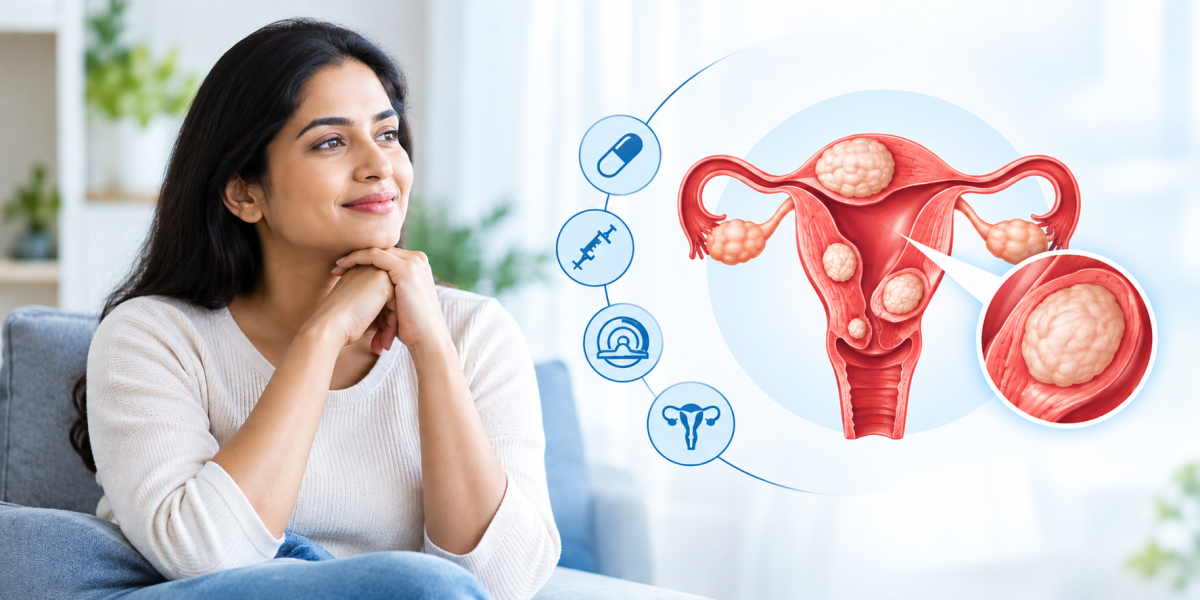
Most women who hear the word "fibroid" expect the next word to be "hysterectomy." That expectation is outdated. Over the last two decades, treatment has shifted toward preserving the uterus wherever it is safe to do so, and Uterine Fibroid Treatment Without Surgery is now a routine part of the conversation in many centres. Whether it suits you depends on your symptoms, where the fibroids sit, and whether you hope to conceive. This guide walks through each of those questions.
Understanding Fibroids
Fibroids, or leiomyomas, are benign tumours that grow from the muscle of the uterus. Some studies estimate that up to 70–80% of women will have one by the age of 50. Most never need treatment. The ones that do are usually large, numerous, or positioned where they interfere with bleeding or with neighbouring organs.
Location matters as much as size. A small submucosal fibroid pressing into the uterine cavity can cause far heavier periods than a much larger one on the outer wall, which may instead press on the bladder or bowel.
Symptoms That Deserve Attention
Heavy menstrual bleeding is the most common complaint. Women often describe it practically: changing a pad every hour, passing clots, or planning their week around their period. Over time this leads to iron-deficiency anaemia, which explains the tiredness, breathlessness, and poor concentration that many patients put down to "stress."
Other symptoms include pelvic heaviness, a visible lower abdominal swelling, frequent urination, constipation, back pain, and pain during intercourse. Sudden severe pelvic pain, or bleeding that soaks through protection within an hour, needs same-day medical attention.
What Causes Fibroids?
No single cause has been identified. Estrogen and progesterone clearly support fibroid growth, which is why these tumours tend to shrink after menopause. Family history raises the risk, and so do earlier onset of periods and higher body weight. Low vitamin D levels have been linked to fibroids in some studies, though a link is not proof that correcting them will shrink existing growths.
How Fibroids Are Diagnosed
A pelvic examination often raises the first suspicion. A transvaginal or abdominal ultrasound usually confirms it. When non-surgical treatment is being considered, a contrast-enhanced pelvic MRI is worth having. It shows how many fibroids there are, their exact position, and how well they are supplied with blood, and it helps separate fibroids from adenomyosis, a different condition that can look similar and responds differently to treatment. A haemoglobin test shows whether blood loss has begun to affect your health.
Treatment Options That Avoid an Operation
Medication
Tranexamic acid reduces bleeding during periods. Anti-inflammatory painkillers ease cramping. A levonorgestrel intrauterine system can control heavy bleeding in some women, provided the uterine cavity is not badly distorted. None of these shrinks fibroids in a lasting way. Newer oral GnRH antagonist combinations can reduce bleeding and fibroid volume, but they are limited to a set duration because of their effect on bone density.
Uterine Fibroid Embolization (UFE)
In UFE, an interventional radiologist passes a fine catheter through the wrist or groin artery and guides it, under X-ray, to the uterine arteries. Tiny particles are released to block the vessels feeding the fibroids. Starved of blood, they soften and shrink over the following months, while the normal uterine tissue recovers its supply from other vessels.
Interventional radiologists such as Dr. Arjunlokesh Netaji, who trained at JIPMER and AIIMS, perform this procedure through a puncture of a few millimetres. More detail is available on his fibroid treatment.
Expect cramping, nausea, and a low fever for a few days afterwards. This is called post-embolization syndrome and is treated with medication. Most patients stay one night and return to routine activity in about one to two weeks. UFE is not suitable during pregnancy, with active pelvic infection, or when cancer is suspected.
MRI-Guided Focused Ultrasound
Focused sound energy heats and destroys targeted fibroid tissue through the intact skin. It works best for a limited number of accessible fibroids, and access to the equipment is restricted.
Observation
Small, silent fibroids can simply be watched with periodic imaging.
How the Options Compare
|
Medication |
UFE |
Focused ultrasound |
Hysterectomy |
|
|
Skin incision |
None |
Needle puncture |
None |
Yes |
|
Effect on fibroids |
Symptom control |
Shrinks |
Shrinks treated areas |
Removed with uterus |
|
Uterus kept |
Yes |
Yes |
Yes |
No |
|
Usual recovery |
Minimal |
1–2 weeks |
Few days |
4–6 weeks |
|
If pregnancy is planned |
Compatible with some options |
Discuss carefully |
Limited data |
Not possible |
Practical Advice from Clinic
Fertility plans decide more than anything else. Professional guidelines generally favour myomectomy over UFE for women who want to conceive, so say so at your first visit.
Insist on an MRI before any procedure. Choosing Uterine Fibroid Treatment Without Surgery without good imaging risks treating the wrong problem.
Treat the anaemia in parallel. Iron replacement will make you feel better regardless of what else you decide.
Finally, ask every specialist what could go wrong. Infection, persistent symptoms, fibroid regrowth, and, rarely, an effect on ovarian function are all part of an honest discussion.
What Has Changed Recently
Oral combination therapies containing a GnRH antagonist and add-back hormones have been approved in several countries for fibroid-related heavy bleeding. Some drugs in older classes have faced restrictions over liver safety, which shows why supervised prescribing matters. Trials comparing embolization with surgery continue to clarify long-term outcomes, and MRI planning has become more precise.
The same image-guided thinking now extends beyond the uterus. Patients searching for a Thyroid Nodule Specialist Chennai will find that the needle-based, no-incision principle is also used for benign thyroid nodules, through radiofrequency ablation.
Frequently Asked Questions
Can fibroids go away without surgery?
They can shrink after menopause, and treatments such as UFE or focused ultrasound reduce them. Medicines usually control symptoms without eliminating the growth.
Does UFE hurt?
Sedation and pain relief are given during the procedure. The cramping afterwards is usually worst in the first day or two and improves with medication.
Can I still have a baby after embolization?
Pregnancies have been reported, but data are less reassuring than for myomectomy. If a pregnancy is planned, discuss this before deciding.
Will fibroids return?
Treated fibroids rarely regrow, but new ones can appear, particularly in younger women. Follow-up imaging helps.
Are fibroids a form of cancer?
No. Malignant change is very rare. Rapid growth after menopause or unusual MRI findings prompt further evaluation.
Can the same doctor treat thyroid nodules too?
Sometimes. Interventional radiology covers several organs, so the doctor you see for fibroid embolization may also be a Thyroid Nodule Specialist Chennai patients are referred to for benign nodules. Ask about experience with each condition, as you would with any specialist.
Conclusion
Fibroids do not automatically mean an operation. The right choice depends on your symptoms, your scans, and your plans for a family. If you would like your reports reviewed and your options explained plainly, you can consult Dr. Arjunlokesh Netaji at Kauvery Hospital, Vadapalani, Chennai, or call +91 99942 25090 to arrange an appointment.
This article is for general information and does not replace personal medical advice.













Comments (0)