

Track and Trace System for Road Freight: What Real Visibility Looks Like Beyond a Map Pin
Discover how a Track and Trace System improves freight visibility with real-time alerts, route monitoring, truck ETAs, and delivery updates.

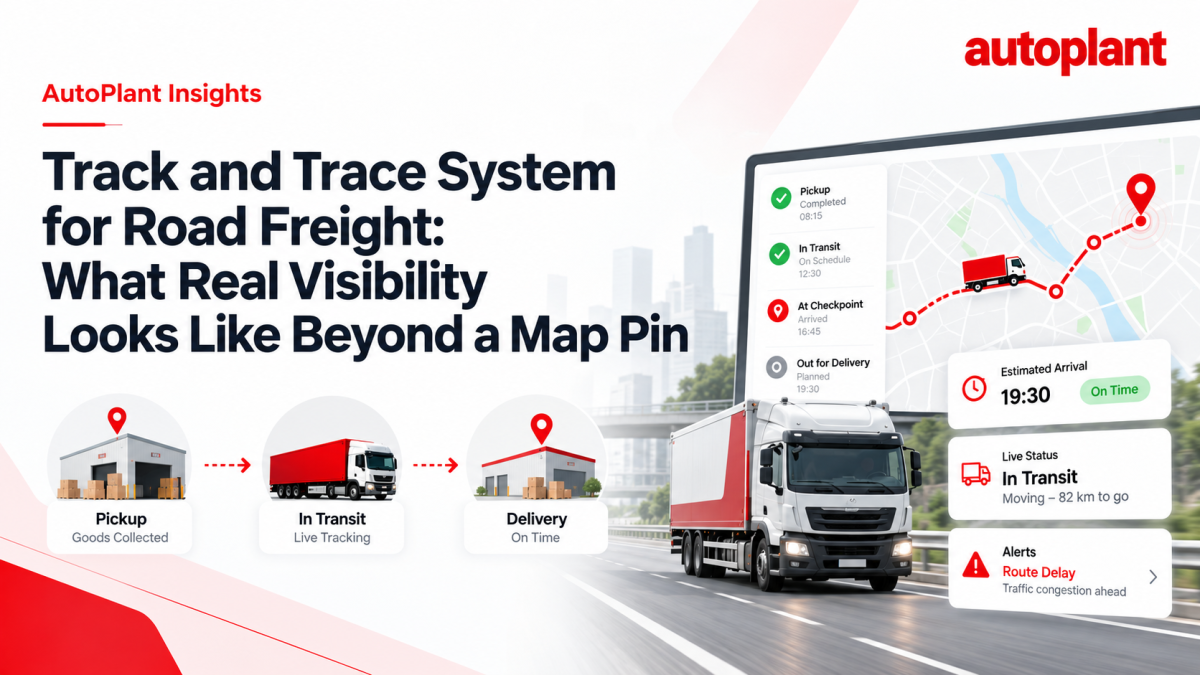
Knowing where a truck is located does not always explain whether a shipment is progressing as planned.
A Track and Trace System provides more than GPS coordinates. It helps logistics teams monitor vehicle movement, identify delays, detect route deviations, and communicate shipment status.
For fleet managers, this means responding to problems before they disrupt delivery schedules. Customer-service teams can also provide updates without repeatedly calling drivers.
Understanding these capabilities helps businesses move from basic vehicle tracking toward practical freight visibility.
What Is a Track and Trace System in Road Freight?
A Track and Trace System is a digital solution that monitors vehicle movements and provides shipment-related information throughout transportation.
It collects location and movement information through GPS devices and other connected tracking technologies.
Unlike basic tracking tools, advanced solutions help teams understand what is happening during a journey.
A Supply Chain Track and Trace Solution connects vehicle movement information with transportation activities, helping businesses monitor shipments across different routes.
This supports better coordination between dispatch teams, transporters, and customers.
Why Is GPS Location Alone Not Enough?
A map pin shows where a vehicle is located. However, it cannot fully explain the vehicle's operational status.
A truck might appear stationary because of traffic, a scheduled stop, mechanical trouble, or an unexpected delay.
Without additional information, logistics teams must contact drivers to understand the situation.
Alerts Help Teams Identify Problems Earlier
A Track and Trace System can provide alerts when vehicles behave differently from expected transportation conditions.
Common monitoring events include:
-
Route deviations from planned journeys
-
Unexpected vehicle stoppages
-
Excessive idling during transportation
-
Overspeeding and unsafe movement
-
Delays in reaching destinations
These alerts help transport managers prioritize shipments requiring attention instead of checking every vehicle manually.
Movement History Provides Useful Context
Vehicle movement history helps teams understand when a truck stopped, resumed movement, or departed from its planned route.
This information supports operational reviews and investigations into unexpected delivery delays.
Telematics for Logistics Optimization combines vehicle information and movement data to identify patterns that may affect transportation efficiency.
However, teams must interpret alerts carefully before assuming that every unusual event indicates a problem.
How Does a Track and Trace System Improve Delivery Visibility?
Effective freight tracking combines movement information with operational events that influence shipment progress.
Monitoring Route Deviations and Idling
Vehicles sometimes leave planned routes because of traffic restrictions, road closures, or driver decisions.
A Track and Trace System helps identify route deviations so transport teams can investigate the reason.
Idling information can also highlight prolonged stoppages that may affect delivery schedules.
Managers should establish clear procedures for contacting drivers, reviewing deviations, and escalating genuine concerns.
This prevents unnecessary responses to normal operational situations.
Understanding ETA for Heavy Vehicles
Estimated Time of Arrival (ETA) is important for planning unloading resources and communicating delivery expectations.
However, truck journeys differ considerably from passenger-car trips.
Heavy vehicles may face restricted routes, lower operating speeds, mandatory rest requirements, and longer waiting periods.
Accurate ETA assessment should consider these conditions alongside current vehicle location and journey progress.
Transport Tracking Software provides movement information that dispatch teams can use when reviewing expected arrival times.
Managers should distinguish between a calculated estimate and a confirmed delivery commitment.
How Can Tracking Information Improve Customer Communication?
Customer-service teams often receive repeated questions about shipment location and expected delivery time.
Without reliable tracking information, employees depend on transporter calls and manual updates.
Sharing Meaningful Shipment Milestones
A Track and Trace System helps teams monitor progress and communicate relevant developments to customers.
Useful shipment updates may include:
-
Vehicle dispatched from the plant
-
Shipment currently in transit
-
Unexpected delay under investigation
-
Vehicle approaching the destination
-
Shipment arrival confirmation
These updates are more useful than continuously sharing raw GPS coordinates.
Reducing Repeated Calls to Drivers
When logistics teams can access movement information directly, they need fewer routine driver updates.
This allows drivers to concentrate on transportation while customer-service employees handle shipment enquiries more efficiently.
Vehicle Tracking and Tracing Software can support consistent monitoring, provided operational information remains accurate and accessible.
Customer-facing updates should communicate confirmed facts rather than make promises based on incomplete tracking data.
What Should Businesses Check Before Selecting a Tracking Solution?
Choosing the right solution requires evaluating operational needs rather than focusing only on map features.
A Track and Trace System should provide useful information for transport, dispatch, and customer-service teams.
Important evaluation points include:
-
GPS device compatibility and tracking reliability
-
Route deviation and idling alerts
-
Vehicle movement history
-
Destination-related notifications
-
Integration with existing ERP systems
-
Clear dashboards for operational users
Businesses should also define who reviews alerts and how teams respond when a shipment requires attention.
Start with a limited group of vehicles and review whether tracking information improves daily decisions.
Frequently Asked Questions
Can freight tracking work in areas with poor mobile coverage?
Tracking accuracy depends on device capabilities, network availability, and data transmission conditions.
Some devices may store information temporarily, but businesses should confirm this capability before implementation.
Can multiple transporters be monitored through one tracking platform?
Yes, when the platform supports compatible devices and permits visibility across different transporter fleets.
Businesses should confirm access permissions and integration requirements before onboarding external transport partners.
How can companies protect driver location information?
Companies should restrict tracking access to authorized employees and establish clear data retention policies.
Drivers and transport partners should understand applicable monitoring procedures and privacy requirements.
Can tracking data help resolve delivery delay disputes?
Yes. Movement records can provide useful evidence about route changes, stoppages, and vehicle arrival times.
However, teams should consider traffic conditions and other supporting information before assigning responsibility.
Conclusion: Moving Beyond Basic GPS Tracking
A Track and Trace System helps businesses understand shipment progress, identify transportation exceptions, and improve communication across logistics operations.
The real value comes from using movement information to support faster decisions rather than simply displaying vehicle locations.
AutoPlant offers a Track and Trace System with real-time vehicle monitoring, route deviation detection, idling information, destination alerts, and ERP integration.
For organizations managing road freight across multiple transporters, exploring connected tracking capabilities is a practical step toward better shipment visibility and operational control.















Comments (0)