

Non-Surgical Facelift in Dubai: Signs You May Benefit
Not sure if it's time? Learn the early signs you may benefit from a non-surgical facelift in Dubai — and when treatment is likely too early or too late.

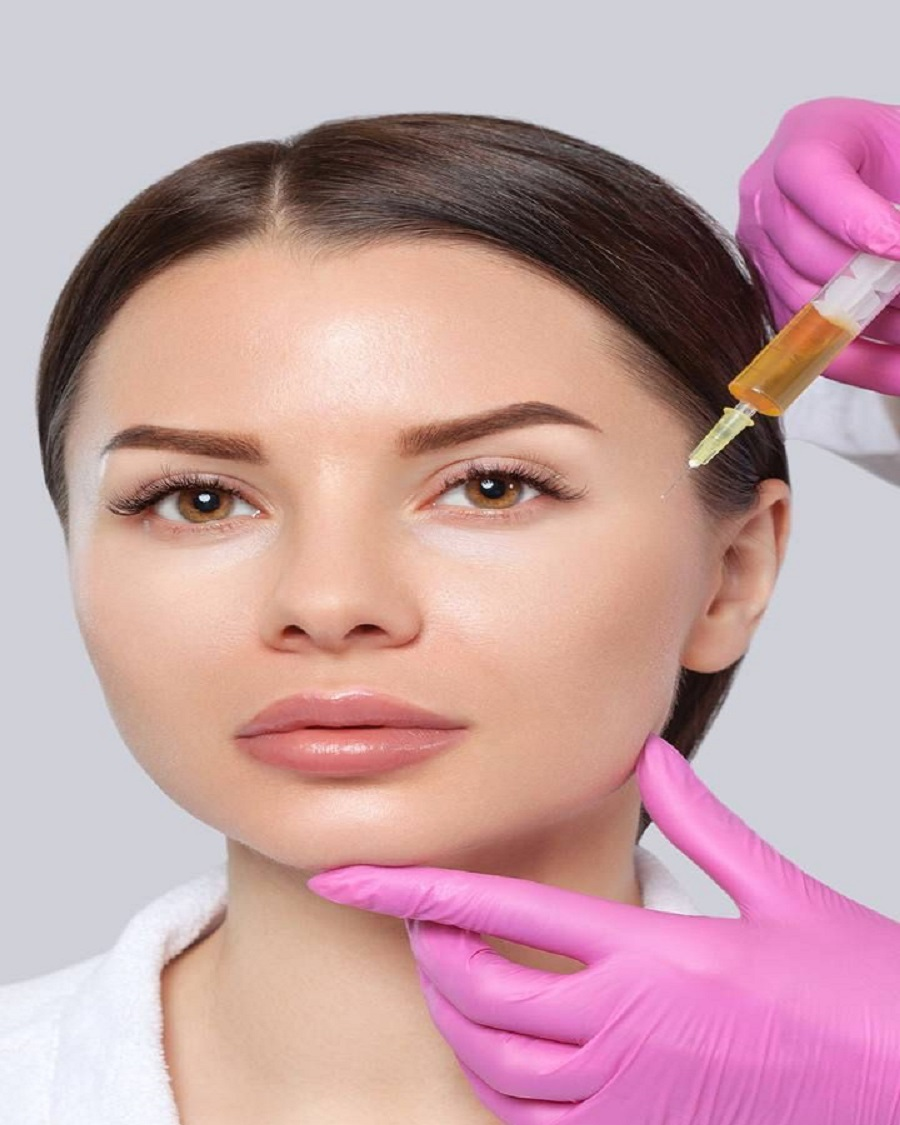
Most patients wait too long. Not because they are indecisive, but because they are unsure whether their concern is "bad enough" to justify treatment. The result is that many people first seek a non-surgical facelift in Dubai when their laxity has progressed beyond what minimally invasive options handle well — and they leave disappointed by a result that would have been impressive two or three years earlier. This article flips the usual question. Rather than asking who is eligible, it identifies the early signals that suggest you are in the window where these treatments work best, and the signs that you may have already passed it.
The Early Window Matters More Than You Think
Minimally invasive lifting works by improving tissue quality and restoring support. It performs best when there is still reasonable tissue quality to work with — skin that retains some elasticity, fat pads that have not descended far, and collagen that still responds to stimulation.
Once skin redundancy becomes pronounced, the treatment is being asked to do something it was never designed for. Timing is not about age. It is about tissue state.
The signals below are the ones clinicians notice during assessment. If several feel familiar, you are likely in a productive window rather than past it.
Non-Surgical Facelift in Dubai: Subtle Contour Changes
The earliest signs are rarely dramatic. They show up in photographs more than mirrors.
-
Your jawline looks softer in candid photos than it did two years ago
-
The line from ear to chin has lost some sharpness
-
Your face appears slightly "heavier" at the lower edge
-
A previously defined cheekbone looks flatter
-
You notice a small shadow beginning to form beside the mouth
None of these are emergencies. All of them are the kind of mild change that responds well to early intervention, and all of them are easier to improve now than later.
The Mirror Test: Signs You Can Spot Yourself
A few simple observations, done in consistent lighting, give a reasonable sense of where you stand.
The pull test. Gently lift the skin along your jawline with two fingers. If it springs back readily and the lifted position looks natural rather than dramatic, skin elasticity is likely still good. If the lift produces a striking difference, the laxity is more advanced.
The front-camera check. Compare a photo taken today with one from several years ago, same angle and lighting. Memory distorts; images do not.
The tired-versus-aged distinction. If you look tired even after adequate sleep, volume loss or early laxity may be the cause rather than fatigue.
The makeup test. If foundation settles into lines or concealer no longer brightens the under-eye area as it once did, structural changes may be underway.
These are not diagnostic. They are prompts for a proper assessment.
Non-Surgical Facelift in Dubai: Functional Clues
Some signs are less about appearance and more about how your face behaves.
-
Clothes and necklines that once framed your face now emphasise the neck
-
You avoid certain angles in photographs
-
Hairstyles are chosen partly to conceal the jawline
-
You notice yourself lifting your face in video calls
-
Filters feel necessary rather than optional
These behavioural signals are worth taking seriously. They usually indicate that a concern has crossed from unnoticeable to personally significant — which is precisely the point at which treatment can make a meaningful difference.
When You Are Probably Too Early
Not every concern warrants treatment, and a good clinician will say so.
Mild changes that only you can see in a magnifying mirror rarely justify the cost and maintenance of a treatment plan. Similarly, patients in their twenties with no structural change but considerable anxiety about aging are usually better served by skincare, sun protection, and reassurance than by injectables.
Intervening too early is not dangerous, but it is wasteful. The same budget spent a few years later, when there is an actual concern to address, generally produces more visible value.
When You May Have Waited Too Long
At the other end, some signs suggest that minimally invasive treatment will struggle to deliver what the patient hopes for.
| Sign | What It Suggests |
|---|---|
| Visible jowling with skin folding | Structural descent beyond device reach |
| Pronounced neck banding or loose neck skin | Poor response to non-surgical options |
| Deep folds that remain when lying down | Volume loss plus structural change |
| Significant skin redundancy on pull test | Surgical assessment likely more appropriate |
| Facial contour changes visible from the side | Deep plane involvement |
If you recognise yourself here, the useful next step is still a consultation — but with realistic expectations about what is achievable and an openness to being told that surgery is the better route.
What Changes After Early Intervention
Patients who treat mild concerns early often describe a different relationship with aging. Rather than chasing a lost baseline, they maintain a stable appearance with smaller, less frequent sessions.
This is the practical argument for early, modest treatment: not vanity, but efficiency. Smaller interventions at the right time cost less, carry lower risk, and produce more natural results than larger corrective plans later.
At Tajmeels Clinic in Dubai, assessment focuses on where a patient sits in this timeline, so recommendations reflect tissue state rather than a standard package applied regardless of stage.
Conclusion
The signs that you may benefit from a non-surgical facelift in Dubai are usually subtle: a softened jawline, a flatter cheekbone, a growing awareness of your neck in photographs. These early signals are exactly when minimally invasive options perform best, and recognising them prevents the common pattern of waiting until the method is being asked to do too much. If several of the signals above feel familiar, a consultation is a sensible next step — not to commit, but to establish where you actually are. If you recognise the later signs instead, that conversation is still worthwhile, provided you go in ready to hear an honest answer.
Contact us:
WhatsApp: +971 56 203 8751
Phone: +971 4 373 9000
Social Media:












Comments (0)