

How to Spot a Fake Rolex: A Complete Buyer's Guide
Modern counterfeit watches are more sophisticated. While obvious fakes remain popular, high-end replicas can look authentic at first. If you are thinking about buying a Rolex purchase, particularly in the pre-owned market, knowing the signs of a genuine model can help save hundreds of dollars as well as help avoid costly errors.
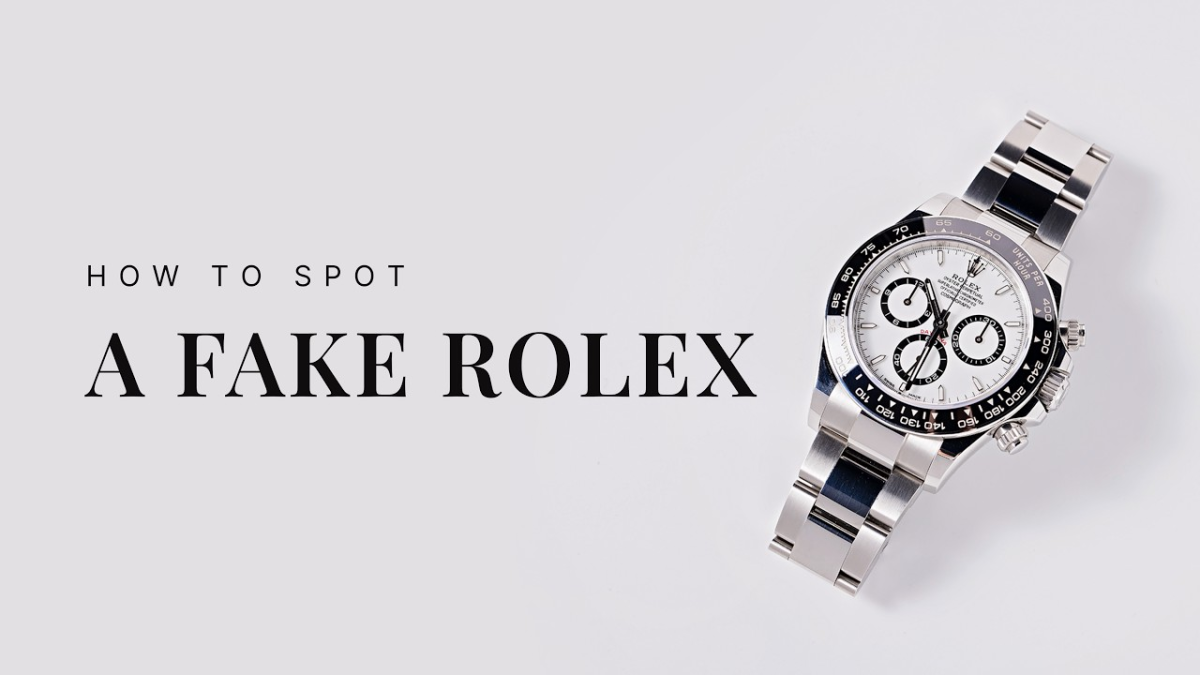
Rolex is one of the most counterfeited luxury brands in the world, and the fakes have gotten remarkably good. Today's "super clones" can fool a casual glance, copying the weight, the sweep of the second hand, and even the etched crystal that once served as a foolproof giveaway. If you're buying a Rolex Super Clone Watches from anywhere other than an authorized dealer — a private seller, an online marketplace, or a "too good to be true" listing — knowing how to spot a fake isn't optional. It's the difference between owning a $10,000 watch and owning a $200 paperweight.
This guide walks through every major authentication checkpoint real watch experts use, from the obvious red flags to the small details counterfeiters still struggle to replicate.
Why Fake Rolexes Are So Common
Rolex doesn't sell online, doesn't franchise its retail network loosely, and keeps waitlists for popular models like the Submariner and Daytona stretching for years. That scarcity creates enormous demand in the secondary market — and counterfeiters exploit exactly that gap. Because genuine Rolex watches hold their value so well, buyers are often willing to purchase from unofficial channels, which is precisely where fakes thrive.
The good news: even the best replicas cut corners somewhere. You just need to know where to look.
1. Start With the Price
This sounds obvious, but it trips up more buyers than anything else. A steel Rolex Submariner retails around $9,000-$10,000 and typically resells at or above retail due to demand. If someone is offering a "genuine" Submariner for $2,000, it isn't genuine — full stop. Counterfeiters rely on buyers who want a deal badly enough to ignore common sense. Cross-check the current market price for the exact model and reference number before you get emotionally invested in a listing.
2. Check the Weight and Build Quality
Genuine Rolex watches are made almost entirely from 904L stainless steel (or precious metals), which is denser and heavier than the cheaper steel alloys used in most fakes. A real Rolex has substantial heft — it should feel solid and cold to the touch, with no rattling parts when you shake it gently.
Fakes often feel noticeably lighter, or conversely, are weighted with cheap filler to fake the heft without matching the actual density distribution. Pay attention to the case finishing too: Rolex alternates polished and brushed surfaces with a precision that budget factories rarely replicate cleanly. Look for uneven brushing, visible tool marks, or sloppy transitions between finishes.
3. Examine the Cyclops Lens
Nearly every Rolex with a date window uses the "Cyclops lens" — a small magnifying bubble on the crystal that enlarges the date by 2.5 times. This is one of the hardest details to fake correctly.
- On a genuine Rolex, the date is dramatically magnified and perfectly centered in the window.
- On most fakes, the magnification is weak (often closer to 1.5x), off-center, or absent entirely.
This single check eliminates a huge percentage of counterfeits in seconds.
4. Study the Movement
Open the case back (or, if it's a solid steel case back like most Submariners and Datejusts, listen closely) and observe the second hand.
- A genuine automatic Rolex has a smooth, sweeping second hand — because the movement operates at a high frequency (typically 28,800 vibrations per hour), the motion looks continuous.
- A cheap fake often uses a quartz movement, producing a visible tick-tick-tick motion once per second.
Higher-end "super clone" fakes now use sweeping mechanical movements too, so this test isn't foolproof on its own — but combined with the other checks below, it narrows things down fast. If you can access the case back, genuine Rolex movements are finished to an extremely high standard: polished bridges, blued screws, and the engraved rotor. Fakes frequently use generic movements with visible casting marks or mismatched branding.
5. Inspect the Engravings
Rolex is meticulous about engraving depth and font consistency, and this is an area where counterfeiters routinely fail.
The rehaut (the inner rim between the dial and the crystal): Since the mid-2000s, genuine Rolex watches have a laser-etched Rolex crown logo and serial number repeated around the rehaut. This engraving is nearly invisible unless you tilt the watch under bright light — it should never be easy to see head-on. Fakes often make this engraving too bold, too shallow, or misspell/misalign the repeating pattern.
The case back: On models with an engraved case back (rare on Rolex, common on fakes), check font weight and spacing. Rolex's own engravings are crisp and uniform; counterfeit engravings are frequently shallow, inconsistent in depth, or slightly the wrong font.
The clasp and lug engravings: Reference and serial numbers stamped between the lugs (on older models) or inside the clasp should be clean, evenly spaced, and correctly formatted for that specific model and production year. A quick search of the reference number against Rolex's known numbering conventions can reveal formatting inconsistencies fakes typically get wrong.
6. Look Closely at the Dial
The dial is where high-quality fakes come closest to matching genuine watches, but flaws still show up under magnification.
- Text crispness: Genuine Rolex dial text — "ROLEX," "SWISS MADE," "OYSTER PERPETUAL" — is printed with laser precision. Fakes often show slightly blurred edges, uneven letter spacing, or inconsistent stroke widths.
- Lume application: Rolex uses Chromalight (glowing blue) on modern models and precisely applied luminous material on hour markers. Sloppy, uneven, or overflowing lume application is a common tell on fakes.
- Logo placement and coronet (crown) detail: The crown logo above the 12 o'clock position should have crisp, symmetrical prongs. Blurry or asymmetrical crowns are an immediate red flag.
7. Check the Bracelet and Clasp
Rolex bracelets use solid links with tight, wobble-free tolerances, and the clasp mechanism — particularly the Oysterlock or Glidelock system on newer Submariners — has a distinctive, satisfying snap. Fakes frequently use hollow links (test by gently squeezing the bracelet; hollow links flex slightly), looser tolerances that create rattling, or a clasp that feels flimsy or opens too easily.
The engraved Rolex crown on the clasp should also match the depth and font quality found elsewhere on the watch.
8. Verify Papers, Box, and Provenance
Legitimate sellers can typically provide some combination of:
- Original box and papers (warranty card, though Rolex has phased out paper cards in favor of digital records for newer purchases)
- Purchase receipt from an authorized dealer
- Service history, if the watch has been serviced
The absence of documentation doesn't automatically mean a watch is fake — plenty of genuine watches change hands without their original box — but it does mean you need to lean harder on physical inspection or third-party authentication. Be especially wary of sellers who are evasive about where the watch came from or pressure you to complete the transaction quickly, both are classic signs of a scam.
9. Use the Serial Number — Carefully
You can no longer verify a Rolex directly through Rolex's website by serial number alone (older third-party lookup tools are unreliable and can even be used by counterfeiters to fake believable numbers). Instead, use the serial and reference number to check that the formatting matches what's expected for that model and production era, and compare fonts and spacing against verified photos of the same reference number from trusted sources.
10. When in Doubt, Get It Authenticated
If you're spending thousands of dollars, don't rely solely on your own inspection. Options include:
- An authorized Rolex dealer: Many will inspect a watch, though some only service watches purchased through their own network.
- A professional watch appraiser or certified horologist: Independent appraisers can authenticate a watch for a fee, typically far cheaper than the cost of being wrong.
- Reputable pre-owned watch platforms: Established resellers that specialize in luxury watches perform in-house authentication before listing a watch for sale, which adds a layer of protection compared to buying from an unverified private seller.
Final Thoughts
No single test guarantees a Clone Watch Shop Rolex watches is genuine — counterfeiters are constantly refining their work, and the best fakes now pass several individual checks. What protects you is layering multiple checkpoints together: price sanity-checking, weight and finishing, the Cyclops lens, movement behavior, engraving quality, dial printing, bracelet construction, and documentation. When several of these details line up, you can buy with confidence. When even one feels off, treat it as a reason to walk away or insist on professional authentication before you pay.
Buying a Rolex should feel exciting, not stressful. A little diligence up front is what makes sure it stays that way.
Welcome to Clone Watch Shop, your destination in Hong Kong, China, for Rolex Super Clone Watches. We provide a varied collection featuring refined designs, impressive detailing, and popular styles. Customers can explore different watch options and choose timepieces that suit their individual preferences, fashion choices, and appreciation for luxury-inspired watches and sophisticated aesthetics.







Comments (0)