

How Do I Choose the Right Palletizer Machine for My Production Line?
Choose the right palletizer machine for your production line with our guide to robotic palletizers, gantry palletizers, high-level, low-level, and hybrid palletizing systems.

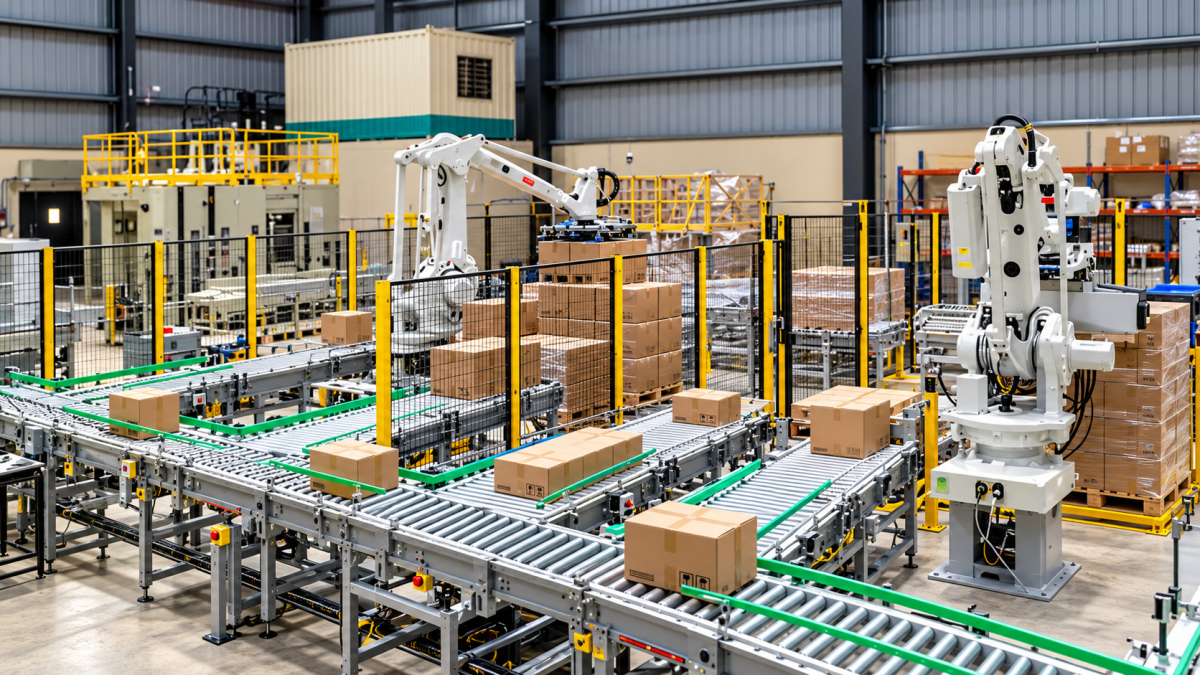
Choosing the right palletizer machine is an important decision for manufacturers looking to automate their end-of-line operations. The right palletizing system can improve production efficiency, reduce manual handling, maintain consistent pallet patterns, and integrate smoothly with existing conveyors and packaging equipment.
However, not every palletizing machine is suitable for every production line. Product dimensions, weight, production speed, pallet configuration, available floor space, number of SKUs, and future expansion plans all influence which system is appropriate.
This guide explains the key factors businesses should consider when selecting a palletizing machine and how to determine whether a robotic palletizer, gantry palletizer, high-level palletizer, low-level palletizer, or hybrid palletizing system is suitable for their application.
What Is a Palletizer Machine?
A palletizer machine is an automated system that arranges products such as cartons, cases, bags, boxes, or containers onto pallets according to a predefined pattern.
A typical palletizing process can include:
Product conveyor → Product positioning → Layer formation → Palletizing → Pallet handling → Wrapping → Dispatch
Modern palletizing systems can be integrated with conveyors, sensors, PLC controls, safety systems, barcode scanners, stretch wrappers, and other end-of-line automation equipment.
For manufacturers handling high production volumes, palletizing automation can reduce repetitive manual work while providing consistent and repeatable pallet stacking.
8 Factors to Consider When Choosing a Palletizing Machine
- Determine Your Production Speed
Production throughput is one of the first factors to evaluate.
Before selecting a palletizer machine, determine:
- Products per minute
- Cases per hour
- Bags or cartons per hour
- Number of pallets required per shift
- Number of production lines
- Expected future production volume
A system designed for a low-volume operation may not be appropriate for a high-speed manufacturing line.
For high-throughput applications, automated robotic palletizing systems or dedicated palletizing equipment can be considered based on the product and required cycle time.
AEO Answer: What production information is required to select a palletizer?
Manufacturers should provide product dimensions, product weight, production rate, pallet size, pallet pattern, number of SKUs, required pallet height, and available installation space. These parameters help determine the appropriate palletizing technology and configuration.
- Consider Product Type, Size and Weight
The product being palletized directly affects the selection of the system.
A palletizer may handle:
- Cartons
- Corrugated cases
- Bags
- Boxes
- Trays
- Containers
- Sacks
- Packaged consumer products
- Industrial products
Product characteristics to evaluate include:
Product weight:
Heavy products may require equipment designed for higher payloads.
Product dimensions:
Different product sizes may require different gripping and positioning mechanisms.
Product shape:
Irregular products may require specialized gripping or robotic handling.
Packaging material:
Cartons, bags and rigid containers can require different handling approaches.
A palletizing robot can provide flexibility when a production facility handles multiple product formats or SKUs.
- Choose Between a Robotic Palletizer and Gantry Palletizer
Two important technologies used in automated palletizing are robotic palletizers and gantry palletizers.
Robotic Palletizer
A robotic palletizer uses an industrial robot to pick and place products onto pallets.
It can be suitable for applications requiring:
- Flexible product handling
- Multiple SKUs
- Multiple pallet patterns
- Variable product configurations
- Flexible cell layouts
- Integration with vision and sensing systems
A robotic palletizing system can also be configured around changing production requirements.
Gantry Palletizer
A gantry palletizer uses linear-axis movement to position products onto pallets.
Gantry palletizing can be considered for applications requiring:
- Repeatable pallet patterns
- High-volume production
- Structured product flow
- Large working areas
- Consistent product positioning
The choice between a robotic palletizer and gantry palletizer should be based on production requirements rather than simply selecting the technology with the highest speed.
- Evaluate Your Pallet Pattern Requirements
Pallet pattern is another critical consideration.
Different products may require different stacking arrangements to achieve:
- Pallet stability
- Maximum space utilization
- Product protection
- Consistent load distribution
- Efficient transportation
If your business handles several SKUs, you may require multiple pallet patterns.
A flexible robotic palletizing system can be programmed for different stacking configurations depending on the application.
When evaluating a palletizer, ask:
- How many products are placed per layer?
- How many layers are required?
- How many pallet patterns are needed?
- Will patterns change frequently?
- Do different SKUs require different orientations?
- Check Available Factory Space
Factory layout can significantly influence the choice of a palletizing machine.
Before installation, evaluate:
- Available floor area
- Conveyor direction
- Pallet loading area
- Product infeed position
- Finished pallet discharge
- Operator access
- Safety fencing
- Maintenance access
- Ceiling height
A robotic palletizer may offer layout flexibility because the robot cell can be configured around the production line.
For some high-volume applications, a high-level palletizer may be appropriate where the production layout supports elevated product flow.
For applications where palletizing takes place closer to floor level, a low-level palletizer can be considered.
- Consider the Number of SKUs
Businesses with a single product may have different requirements from manufacturers handling dozens or hundreds of SKUs.
If you have:
- Multiple carton sizes
- Different product weights
- Different pallet sizes
- Multiple pallet patterns
- Frequent product changeovers
then flexibility becomes particularly important.
A robotic palletizing system can be configured to handle multiple product formats when the appropriate tooling, programming and material-handling equipment are selected.
- Think About Future Production Expansion
Do not select a palletizing machine only according to today's production requirements.
Consider your expected future requirements:
- Will production volume increase?
- Will additional SKUs be introduced?
- Will another production line be added?
- Will pallet sizes change?
- Will additional automation be required?
- Will the system need integration with warehouse automation?
A scalable palletizing solution can make future expansion easier and help avoid replacing the entire system when production requirements change.
- Evaluate Integration With Your Existing Automation
A palletizer should work as part of the complete production line rather than operate as an isolated machine.
A modern palletizing solution may integrate with:
- Production conveyors
- Case packers
- Carton sealing machines
- Checkweighers
- Labeling systems
- Barcode scanners
- Stretch wrappers
- Pallet dispensers
- PLC systems
- HMI panels
- Warehouse systems
This integrated approach can create a continuous end-of-line automation system from packaging through pallet dispatch.
Robotic Palletizing System vs Gantry Palletizing
Businesses often compare these two technologies when planning palletizing automation.
Robotic Palletizing : A robotic palletizing system can provide flexibility for applications involving different products, pallet patterns and production requirements.
It is particularly useful where production needs may change over time.
Gantry Palletizing : Gantry palletizing uses coordinated linear-axis movement and can be suitable for structured, high-volume applications requiring consistent and repeatable palletizing.
What Are the Benefits of Automating Palletizing?
Businesses typically consider palletizing automation to address repetitive manual operations and improve end-of-line consistency.
Potential benefits include:
1.Reduced Manual Handling : Automated palletizers can reduce repetitive lifting and stacking activities.
- Consistent Pallet Patterns : Automated systems can repeatedly execute programmed stacking patterns.
- Improved Production Flow : Palletizing can be synchronized with upstream packaging and conveyor systems.
4.Flexible Product Handling :Robotic systems can be configured for different products and pallet patterns.
5.Better End-of-Line Automation : Palletizing can be integrated with wrapping, labeling, conveying and pallet handling.
6.Scalable Automation :The right system can provide a foundation for future production-line expansion.
What Information Should You Give a Palletizer Manufacturer?
Before requesting a palletizing solution, prepare the following information:
Product Information
- Product type
- Length × width × height
- Product weight
- Packaging format
Production Information
- Products per minute
- Cases per hour
- Number of production lines
- Operating hours per day
Pallet Information
- Pallet dimensions
- Maximum pallet height
- Maximum pallet weight
- Required pallet patterns
Factory Information
- Available floor space
- Ceiling height
- Conveyor direction
- Product infeed and pallet discharge locations
Automation Information
- Existing conveyor system
- PLC/controls
- Wrapping requirements
- Barcode/labeling requirements
- Safety requirements
Providing these details allows an automation provider to evaluate the application more accurately.
Why Choose Alligator Automations for Palletizing Solutions?
Selecting the right palletizing machine requires more than choosing a robot or machine based on speed. The complete production process, product characteristics, pallet configuration and factory layout need to be considered.
Alligator Automations provides a range of palletizing solutions designed for different industrial production requirements, including:
- Robotic Palletizing
- Gantry Palletizing
- High-Level Palletizing
- Low-Level Palletizing
- Hybrid Palletizing
The solution can be evaluated according to production throughput, product characteristics, pallet pattern, available space and required automation level.
Ready to Automate Your Palletizing Process?
Choosing the right palletizer machine starts with understanding your production requirements—not simply choosing a machine based on speed or price.
If you are evaluating robotic palletizers, robotic palletizing systems, gantry palletizers, high-level palletizers, low-level palletizers or hybrid palletizing solutions, Alligator Automations can help you identify an automation approach based on your product, throughput, pallet pattern and factory layout.
Looking to automate your end-of-line palletizing process?
Talk to Alligator Automations about your palletizing requirements and explore the right solution for your production line.








Comments (0)