

Energy Monitoring vs Energy Management: What’s the Difference?
Energy monitoring focuses on measuring and tracking energy consumption, while energy management uses that data to identify inefficiencies, control usage, reduce costs.

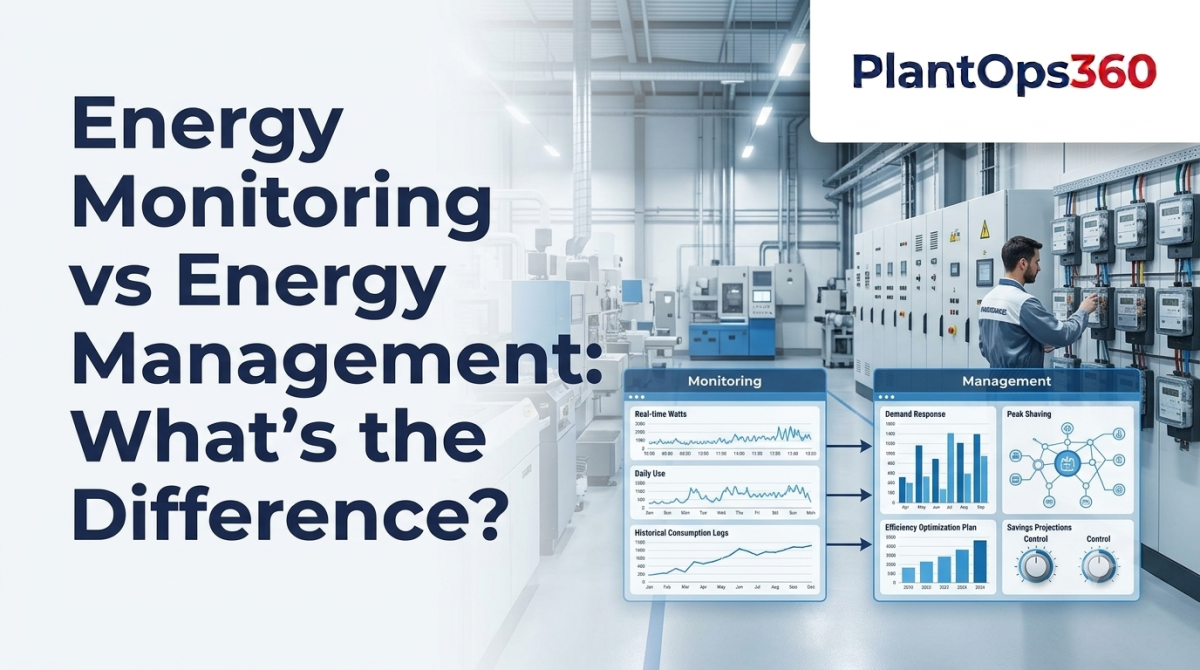
Energy monitoring and energy management are related, but they are not the same. Energy monitoring shows how much energy your plant is using and where it is being consumed. An energy management system goes further by helping teams analyze that usage, identify inefficiencies, set targets, and take action to reduce waste.
For manufacturers, understanding this difference is important because collecting energy data alone does not automatically improve energy performance. The real value comes from turning that data into better operational decisions.
What Is Energy Monitoring?
Energy monitoring is the process of measuring and tracking energy consumption across equipment, production lines, utilities, or entire facilities.
It helps teams understand when and where energy is being used.
A typical monitoring setup may track:
-
Electricity consumption
-
Equipment-level energy use
-
Peak demand
-
Daily or monthly usage
-
Utility consumption by department
-
Energy trends over time
-
Abnormal changes in usage
The main purpose is visibility.
Without accurate monitoring, plants may know their total utility bill but still have limited understanding of which machines, processes, or operating periods are driving consumption.
What Is an Energy Management System?
An energy management system takes energy data and turns it into a structured process for improving performance.
It can help teams monitor consumption, compare trends, identify unusual patterns, define energy targets, and track improvement actions.
Instead of simply asking, “How much energy did we use?”, energy management asks broader questions such as:
-
Why did consumption increase?
-
Which equipment uses the most energy?
-
Are machines consuming energy while idle?
-
Which production area is less efficient?
-
Did an energy-saving action deliver results?
-
Where should improvement efforts focus next?
This makes energy management more action-oriented than basic monitoring.
Energy Monitoring vs Energy Management: What Is the Main Difference?
The biggest difference is what happens after data is collected.
Energy Monitoring Provides Visibility
Monitoring gives teams access to consumption data.
It can show how much power a machine used during a shift, whether demand increased during a certain period, or which area consumed the most energy.
This information is valuable, but it does not automatically explain what action should be taken.
Energy Management Turns Data Into Action
Energy management uses monitoring data to improve decisions.
An energy management system can help teams identify inefficient equipment, compare performance, investigate unusual consumption, and measure whether corrective actions are working.
Monitoring tells you what is happening. Energy management helps you decide what to do about it.
Why Is Energy Visibility Important in Manufacturing?
Manufacturing plants often operate many energy-consuming systems at the same time.
These may include:
-
Production machinery
-
Motors and drives
-
Compressors
-
HVAC systems
-
Boilers
-
Pumps
-
Lighting
-
Utilities
If teams only review monthly energy bills, it can be difficult to identify where unnecessary consumption is occurring.
More detailed monitoring can reveal patterns that would otherwise remain hidden.
For example, a machine may continue consuming significant energy during non-production hours. Another production line may require more energy than a similar line producing the same output.
These patterns give teams a starting point for investigation.
How Does an Energy Management System Help Reduce Waste?
An energy management system can help plants identify areas where consumption does not match operational requirements.
Identify Unusual Energy Consumption
A sudden rise in energy use may indicate an operational issue, equipment problem, or change in production conditions.
Early visibility allows teams to investigate before the problem continues for weeks or months.
Compare Equipment and Production Areas
Energy data can be compared across similar machines, production lines, departments, or shifts.
Large differences may reveal opportunities for maintenance or process improvement.
Track Energy-Saving Actions
Suppose a plant replaces equipment, changes operating schedules, or improves compressed air management.
Energy data can help determine whether those changes actually reduced consumption.
Without measurement, it can be difficult to confirm the impact of improvement projects.
What Is the Connection Between Energy and Maintenance?
Energy efficiency and equipment condition are often connected.
A machine that is poorly maintained may consume more energy than necessary.
Examples can include:
-
Worn bearings increasing motor load
-
Blocked filters reducing system efficiency
-
Air leaks increasing compressor demand
-
Poor lubrication increasing friction
-
Misalignment increasing energy consumption
Energy trends can therefore provide useful information alongside maintenance data.
When maintenance and energy teams work together, unusual consumption may help identify equipment that needs attention.
When Should a Plant Move Beyond Basic Energy Monitoring?
Basic monitoring may be enough when the goal is simply to understand total energy use.
A broader energy management system becomes more useful when a plant wants to actively reduce consumption and measure performance.
Common signs include:
-
Energy costs continue to increase
-
Teams cannot identify where energy is being wasted
-
Different departments track data separately
-
Energy-saving projects are difficult to measure
-
Equipment-level consumption is unclear
-
Management needs regular energy KPIs
-
Multiple plants need standardized energy reporting
At this stage, energy data needs to become part of a structured improvement process.
What Should You Look for in an Energy Management System?
The right system should make energy data useful for both operational teams and management.
Useful capabilities may include:
-
Real-time or periodic energy monitoring
-
Equipment-level consumption tracking
-
Energy dashboards
-
Trend analysis
-
Peak demand visibility
-
Alerts for abnormal consumption
-
Department or area comparisons
-
Historical reporting
-
Energy KPI tracking
-
Multi-site visibility
The system should also present data clearly. Complex dashboards provide little value if plant teams cannot easily understand what needs attention.
Frequently Asked Questions
Can an energy management system monitor individual machines?
Yes. Depending on the available meters, sensors, and integrations, energy consumption can often be tracked at machine, production line, department, or facility level.
How often should manufacturers review energy data?
Daily or weekly reviews can help operational teams identify unusual changes quickly. Monthly reviews are useful for broader performance analysis and management reporting.
Can energy data help detect equipment problems?
Sometimes. Unexpected changes in consumption may indicate equipment deterioration or inefficient operation. Energy data should be reviewed together with maintenance and operating information before drawing conclusions.
Is energy management only useful for large factories?
No. Smaller plants can also benefit if energy represents a significant operating cost or if management needs better visibility into where consumption occurs.
Conclusion: Move from Measuring Energy to Managing It
Energy monitoring is the foundation of better energy performance because it shows where and when energy is being used. However, monitoring alone does not reduce waste.
Energy management adds the next step by helping teams analyze consumption, identify opportunities, take corrective action, and measure results.
If your plant wants to move beyond basic energy tracking and build a more structured approach to improving energy performance, explore PlantOps360 energy management system to bring monitoring, analysis, and energy improvement into one connected process.







Comments (0)