

What Are the Benefits of Growing an Ashoka Tree?
Explore the key Ashoka tree benefits, including its ornamental value, environmental role, flowers, foliage, and traditional uses.

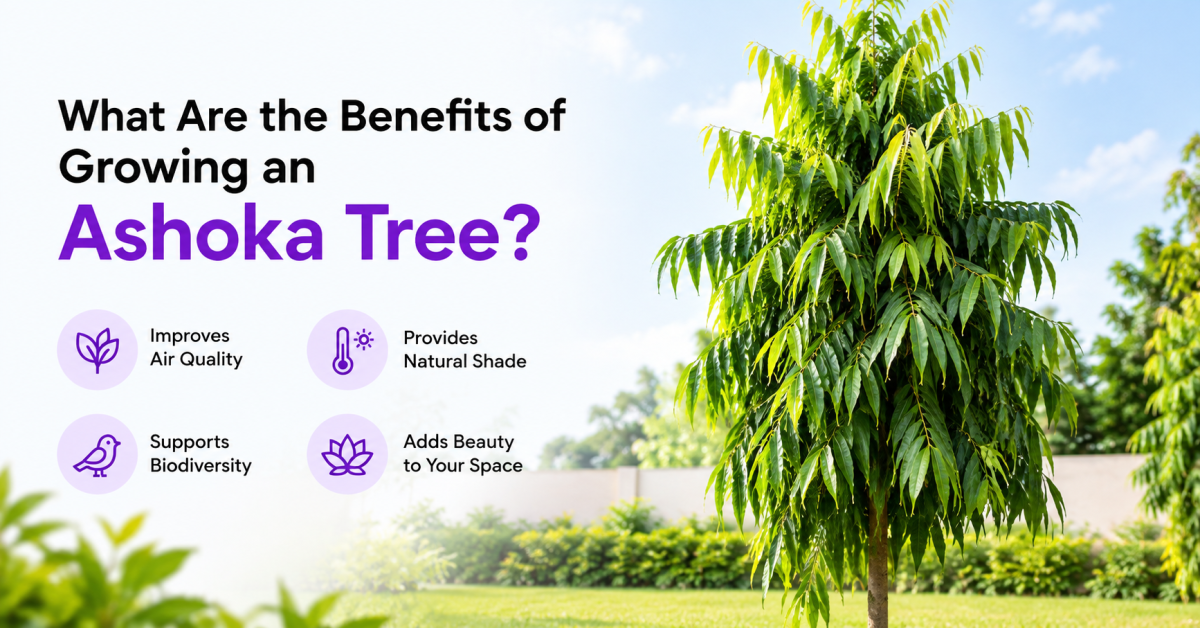
Ashoka tree is a widely recognised ornamental tree that is used for its ornamental value due to its beautiful leaves, fragrant flowers, and cultural significance. Popularly used in Indian gardens, courtyards, parks, and landscape areas. In addition to its beauty, the tree has several benefits related to the environment, tradition, and gardens.
Ashoka tree benefits are important to know for gardeners to determine the appropriateness of this evergreen tree for their garden. The ashoka tree can be a great addition to home gardens, offering various advantages such as beauty and aesthetics, and the promotion of a greener environment.
1. Adds Beauty to the Garden
The chief advantage of growing the Ashoka tree is that it is ornamental in nature. The tree has a dense and good appearance, providing a lush green appearance for much of the year.
It is also a popular plant for its clusters of flowers. The colour of the flowers can range from orange to red, yellow, or other warmer colours, depending on the species and growing conditions. They can be used to introduce colour and interest in gardens and landscaped areas during the season.
The Ashoka tree can be a focal plant or part of a larger landscape design for those seeking to add an attractive element to their home garden that also supports the environment.
2. Creates a Green and Lush Landscape
Ashoka trees are attractive due to their thick canopy and can help to make outdoor spaces look greener. They can be a good accent plant in the garden when planted in an appropriate location.
The leaves also help to soften the edges of hard landscaping like walls, pathways and buildings. The tree fits nicely in residential, institutional and other landscapes where greenery is needed.
When used in appropriate landscapes, growing trees like Ashoka can also add to the general greenery of the city.
3. Attractive Foliage Adds Year-Round Interest
Ashoka trees are easily recognised by their leaves. There may be variation in colour and texture between new and mature growth.
It has thick foliage and lends an elegant look to a garden; it can be used for ornamental purposes. This is one of the reasons why Ashoka is often used in gardens where leaf colour is a key feature of the garden design.
So, the advantages of the Ashoka tree leaves in the context of gardening are primarily related to their rich and attractive foliage and ornamental value.
4. Flowers Can Add Fragrance and Colour
The beautiful and fragrant flowers of Ashoka are well known. During the flowering period, the clusters of flowers can be an important part of the garden.
Flowering plants are attractive and provide scent in the outdoor environment, especially when located near seating areas, walkways, or patios. Flowers may also be an eye-catcher for visitors and provide seasonal interest to the landscape.
Ashoka may be an interesting choice for gardeners who wish to have both foliage and flowers from the same plant.
5. Supplies a Natural Green Background.
Ashoka trees grow so densely that they can be incorporated into a multi-layered garden. They can be used to create a natural green background behind smaller flowering plants, shrubs, or other decorative garden features.
Plants can be used to create a more natural and appealing landscape design, rather than using only walls or artificial screens.
The dimensions and characteristics of growth will vary according to species and environment, and growers should choose the right type of Ashoka for the space.
6. Supports a Greener Outdoor Environment
An Ashoka tree, like other trees, helps to create a vegetated environment around it. Photosynthesis involves CO2 consumption and O2 release, a natural process.
Trees and other vegetation can also play a role in urban green spaces, as the more vegetated the surrounding is, the more vital such spaces are.
But Ashoka shouldn't be thought of as an all-purpose tree for environmental improvement, just one of many plants in a garden.
7. Useful for Landscaping
The Ashoka tree is also known for its versatility in landscaping, as it can be adapted to a variety of uses. It can be utilized in home gardens, pathways, courtyards, parks, and other landscaped spaces depending on the variety and space available.
It can be used in a garden for decorative and functional purposes due to its foliage and flowers.
When planning a tree site, take into account the mature size of the tree, available sunlight, soil drainage, watering needs, and distance from other plants and buildings.
8. Traditional and cultural importance
Ashoka tree holds a significant place in Indian culture and traditional practices. The tree has been mentioned in Indian literature, traditions, and religious contexts, and the name "Ashoka" is usually connected to the elimination of sorrow.
The tree has cultural importance and meaning, transcending its physical beauty. Therefore, for some gardeners, planting an Ashoka tree may be a way to add a culturally and historically connected plant to their garden.
Final Thoughts
The benefits of ashoka tree extend beyond its attractive appearance. Its dense foliage, colourful and fragrant flowers, landscaping value, environmental contribution, and cultural significance make it an interesting addition to suitable gardens.
The benefits of ashoka tree leaves are frequently discussed in relation to traditional practices, but such traditional uses should be distinguished from medically established benefits. For most home gardeners, the primary value of the leaves is their contribution to the tree's lush and ornamental appearance.
With the right location, soil, sunlight, and regular care, an Ashoka tree can become a long-lasting feature of a home garden or landscape.
If you found this article informative and want to explore more related ones, consider visiting Gardyna.net













Comments (0)