

What Your Forehead Pimples May Be Telling You About Your Skincare Routine

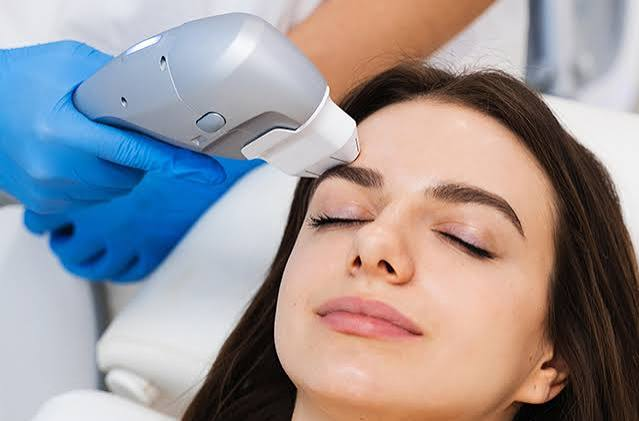
You're not imagining it, and you're definitely not alone. A global epidemiology study published in the Journal of the American Academy of Dermatology found that acne affects roughly 1 in 5 people worldwide, with close to 1 in 5 adults aged 25 to 39 still dealing with it well past their teenage years. In India alone, a 2024 analysis of Global Burden of Disease data published in the British Journal of Dermatology recorded 30.7 million acne cases, the highest of any country studied.
So if your forehead has become a recurring battleground, the honest answer is that your skin is trying to tell you something. It's just probably not what the internet has told you it means.
The Myth You've Probably Already Heard
Somewhere along the way, "face mapping" convinced half the internet that forehead pimples mean a digestion problem. It's a tidy story: spot shows up in a zone, zone points to an organ, organ points to a fix you can buy. It also has no real backing in modern dermatology.
Dermatologists are blunt about this. The theory traces back to ancient Chinese and Ayurvedic traditions, not clinical research, and there is no scientific evidence connecting forehead breakouts to digestive health specifically. Treating your skin like a mystical readout of your gut can send you chasing diet restrictions and supplements while the actual, treatable cause sits ignored right at your hairline.
What Your Forehead Is Actually Telling You
Real dermatology looks at what's physically touching your forehead, not what your last meal was. Here's the honest breakdown of what usually drives breakouts in this specific zone.
|
SL NO |
What's Happening |
Why It Shows Up on Your Forehead |
|
1 |
Hair product residue ("pomade acne") |
Pomades, gels, waxes, and heavy conditioners migrate from hair to skin and clog pores close to the hairline |
|
2 |
Sweat and friction (acne mechanical) |
Caps, helmets, headbands, and even long bangs trap heat and sweat against the skin |
|
3 |
Hormonal fluctuation |
Androgen shifts during puberty, cycles, or high-stress periods increase oil production |
|
4 |
High-glycemic diet |
A 2016 study in Postępy Dermatologii i Alergologii linked high-glycemic foods and dairy to acne-related inflammation |
|
5 |
Chronic stress |
A study in Acta Dermato-Venereologica found a significant link between stress levels and acne severity, especially in men |
|
6 |
Product overload |
Heavy, occlusive skincare or makeup applied to an already oily T-zone compounds the problem instead of fixing it |
Notice what's missing from that list: your stomach, your liver, and whatever organ the last wellness influencer blamed. The forehead sits in the oilier T-zone of the face, with a higher concentration of active sebaceous glands, which makes it more reactive to all six of these triggers than most other areas.
What This Means for Your Skincare Routine
If your forehead keeps breaking out despite a routine that "should" be working, the issue is often not the ingredients you're using but what's sitting on your skin from somewhere else entirely. Switching your hair products to non-comedogenic formulas and keeping them off the hairline, using the two-finger rule, solves more forehead breakouts than most skincare aisles ever will. Washing your face immediately after wearing a cap or helmet matters just as much as any serum in your routine.
It's also worth checking whether your routine has quietly become too heavy. Piling on thick moisturizers, sunscreen, and makeup over an already oily forehead without proper cleansing at night just adds another layer to the clog. A genuinely effective forehead pimples treatment usually starts with subtraction, not addition.
When It's Time for a Dermatologist, Not Another Product
Home fixes work for a lot of mild, occasional breakouts. But persistent, inflamed, or scarring forehead acne needs an actual diagnosis, because self-treating the wrong cause for months is how mild acne turns into a marks-and-texture problem.
A dermatologist-led forehead pimples treatment plan typically starts with identifying which of the six triggers above is actually driving your case, since a hormonal pattern and a pomade-acne pattern need completely different approaches. From there, in-clinic options can move faster than an at-home routine ever will:
|
SL NO |
Treatment |
Best For |
|
1 |
Medical-grade chemical peels |
Active breakouts, oiliness, and early textural damage |
|
2 |
photodynamic therapy |
Inflammatory acne resistant to topical treatment |
|
3 |
Laser skin treatment |
Persistent active acne, post-acne redness, and residual dark marks |
|
4 |
Extraction |
Deep, painful cystic breakouts that won't resolve on their own |
For anyone in Bangalore dealing with acne marks or redness that lingers long after the breakout has cleared, laser skin treatment in Bangalore at a proper dermatology clinic can address both the active inflammation and the marks it leaves behind, something a cleanser alone was never going to fix. Kosmoderma is one such Bangalore-founded clinic offering diagnosis-led acne and laser protocols rather than a one-size-fits-all product recommendation.
Your forehead isn't broken, and it isn't your digestion talking. It's usually just reacting, predictably, to whatever has been sitting on it. Figure out which of the six it is, and the breakouts tend to follow a much more manageable pattern.










Comments (0)