

From Steel Profiles to Precision Frames: Machines Behind Modern Metal Manufacturing
Discover how modern metal processing machines improve steel production, from Z section forming and sheet folding to hollow section manufacturing and pipe straightening.
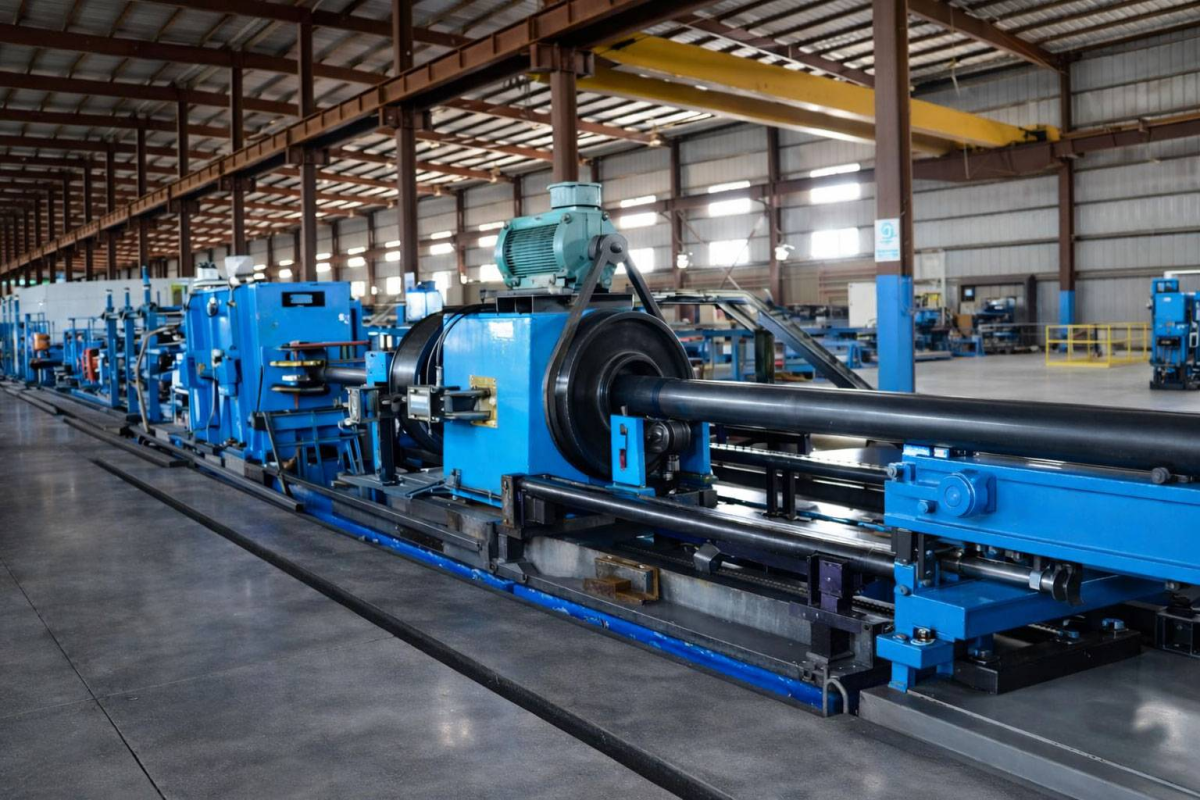
Modern construction and fabrication depend on machines that can shape, form, straighten, and process metal accurately. Nirmal Overseas Private Limited provides industrial machinery for tube, pipe, profile, and metal-processing applications. Its machine range includes purlin machines for C, U, and Z sections, tube mills, slitting lines, API pipe mills, cut-to-length lines, and other allied equipment.
For manufacturers working with steel profiles, doors, windows, pipes, and structural components, selecting the right production equipment can improve dimensional consistency, production speed, and material utilization. This makes it important to understand what different machines do and where they fit into the manufacturing process.
What Is a Z Section Machine Used For?
A Z section machine uses roll-forming principles to produce Z-shaped metal profiles from suitable strip material. These profiles are commonly associated with structural and framing applications where controlled dimensions and repeatable shapes are required.
A modern purlin machine can be configured for different open profiles, including C, U, and Z sections. Nirmal Overseas lists a purlin machine range designed for C, U, and Z sections used for door and window applications. The company describes these machines as having easy operation, compact construction, consistent performance, and comparatively low power consumption.
Businesses researching a z section window manufacturer in India should therefore also understand the machinery and forming process behind the finished profile. Consistent roll forming can help maintain the required profile shape throughout production.
How Does Sheet Metal Folding Support Fabrication?
A sheet metal folding machine is used to bend metal sheets into specific angles and shapes. It is useful in fabrication work where accurate bends are required for panels, enclosures, brackets, channels, and other components.
The selection of a folding machine depends on factors such as:
-
Sheet thickness
-
Material type
-
Required bending angle
-
Component dimensions
-
Production volume
-
Required accuracy
Folding is different from roll forming. Roll forming progressively shapes continuous metal strip through a series of rollers, while folding generally creates bends at defined positions on individual sheets or blanks.
What Is Hollow Section Manufacturing?
Hollow sections are widely used in structural and fabrication applications because their closed profiles can provide useful strength while maintaining controlled dimensions.
A hollow section for square rectangular machine manufacturer in India typically deals with equipment designed to produce square or rectangular hollow profiles from metal strips. Such production can involve forming, welding, sizing, and straightening stages.
The exact machine configuration should be selected according to the required section dimensions, material thickness, production speed, welding method, and level of automation. For manufacturers, understanding these specifications before purchasing equipment can help avoid capacity or compatibility issues.
Why Is Pipe Straightening Important?
After forming and welding, pipes and tubes may require straightening to achieve the dimensional condition needed for subsequent operations. Straightening helps control alignment and can support consistent handling, cutting, inspection, and downstream fabrication.
Companies looking for a pipe straightening machine manufacturer in India should consider machine capacity, pipe diameter range, wall thickness, production speed, adjustment mechanism, and automation level.
Nirmal Overseas manufactures tube and pipe machinery covering several stages of production. Its high-speed tube mill, for example, incorporates strip preparation, pipe forming, welding, cooling, sizing, straightening, cut-off, and take-off operations.
What Should Manufacturers Check Before Selecting Machinery?
The right machine depends on the product rather than simply the machine name. Before finalizing equipment, manufacturers should review:
-
Required profile or pipe dimensions
-
Raw material grade and thickness
-
Desired production capacity
-
Automation requirements
-
Available factory space
-
Power requirements
-
Maintenance and operating requirements
-
Installation and operator training support
This approach helps manufacturers match equipment with their actual production requirements instead of selecting machinery based only on advertised specifications.
How Nirmal Overseas Supports Metal Processing Requirements?
Nirmal Overseas Private Limited was established in 1983 and is a government-recognized Export House. The company manufactures machinery and turnkey solutions for steel tube, pipe, and related metal-processing applications. Its listed machine portfolio includes high-speed tube mills, slitting lines, API pipe mills, galvanizing plants, purlin machines, cut-to-length lines, burr-free cold saw cutting systems, and solid-state HF tube welders.
Its purlin machinery specifically covers C, U, and Z section applications for doors and windows, making it relevant for manufacturers evaluating profile-forming equipment.
Conclusion
Choosing metal-processing machinery requires attention to profile dimensions, material thickness, production speed, automation, accuracy, and long-term operating requirements. Roll forming, folding, hollow-section production, tube manufacturing, and straightening each serve different stages of industrial fabrication. Understanding these differences helps manufacturers select equipment according to their actual production needs.
Nirmal Overseas Private Limited, established in 1983, provides machinery for tube, pipe, profile, and metal-processing applications. Its portfolio includes purlin machines, tube mills, slitting lines, API pipe mills, cut-to-length lines, and other industrial systems.
Nirmal Overseas Private Limited is a Government-recognized Export House established in 1983, offering steel-processing machinery and turnkey solutions. Its range includes high-speed tube mills, API pipe mills, slitting lines, direct forming machines, galvanizing plants, purlin machines, hydro testing systems, seam normalizers, cut-to-length lines, cold saws and HF tube welders, with design, engineering, manufacturing, installation and support services.



Comments (0)