

Predictive Maintenance for Plastics Plants: What Data Should You Track with AI Powered Plastics Plant Maintenance Software?
Learn which equipment, sensor, maintenance, and operational data plastics plants should track for predictive maintenance, and how AI-powered maintenance software can help identify potential failures, optimize maintenance schedules, reduce downtime, and improve equipment reliability.

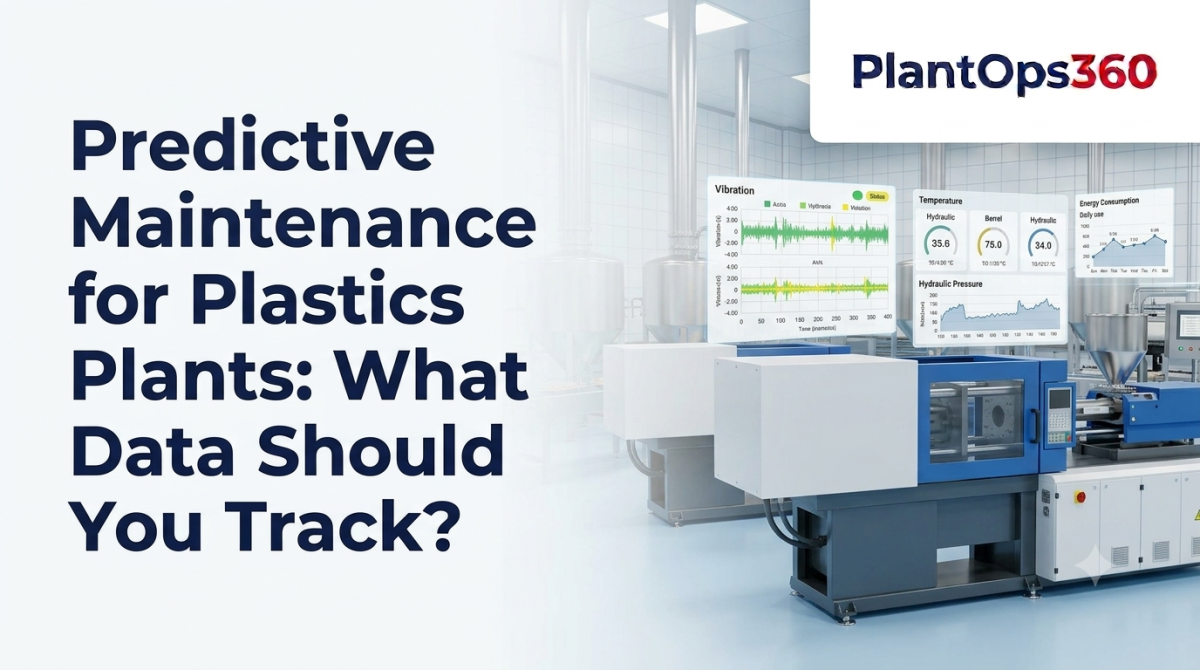
Predictive maintenance helps plastics manufacturers identify developing equipment problems before they lead to major breakdowns. Instead of servicing every machine only on a fixed schedule, teams monitor operating data and look for changes that may indicate wear, instability, or declining performance.
AI powered plastics plant maintenance software can help organize this data, identify abnormal patterns, and connect condition information with work orders and maintenance history.
The key is knowing which data points actually matter for your equipment and production process.
Why Is Predictive Maintenance Useful in Plastics Manufacturing?
Plastics plants depend on equipment that often operates continuously under demanding production conditions.
Common assets include:
-
Injection molding machines
-
Extruders
-
Hydraulic systems
-
Motors and drives
-
Chillers
-
Compressors
-
Pumps
-
Material handling systems
-
Cooling equipment
-
Auxiliary machinery
A sudden failure can stop production, increase scrap, delay orders, or affect product consistency.
Predictive maintenance gives teams more visibility into equipment condition so they can investigate problems earlier.
What Data Should Plastics Plants Track?
Not every machine needs the same monitoring strategy. The right data depends on equipment type, criticality, operating conditions, and failure history.
However, several data points can provide useful early indicators.
1. Vibration Data
Vibration is one of the most useful condition indicators for rotating equipment.
Changes in vibration can sometimes point to issues such as:
-
Bearing wear
-
Misalignment
-
Imbalance
-
Loose components
-
Mechanical deterioration
Motors, pumps, compressors, and other rotating equipment are common candidates for vibration monitoring.
With AI powered plastics plant maintenance software, teams can compare current readings with historical trends and identify unusual changes.
2. Temperature Trends
Temperature changes can provide useful information about equipment condition.
Plants may track temperature on:
-
Motors
-
Bearings
-
Hydraulic systems
-
Gearboxes
-
Heaters
-
Cooling systems
-
Electrical panels
A gradual increase in temperature may indicate friction, poor lubrication, cooling problems, overloading, or another developing issue.
One abnormal reading does not always mean failure. Trends over time are usually more useful than isolated values.
3. Hydraulic Pressure and Oil Condition
Injection molding equipment often depends heavily on hydraulic systems.
Changes in pressure may affect machine performance and indicate problems with pumps, valves, seals, or hydraulic circuits.
Teams may track:
-
Operating pressure
-
Pressure fluctuations
-
Oil temperature
-
Oil contamination
-
Filter condition
-
Leakage
Regular monitoring helps maintenance teams understand whether the hydraulic system is operating normally.
4. Motor Current and Power Consumption
Changes in motor current can sometimes indicate increased mechanical load or equipment inefficiency.
For example, a motor that normally operates within a stable range may begin drawing more current because of:
-
Mechanical resistance
-
Bearing problems
-
Misalignment
-
Process changes
-
Overloading
Tracking energy use can also help identify equipment that is gradually becoming less efficient.
AI powered plastics plant maintenance software can help compare electrical data with equipment history and operating conditions.
5. Cycle Time and Machine Performance
In plastics manufacturing, production data can also provide maintenance clues.
A gradual increase in cycle time may not immediately appear to be a maintenance problem, but it can signal that equipment performance is changing.
Track data such as:
-
Cycle time
-
Production rate
-
Machine availability
-
Repeated stoppages
-
Setup time
-
Idle time
Changes in these metrics should be investigated together with maintenance and process information.
6. Cooling System Performance
Cooling is critical in many plastics manufacturing processes.
Poor cooling can affect cycle time, equipment performance, and product quality.
Plants can monitor:
-
Chilled water temperature
-
Flow rate
-
Pump condition
-
Cooling pressure
-
Chiller performance
-
Heat exchanger condition
A decline in cooling performance may increase production time even before the equipment fails completely.
7. Breakdown and Work Order History
Sensor data is useful, but maintenance history is equally important.
Teams should track:
-
Previous breakdowns
-
Failure causes
-
Repair frequency
-
Parts replaced
-
Technician comments
-
Downtime
-
Repeat issues
Historical work orders help provide context for current condition data.
For example, rising vibration on a motor becomes more meaningful if the same motor has a history of bearing failures.
How Does AI Powered Plastics Plant Maintenance Software Help?
Collecting data is only the first step. Maintenance teams also need to organize and interpret it.
AI powered plastics plant maintenance software can help bring together condition data, equipment history, maintenance schedules, and work orders.
Depending on the system, it may help teams:
-
Track equipment condition trends
-
Identify abnormal readings
-
Generate maintenance alerts
-
Review historical failures
-
Schedule inspections
-
Create work orders
-
Monitor recurring issues
-
Prioritize critical assets
AI can support pattern recognition, but maintenance decisions should still consider engineering judgment and actual plant conditions.
Which Equipment Should You Monitor First?
Do not try to monitor every machine at the same level from day one.
Start with assets where failure would have the greatest impact.
Prioritize equipment based on:
-
Production criticality
-
Failure frequency
-
Repair cost
-
Downtime impact
-
Spare-part availability
-
Safety implications
-
Replacement lead time
Once the process is working well for critical equipment, monitoring can be expanded gradually.
How Should Predictive Data Be Reviewed?
Condition data becomes more useful when teams review it consistently.
Create simple rules for:
-
What should be monitored.
-
How often data should be reviewed.
-
What counts as abnormal.
-
Who investigates unusual trends.
-
When a work order should be created.
-
How findings should be documented.
The objective is not to collect more data. It is to collect useful data that leads to better maintenance decisions.
Frequently Asked Questions
Does predictive maintenance require sensors on every plastics machine?
No. Start with critical equipment and data points that provide meaningful insight. Some assets may need sensors, while others can be monitored through manual readings or existing machine data.
Can predictive maintenance replace preventive maintenance?
Not completely. Preventive maintenance is still useful for scheduled tasks such as lubrication, inspections, and component replacement. Predictive maintenance adds condition-based information to improve decision-making.
How much historical data is needed before predictive maintenance becomes useful?
There is no fixed amount. Useful insights can begin with basic trends, but more historical data generally improves your ability to recognize normal and abnormal equipment behaviour.
Can production data be used for maintenance decisions?
Yes. Changes in cycle time, downtime, energy use, and equipment availability can help identify performance deterioration when reviewed alongside maintenance data.
Conclusion: Track Data That Leads to Better Maintenance Decisions
Predictive maintenance works best when plastics plants focus on the data that reflects actual equipment condition.
Vibration, temperature, hydraulic pressure, motor current, cycle time, cooling performance, and maintenance history can all provide useful insight when monitored consistently.
The goal is not to collect every possible data point. It is to identify meaningful changes early and turn them into timely maintenance action.
If your plant wants better visibility into equipment condition, failure trends, work orders, and maintenance history, explore PlantOps360 AI powered plastics plant maintenance software to build a more data-driven approach to plastics plant maintenance.









Comments (0)