

Why Does My House Have Low Water Pressure?
Low water pressure can come from leaks mineral buildup valves or regulators. A plumber in Orange County can test your system and identify the cause.
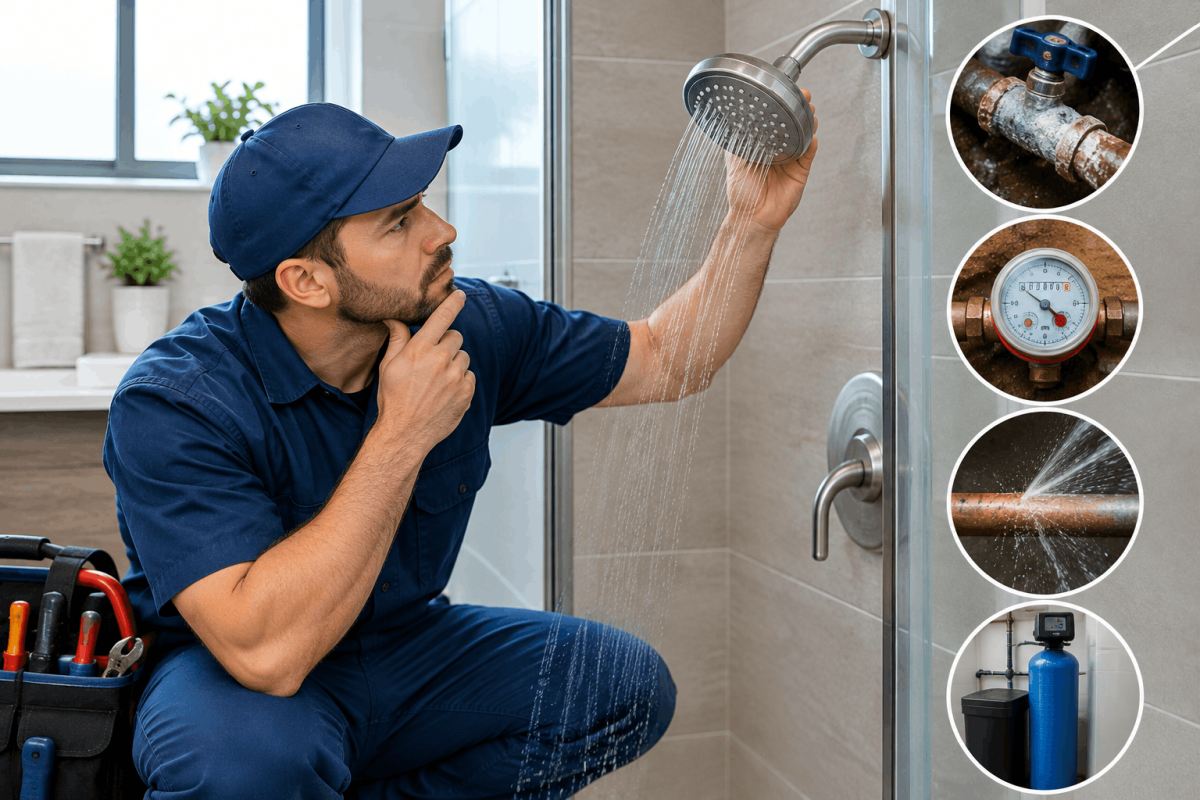
You turn on the shower expecting that satisfying blast of water, and instead you get something closer to a sad little trickle. Or maybe you're trying to fill a pot in the kitchen and it takes forever, like the faucet is working against you on purpose. Low water pressure is one of those problems that sneaks up gradually, and by the time you notice it, you're left wondering whether it's a quick fix or a sign of something bigger going on behind your walls.
The Quick Answer
Low water pressure usually comes from mineral buildup inside pipes, a partially closed shutoff valve, a hidden leak, a faulty pressure regulator, or an issue with the municipal water supply. Whole-house pressure drops point to something in your main line or regulator, while low pressure at just one fixture usually means a localized clog or fixture-specific problem.
That's the short version. Now let's get into what's actually happening and how to figure out which one applies to you. If nothing here explains your situation, it might be time to bring in a plumber in Orange County who can actually test the system in person.
Common Reasons Your Water Pressure Has Dropped
There's rarely just one single cause, so let's go through the usual suspects one at a time.
1. Mineral Buildup and Pipe Corrosion
Hard water leaves behind calcium and magnesium deposits that stick to the inside of your pipes over the years. Bit by bit, this buildup narrows the space water has to travel through, kind of like plaque narrowing an artery. Older homes with galvanized steel pipes are especially prone to this since the metal itself corrodes internally, adding to the blockage.
2. A Partially Closed Main Shutoff Valve
This one sounds almost too simple, but it happens more often than you'd think. If a shutoff valve got bumped, adjusted during a repair, or never fully reopened after maintenance, it can restrict flow across your entire home without anyone realizing it.
3. A Hidden Leak Somewhere in the System
Water always takes the path of least resistance, so if there's a leak somewhere along the line, pressure gets diverted away from your faucets and toward the escape point instead. Leaks behind walls or underground are sneaky because you might not see any visible water damage right away, just a mysterious drop in pressure and maybe a higher water bill.
4. A Failing Pressure Regulator
Most homes have a pressure regulator that controls how much force water enters your plumbing system with. When this part wears out or fails, it can either restrict flow too much or let pressure fluctuate unpredictably. If your pressure seems to randomly rise and fall throughout the day, this is often the reason.
5. Municipal Supply Issues
Sometimes it's not your plumbing at all. Water main repairs, high demand during peak hours, or issues on the city's end can temporarily drop pressure throughout your neighborhood. If your neighbors are dealing with the same thing, this is likely your answer.
Is It Affecting the Whole House or Just One Fixture?
This distinction matters more than people realize, since it points you toward completely different causes.
1. Whole-House Low Pressure
If every faucet and shower in your home feels weak, the problem usually sits somewhere central, like the main line, the shutoff valve, or the pressure regulator. This isn't something you can fix by cleaning one faucet aerator.
2. Low Pressure in a Single Fixture
If it's just your kitchen sink or one particular shower acting up, the issue is likely localized. A clogged aerator, a kinked supply line, or sediment stuck in that specific fixture's valve is usually to blame, and it's often a quick fix.
How to Check Your Water Pressure Yourself
Before assuming the worst, a couple of simple checks can help narrow things down.
1. Using a Pressure Gauge
A basic pressure gauge, which threads onto an outdoor spigot, gives you an actual number to work with. Normal household water pressure typically falls between 40 and 80 psi. Anything noticeably below that confirms you're not imagining things.
2. Testing Multiple Faucets
Run water at a few different fixtures around the house. If they're all weak, that points to a whole-house issue. If only one is affected, you've likely isolated the problem to that specific location.
When Low Water Pressure Signals a Bigger Problem
Sudden pressure drops, especially paired with unusual sounds like banging pipes, damp spots on walls or ceilings, or a spike in your water bill, often mean there's an active leak somewhere that needs attention right away. Waiting it out rarely helps, and in some cases it can lead to serious water damage if a pipe is slowly failing behind a wall. This is exactly the kind of situation where calling a trusted plumber in Orange County makes sense, since pinpointing a hidden leak usually requires specialized equipment most homeowners don't have lying around.
How Plumbers Diagnose and Fix Low Water Pressure
A professional typically starts by checking your main shutoff valve and testing pressure at multiple points throughout the home. If mineral buildup is suspected, they may inspect sections of pipe or run a camera through the line. For leaks, acoustic listening devices or pressure testing can help locate the exact spot without tearing up your entire yard. Once the cause is confirmed, the fix might be as simple as replacing a regulator or as involved as repairing a section of corroded pipe, which is why an experienced plumber in Orange County will always confirm the root cause before recommending any repair. If the issue crops up outside normal business hours, which water problems have an annoying habit of doing, a 24 hour plumber in Orange County can step in immediately rather than leaving you to deal with a worsening leak overnight.
Preventing Water Pressure Problems Down the Road
Routine maintenance genuinely helps here. Flushing your water heater annually reduces sediment buildup, installing a whole-house filtration system can slow mineral accumulation in hard water areas, and periodically checking your pressure regulator keeps small issues from snowballing into bigger ones. If you're ever unsure whether a drop in pressure is normal wear or something more serious, reaching out to a licensed plumber in Orange County for a quick inspection is far cheaper than dealing with a burst pipe later. And since plumbing problems rarely wait for convenient timing, it helps to have a 24 hour plumber in Orange County saved in your contacts before an emergency actually happens.
Final Thoughts
Low water pressure is annoying on a good day and a genuine warning sign on a bad one. Whether it traces back to mineral buildup, a stuck valve, a sneaky leak, or a failing regulator, figuring out whether the issue is whole-house or isolated to one fixture is the first real step toward solving it. And if the problem shows up suddenly or gets worse fast, don't wait around hoping it fixes itself. Keeping the contact for a reliable 24 hour plumber in Orange County on hand means you're never stuck dealing with a serious pressure drop alone, day or night, and having a dependable plumber in Orange County on call gives you peace of mind long before an emergency ever comes up.
Frequently Asked Questions
Experienced plumbers in Los Alamitos providing honest pricing, leak repairs, water heater services, and dependable plumbing solutions for homes.






Comments (0)