

How Maninder Kaur Panesar Balances Multiple Roles as an Entrepreneur
Maninder Kaur Panesar’s entrepreneurial journey reflects this reality. Her work brings together entrepreneurship, digital marketing, brand building, business growth, leadership, and mentoring.
Being an entrepreneur rarely means having just one job. A founder may be a strategist in the morning, a problem-solver in the afternoon, a mentor in the evening, and a decision-maker throughout the day. Managing these different responsibilities requires more than hard work. It requires clarity, discipline, adaptability, and the ability to understand what deserves attention at the right time.
Maninder Kaur Panesar’s entrepreneurial journey reflects this reality. Her work brings together entrepreneurship, digital marketing, brand building, business growth, leadership, and mentoring. Through her entrepreneurial ecosystem, she has worked across different areas while continuing to focus on a common idea: helping businesses and people turn opportunities into meaningful growth.
Her professional journey has developed from corporate leadership into entrepreneurship and the creation of brands such as Zenauf, Maninder Wave, and SheShine. Her official website describes this ecosystem as a combination of specialized brands working toward a larger vision of building and amplifying digital presence.
So, how does an entrepreneur balance so many different roles without losing sight of the bigger picture?
Understanding That Every Role Has a Purpose
One of the most important parts of managing multiple responsibilities is understanding why each role exists.
An entrepreneur cannot treat every task as equally important. Some responsibilities directly affect business growth, while others support long-term development. Knowing the difference helps create better priorities.
For Maninder Kaur Panesar, different professional roles connect to a broader entrepreneurial vision. Her work includes areas such as digital marketing, SEO, public relations, web development, consulting, and brand strategy.
Instead of looking at these areas as completely separate responsibilities, they can be viewed as different parts of the same business journey.
Marketing creates visibility. Strategy gives direction. Branding builds identity. Technology supports execution. Leadership brings people and ideas together.
When these pieces work together, an entrepreneur can manage several responsibilities without feeling that every role is competing for attention.
Moving from Doing Everything to Building Systems
When entrepreneurs start out, they often try to handle everything themselves. Client communication, marketing, planning, operations, content, sales, and decision-making can all end up on one person's desk.
That approach may work temporarily, but it becomes difficult as the business grows.
Maninder has spoken publicly about an early lesson from her entrepreneurial experience: doing everything day by day can quickly become overwhelming, and repeated work needs to become a system if it is going to survive busy periods.
This is an important lesson for anyone managing multiple roles.
Systems reduce unnecessary decision-making. A process for handling recurring tasks allows an entrepreneur to spend more time thinking about strategy rather than repeatedly solving the same operational problems.
The goal is not to control every small detail. The goal is to create a structure where important work can continue consistently.
Prioritizing Strategy Over Constant Activity
Being busy and being productive are not the same thing.
Entrepreneurs can easily fill their days with meetings, messages, emails, social media, calls, and administrative tasks. At the end of the day, they may feel exhausted without having worked on anything that genuinely moves the business forward.
Balancing multiple roles requires knowing when to step back from daily activity and focus on the bigger picture.
For Maninder, this broader perspective is visible in the way her professional work connects strategy, creativity, digital marketing, and business growth. Her website emphasizes turning ideas into brands and challenges into opportunities.
This strategic mindset is particularly important when an entrepreneur is responsible for multiple initiatives.
Instead of asking, “What can I do today?” a better question is often, “What needs my attention most today?”
That small change can have a significant impact on productivity.
Learning to Switch Between Different Mindsets
Every entrepreneurial role requires a different mindset.
A strategist thinks about long-term direction. A marketer thinks about customers and communication. A leader thinks about people and performance. A founder thinks about sustainability and growth.
Switching between these perspectives is part of entrepreneurial life.
Maninder’s professional background includes digital marketing, marketing strategy, business consulting, brand consulting, social media marketing, SEO, and related areas.
Working across these fields requires flexibility.
The ability to change perspective without losing the larger objective can help an entrepreneur make better decisions. A marketing problem may require creativity, while a business problem may require analysis. A team challenge may require empathy, while a growth decision may require courage.
The role changes, but the underlying purpose remains consistent.
Keeping People at the Center of Business
Technology, data, and strategy are important in modern entrepreneurship, but businesses are ultimately built around people.
Customers have different needs. Employees have different strengths. Partners bring different perspectives. Entrepreneurs themselves have different motivations.
Balancing multiple roles therefore also means learning how to communicate with different people effectively.
Maninder’s professional work has included client-facing consulting, marketing, leadership, and mentoring. Her public professional profile highlights services ranging from lead generation and digital marketing to public relations and content marketing.
These responsibilities require more than technical knowledge. They require listening, communication, patience, and an understanding of what another person is trying to achieve.
A good entrepreneur does not simply provide an answer. They first understand the problem.
Making Room for Learning
Another important part of managing multiple roles is continuous learning.
The digital business environment changes quickly. Marketing platforms evolve, customer expectations change, technology develops, and new opportunities appear constantly.
An entrepreneur who stops learning can quickly become disconnected from the market.
Maninder’s professional profile reflects experience across digital marketing, social media, analytics, advertising, and related areas, along with multiple certifications and training experiences.
For entrepreneurs, learning does not always mean sitting down with a textbook. It can happen through client conversations, market changes, mistakes, experiments, workshops, team discussions, and observing what works.
The important thing is to remain curious.
Balancing Business with Purpose
Entrepreneurship is often associated with revenue, growth, and expansion. But for many entrepreneurs, there is another dimension: purpose.
Maninder’s entrepreneurial ecosystem includes SheShine, an education foundation focused on empowering girls through education and skill-based training. Its published material emphasizes digital skills, confidence, and opportunities for young women.
This adds another dimension to the idea of balancing roles.
An entrepreneur may build a commercial business while also contributing to a social mission. These activities can require different approaches, but both can come from the same personal values.
For Maninder, entrepreneurship appears not only as a way to build businesses but also as a platform for creating opportunities and sharing knowledge.
Knowing When to Say No
One of the hardest lessons for a busy entrepreneur is that saying yes to everything is not sustainable.
Every new opportunity comes with a cost: time, attention, energy, or resources.
When an entrepreneur manages multiple roles, choosing what not to do becomes just as important as choosing what to do.
This does not mean rejecting opportunities without thought. It means evaluating whether an opportunity fits the larger direction.
Does it support the current goal? Does it create meaningful value? Is the timing right? Can it realistically be handled well?
These questions can help entrepreneurs avoid spreading themselves too thin.
Using Experience to Make Faster Decisions
Experience does not eliminate challenges, but it can make decision-making more efficient.
Someone who has worked across different businesses and professional environments develops patterns of recognition. They may notice problems earlier, understand customer expectations faster, or recognize when a strategy needs to change.
Maninder’s journey from corporate leadership into entrepreneurship has given her exposure to different sides of business. Her website describes her path as one built around leadership, entrepreneurship, creativity, strategy, and growth.
That experience becomes valuable when managing multiple responsibilities because decisions do not always need to start from zero.
Past lessons become part of the decision-making process.
The Importance of Delegation
No entrepreneur can build a sustainable business by personally handling every responsibility forever.
Delegation is therefore not simply about giving work to someone else. It is about understanding which responsibilities require the founder’s direct involvement and which can be handled by capable team members.
The entrepreneur should remain close to areas that require vision, leadership, important relationships, and strategic decisions.
Other recurring responsibilities can gradually be delegated through clear processes and accountability.
This creates room for the founder to focus on the future rather than constantly being trapped in the present.
Building Multiple Brands with One Larger Vision
Maninder Kaur Panesar’s entrepreneurial ecosystem demonstrates another way of balancing multiple roles: giving different initiatives their own identity while keeping them connected to a larger purpose.
Her website identifies Maninder Wave as a digital marketing agency, Zenauf as a digital marketing agency, and SheShine as an education foundation.
Each serves a different function.
This kind of structure allows an entrepreneur to explore different opportunities without necessarily treating every project as an isolated venture.
The larger vision becomes the connecting thread.
Staying Human While Building a Business
Perhaps the most important part of balancing multiple entrepreneurial roles is remembering that business is not only about tasks and targets.
Entrepreneurs experience uncertainty, pressure, excitement, setbacks, and growth just like everyone else.
Maninder has previously shared her own experience of registering Zenauf while still working and facing an initial period without clients before eventually securing her first project.
That experience illustrates something many entrepreneurs understand: progress is rarely perfectly predictable.
The ability to continue learning and moving forward during uncertain periods can be just as valuable as having a strong strategy.
What Aspiring Entrepreneurs Can Learn
Maninder Kaur Panesar’s approach to multiple entrepreneurial roles offers several practical lessons.
First, create systems for repeated work.
Second, prioritize important responsibilities instead of simply staying busy.
Third, keep learning as the market changes.
Fourth, delegate when possible instead of trying to control everything.
Fifth, connect different projects to a larger vision.
And finally, understand that entrepreneurship is a long-term journey rather than a collection of quick wins.
Conclusion
Balancing multiple roles as an entrepreneur is not about doing everything at once. It is about knowing what deserves attention, creating systems that make work manageable, surrounding yourself with the right people, and staying connected to a larger purpose.
Maninder Kaur Panesar’s journey reflects the many dimensions of modern entrepreneurship—from corporate leadership and digital marketing to brand building, business growth, mentoring, and social impact.
Her story shows that multiple roles do not necessarily have to create confusion. When they are connected by a clear vision, each role can become part of a larger entrepreneurial journey.
For aspiring entrepreneurs, perhaps the biggest lesson is simple: you do not need to master every role on day one. You need to understand your direction, keep learning, build systems, and give yourself the space to grow into the entrepreneur you want to become.
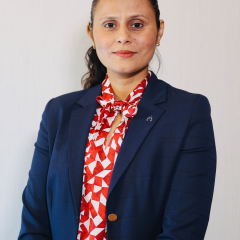
Maninder Kaur Panesar is an AI Growth Consultant, digital marketing consultant, and brand strategy expert based in Mohali (S.A.S. Nagar), Punjab, with over 15+ years of experience in corporate leadership, entrepreneurship, digital marketing, and business growth. She is the founder of Zenauf and leads a strategic ecosystem of brands, including Maninder Wave (digital marketing agency) and SheShine (education foundation), each focused on building, amplifying, and growing digital presence for businesses.









Comments (0)