

How Does a Crypto Wallet Drainer Work? A Simple Guide for Beginners
Learn how a crypto wallet drainer works, from wallet connections and permissions to smart-contract interactions, in this simple beginner-focused Web3 security guide.

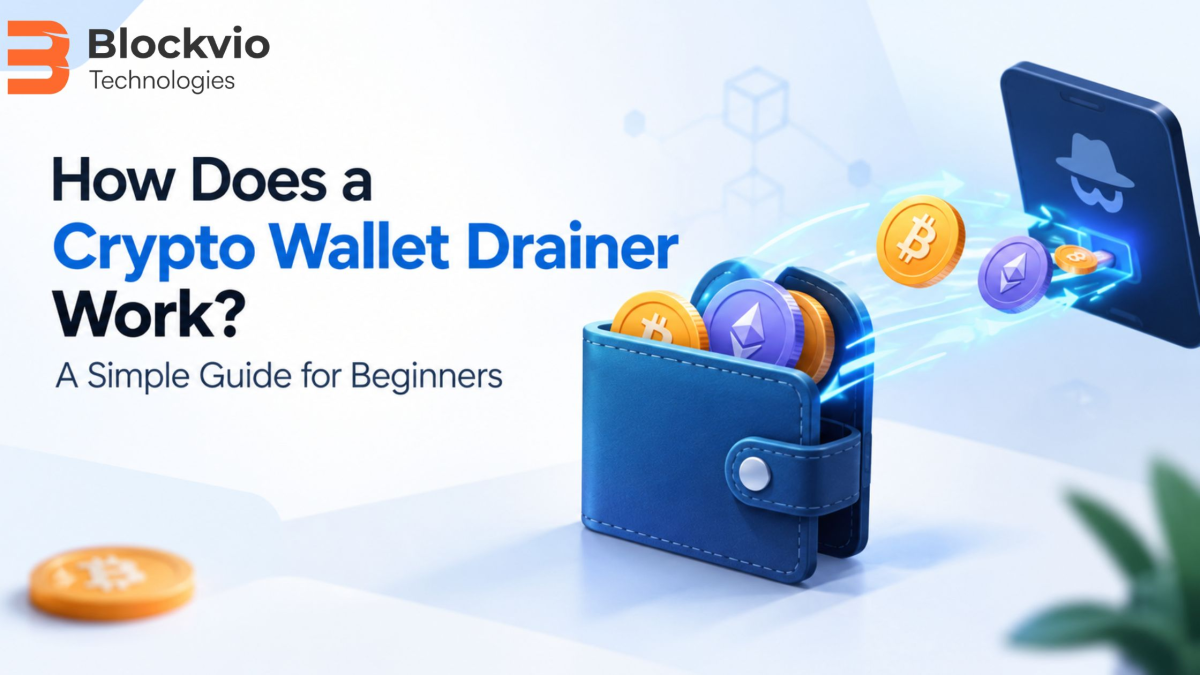
Imagine a beginner exploring Web3 for the first time. They connect a wallet to a website, see a familiar-looking button, and approve a request without thinking much about what is happening behind the screen. Later, they notice an unexpected transaction and start wondering how a simple wallet interaction could lead to it. A crypto wallet drainer is generally designed to manipulate wallet interactions so a user approves transactions, signatures, or permissions that can allow digital assets to be transferred. Understanding this process is useful for learning how wallets, smart contracts, and blockchain transactions work together.
What Is a Crypto Wallet Drainer?
A crypto wallet drainer is a malicious mechanism or application that attempts to obtain access to digital assets through deceptive blockchain interactions. Rather than simply “breaking into” a wallet, these systems commonly depend on users approving an action through their wallet. For beginners, this distinction is important. A crypto wallet normally protects private keys, meaning websites do not simply receive the private key when a wallet is connected. However, users can still approve blockchain actions that give contracts specific permissions. This makes wallet activity a combination of technology and user interaction. Understanding both sides helps explain how these systems operate.
How the Wallet Interaction Begins
The process can start when someone encounters a website, decentralized application, message, or other Web3 interface. The user may be asked to connect a wallet before accessing a particular feature. After connection, the application can communicate with the blockchain and request an action. That action might involve signing a message, approving a token contract, or confirming another smart-contract transaction. The interface may look simple, but the underlying request can contain technical information. This is why Wallet Interface Testing is an important area of security research. Testing helps examine whether users can clearly understand what an application is asking their wallet to approve.
Understanding Transactions and Permissions
To understand how a drainer works, beginners first need to understand the difference between common wallet actions. Sending tokens is one type of blockchain transaction. Approving a token contract is another. Signing a message can serve a different purpose again. Each action has its own technical meaning. Transaction Risk Awareness focuses on understanding these differences before an action is confirmed. Instead of viewing every wallet popup as the same type of request, learners can examine what the transaction is actually asking the blockchain to do. Permissions are particularly important because some token approvals can allow a smart contract to interact with assets according to the permission granted.
The Role of Smart Contracts
Smart contracts are programs deployed on a blockchain. They automatically execute predefined logic when their conditions are met. A malicious application can interact with a smart contract in a way that encourages users to approve unintended actions. Once an approval or transaction is confirmed, the blockchain executes it according to the contract's rules. This is where Smart-Contract Risk Analysis becomes useful. Researchers can study contract functions, requested permissions, transaction behavior, and relationships between addresses to understand what a contract is designed to do. The key lesson for beginners is simple: a wallet request is connected to blockchain code, and understanding that connection makes the entire process easier to follow.
Learning Through Controlled Scenarios
Security concepts become easier to understand when learners can examine them in controlled environments. A Training Wallet can be used for educational exercises involving wallet connections, transaction flows, and smart-contract interactions without making the lesson dependent on valuable assets. Scenario Management can also help create different learning situations. One scenario might demonstrate a normal token approval, while another can show how an unclear permission request differs from an ordinary transaction. This approach supports Safe Practical Training and Security Awareness Training because learners can focus on understanding the technology rather than simply memorizing warnings.
How AI and Analytics Support Understanding
Modern Web3 security research increasingly involves data analysis. AI-powered phishing detection can examine suspicious websites or communication patterns and help identify signals associated with deceptive activity. Blockchain data can provide another layer of understanding. Advanced blockchain analytics can be used to study transaction histories, wallet relationships, contract interactions, and movement patterns across blockchain networks. An Analytics Layer can bring different information together, while Research Analytics can help researchers examine broader behavioral patterns. These technologies are useful because blockchain activity generates a large amount of public data. Turning that data into understandable information can help security professionals study how different wallet interactions behave.
Building Better Wallet Awareness
Technology alone cannot explain every part of Web3 security. The way information is presented to users also matters. Better Wallet Design can make transaction details, permissions, contract information, and important actions easier to understand. Clear interfaces can support Better User Awareness by helping people recognize what they are being asked to approve. This is also connected to Advanced access controls. Access controls determine what applications, accounts, or users are permitted to do within a system. Understanding these controls gives beginners a stronger foundation for studying how blockchain applications manage permissions. For organizations, Security auditing can examine applications, contracts, permissions, and technical configurations to understand how different components behave.
Why Understanding the Process Matters
Learning how a crypto wallet drainer works is not only about understanding one type of Web3 threat. It provides a practical way to learn how wallets communicate with decentralized applications, how smart contracts process instructions, and how users interact with blockchain technology. Cybersecurity Training Providers and Web3 Development Teams can study these concepts when creating educational scenarios, reviewing interfaces, or researching blockchain security. The same concepts can also help beginners understand why transaction details and permissions deserve careful attention. Web3 will continue to change as wallets, smart contracts, artificial intelligence, and blockchain analytics develop. The more clearly these systems are understood, the easier it becomes to see what happens behind a simple wallet confirmation.






Comments (0)