

How Curtain Fabrics Can Complement Different Interior Textures
Curtain fabrics can complement interior textures by adding contrast, softness, or visual depth while coordinating with furniture, flooring, walls, and other decorative elements.

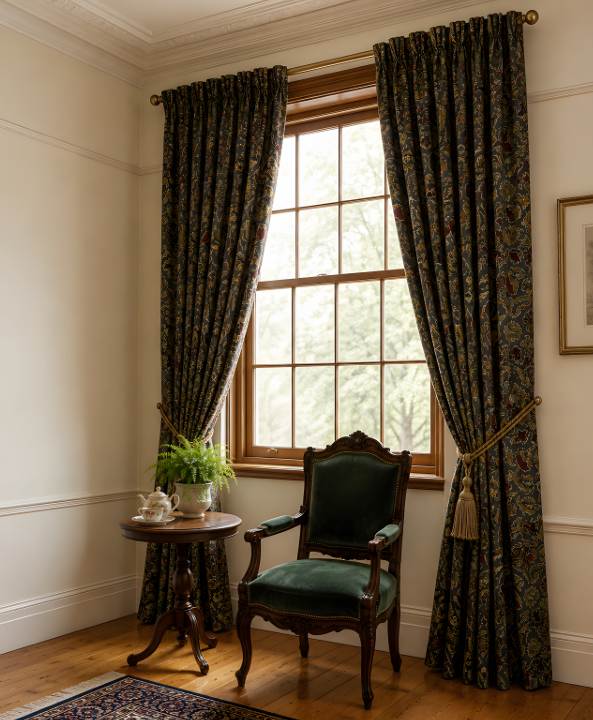
Curtain fabric complements interior textures best when it either matches the room's dominant texture family or intentionally contrasts with it to add balance. A room full of smooth, hard surfaces — glass, metal, polished stone — often benefits from a softer, textured curtain fabric, while a room already rich in texture from rugs, upholstery, and wood may need a smoother curtain to avoid visual overload.
Texture coordination often gets overlooked in favour of colour matching, but the tactile quality of a room's materials plays just as large a role in how cohesive a space feels. Curtains, given their size and fabric presence, are one of the more effective tools for managing this balance.
Window Blinds and Texture: A Different Kind of Contribution
Window blinds, typically made from wood, aluminium, or PVC, bring a smooth, structured texture that contrasts naturally with soft furnishings elsewhere in a room. This can work well in spaces where a clean, hard-edged texture is desired alongside softer furniture, but blinds don't offer the same tactile range as curtain fabric, which can span anything from smooth silk to heavily woven jute.
For rooms with a lot of textural variety already — a woven rug, a textured accent wall, upholstered furniture — window blinds can actually provide a useful moment of visual and tactile calm, since their smooth, uniform surface doesn't compete with everything else going on. Curtains, by contrast, are usually chosen to actively participate in a room's texture story rather than step back from it.
Curtains for Home: Matching Fabric Texture to Existing Materials
Curtains for home use should be considered alongside the room's existing materials — flooring, upholstery, rugs, and wall finishes — rather than chosen purely for colour. A room with a lot of smooth, glossy surfaces (lacquered furniture, glass tables, polished floors) often benefits from a curtain fabric with some texture, like a linen weave or a subtle jacquard, to introduce tactile contrast and warmth.
Conversely, a room already dense with texture — a chunky knit throw, a textured wallpaper, a heavily grained wood floor — can start to feel overwhelming with an equally textured curtain added on top. In these cases, a smoother, flatter curtain fabric often works better, letting the existing textures remain the room's focal point.
How Different Textures Interact With Curtain Fabric
- Smooth, hard surfaces (glass, metal, polished stone): Pair well with textured curtain fabrics like linen or bouclé-style weaves, adding warmth and tactile contrast.
- Heavily textured surfaces (rugs, textured wallpaper, rough wood): Generally suit smoother curtain fabrics, avoiding an overload of competing textures in one room.
- Mixed-texture rooms (a blend of smooth and textured elements): Benefit from a mid-weight curtain fabric with subtle texture, bridging the room's varied materials without leaning too far in either direction.
- Upholstered furniture with heavy texture (velvet sofas, boucle chairs): Often pair well with a smoother curtain fabric to avoid two competing heavy textures in close proximity.
Curtain Textures for Different Interior Styles
Beyond matching existing room materials, overall interior style also shapes which curtain textures work best.
Modern Interiors
What curtain texture is best for a modern home? Smooth, matte-finish fabrics generally suit modern interiors best, particularly in rooms with a lot of glass, metal, and polished surfaces, where a clean curtain texture complements rather than competes with the space's sleekness.
Luxury Interiors
Which curtain fabric is best for a luxury interior? Velvet and heavier silk-blend fabrics suit luxury interiors well, and their rich texture pairs particularly well with polished materials like marble or lacquered wood, providing a tactile contrast that elevates the overall feel.
Minimalist Interiors
Minimalist spaces generally suit lightweight, plain-weave fabrics, keeping texture subtle and letting the room's few chosen materials remain the focal point without added competition.
Traditional Interiors
Traditional interiors often pair well with medium-to-heavy textured fabrics like jacquard, which complement the layered materials — wood, rugs, upholstery — typically found in this style.
Scandinavian Interiors
Scandinavian-style rooms generally suit light linen or cotton-blend curtains, adding gentle texture that complements the natural wood and woven materials common in this aesthetic.
Contemporary Interiors
Contemporary interiors work well with mid-weight fabrics with subtle texture, bridging the smoother and more textured elements often found together in this style.
How to Choose Curtains Based on Room Conditions
- Room size: In smaller rooms, a smoother curtain fabric can help avoid visual and textural clutter; larger rooms can support more pronounced texture.
- Natural light: Textured fabrics can catch light differently than smooth ones, worth considering in rooms with strong natural light where this effect becomes more noticeable.
- Privacy: Fabric weight for privacy — sheer or blackout — can still be chosen within your preferred texture family without compromising light control.
- Furniture: Curtain texture should complement or intentionally contrast with upholstery texture, rather than being chosen independently.
- Wall colour: Textured wallpaper or a heavily textured accent wall generally calls for a smoother curtain fabric to avoid competing textures.
- Maintenance: More heavily textured fabrics can require more careful cleaning than smooth, flat weaves, worth factoring in for high-traffic rooms.
Curtains vs Blinds for Windows: Which Is Better?
Are curtains or blinds better for windows? Curtains offer a much broader range of texture options than blinds for windows, which are generally limited to smooth, structured materials like wood, aluminium, or PVC. The better choice depends on whether you want the window treatment to actively contribute texture to the room or provide a neutral, uniform surface instead.
Curtains work well when a room's texture story needs an active contributor — whether that's warmth through a linen weave or richness through velvet. Blinds for windows suit rooms that already have plenty of texture and could use a calmer, more uniform element instead. Many homes combine both, using blinds in more texture-heavy rooms and curtains where additional tactile interest is welcome.
How to Choose Curtains for Different Rooms
How do I choose curtains for my living room? Living room curtains for home use should be chosen in relation to the room's existing upholstery and flooring texture, since living rooms typically combine multiple textural elements that need to work together rather than compete.
Bedrooms often benefit from softer, smoother curtain fabrics that complement bedding texture without adding competing visual weight. Dining rooms can handle richer, more textured fabrics if the space leans traditional or formal, while kitchens and bathrooms generally suit simpler, smoother fabrics or blinds for windows given practical cleaning considerations.
How to Choose a Curtain and Upholstery Shop in Gurgaon
How do I choose a curtain shop in Gurgaon? Look for a provider offering a genuine range of curtain textures, along with physical samples you can view against your room's existing materials — flooring, upholstery, and wall finishes — rather than relying on a fabric swatch alone.
When comparing an upholstery shop in Gurgaon for both curtains and matching furniture fabric, it helps to check whether the provider can view your existing textures together in one consultation, since texture coordination depends on seeing all these elements side by side. Local considerations worth keeping in mind include Gurgaon's regular dust, which makes smoother, easier-to-clean fabrics practical for daily-use rooms, and the range of apartment and independent-home interiors across the region, which often combine different material textures that curtain fabric needs to complement.
Before finalising a provider, it's worth checking whether they offer:
- A genuine range of fabric textures, from smooth to heavily woven
- Physical samples to view against your actual furniture and flooring
- Consultation that considers your room's full material palette
- Accurate on-site measurement
- Transparent, itemised pricing
- Installation support for hardware and hanging
Key Takeaways
- Curtain fabric should either match or intentionally contrast with a room's existing texture, rather than being chosen in isolation.
- Smooth, hard-surfaced rooms generally benefit from textured curtains; texture-heavy rooms often suit smoother curtain fabrics.
- Window blinds offer a more limited, uniform texture range compared to the broader options available in curtain fabric.
- Match curtain texture to interior style — velvet for luxury settings, linen for Scandinavian, jacquard for traditional spaces.
- An upholstery shop in Gurgaon offering samples viewed against your actual room materials makes texture coordination considerably easier.
FAQs
How can curtain fabric complement a room's existing textures?
Curtain fabric should either match the room's dominant texture family or intentionally contrast with it for balance. Smooth, hard-surfaced rooms generally benefit from textured curtains, while texture-heavy rooms often suit a smoother curtain fabric instead.
What curtain texture is best for a modern home?
Smooth, matte-finish fabrics generally suit modern interiors, particularly in rooms with glass, metal, and polished surfaces, where a clean curtain texture complements the space's sleekness rather than competing with it.
Which curtain fabric is best for a luxury interior?
Velvet and heavier silk-blend fabrics suit luxury interiors well, and their rich texture pairs particularly well with polished materials like marble or lacquered wood for tactile contrast.
Are curtains or blinds better for windows?
Curtains offer a much broader texture range than blinds for windows, which are generally limited to smooth, structured materials. The better choice depends on whether the room needs an active textural contributor or a calmer, uniform element.
How do I choose curtains for my living room?
Choose curtain fabric in relation to your living room's existing upholstery and flooring texture, since this room typically combines multiple textural elements that need to work together rather than compete for attention.
How do I choose a curtain shop in Gurgaon?
Look for a provider offering a genuine range of fabric textures, physical samples viewable against your actual furniture and flooring, and consultation that considers your room's full material palette.
Should curtain texture match or contrast with upholstery?
Both approaches can work, but the choice depends on the room's existing balance. A room with heavily textured upholstery often benefits from a smoother curtain, while simpler, smoother furniture can handle a more textured curtain fabric.
Do heavily textured curtains need more maintenance?
Generally, yes. Heavily textured fabrics like bouclé or jacquard can require more careful cleaning than smooth, flat weaves, which is worth considering for high-traffic rooms or households wanting lower-maintenance options.
A Practical Next Step
If a room feels slightly off despite good furniture choices, it's worth considering whether the curtain fabric's texture is working with or against the room's other materials. Comparing curtains for home use alongside window blinds from a local provider makes it easier to find a texture that genuinely complements your existing space.









Comments (0)