

How Can the NCVT4IR Improve Electrical Inspections?

What Makes the NCVT4IR Different from a Basic Voltage Pen?
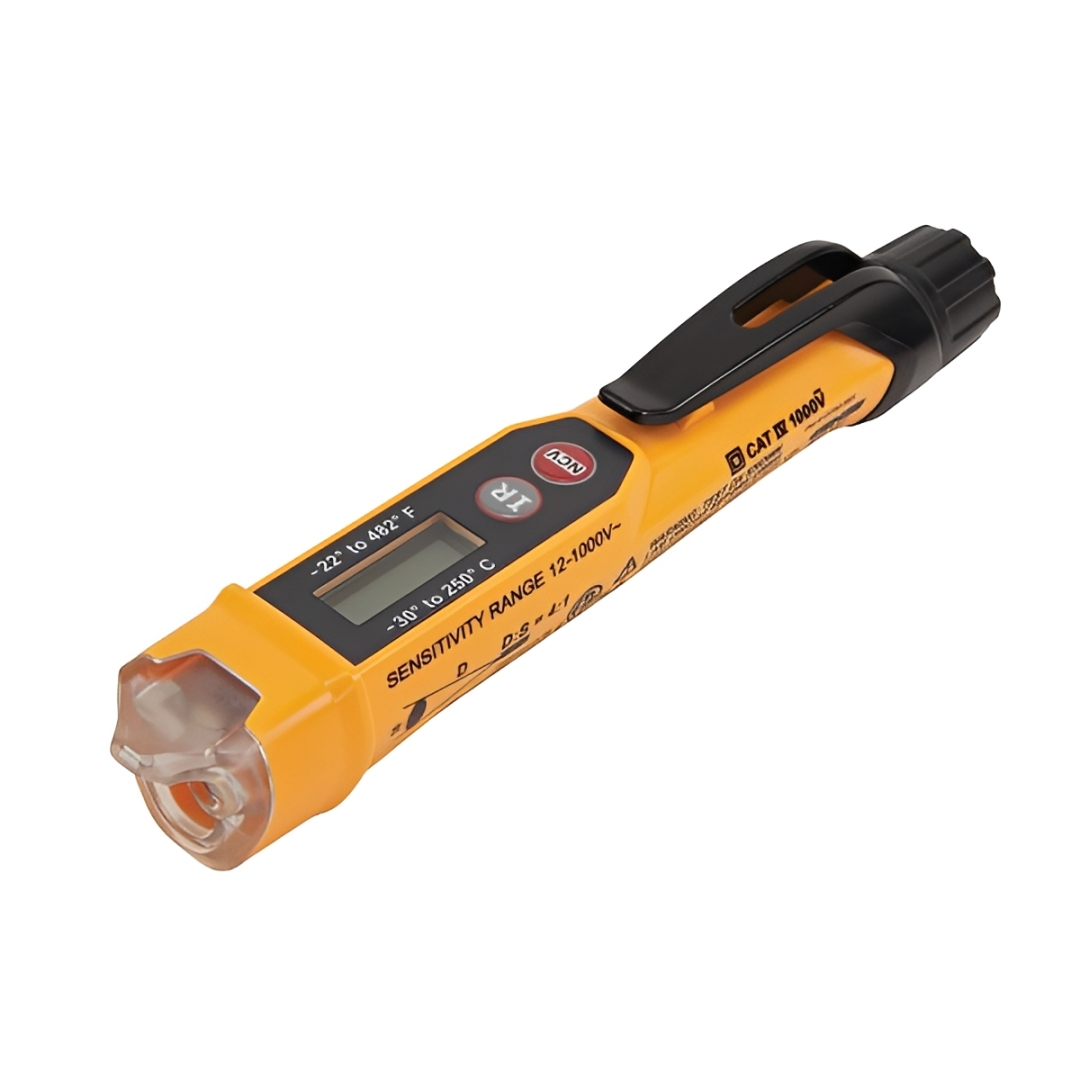
The NCVT4IR Voltage Tester from Klein Tools combines two useful screening functions in one handheld instrument. It detects AC voltage without direct contact and also checks surface temperature through infrared sensing.
This combination helps electricians, facilities teams and maintenance engineers identify two common warning signs: unexpected electrical energy and abnormal heat. The tester is suitable for initial checks on sockets, cables, switches, breakers, terminals and control equipment.
It should be treated as a first-line indicator. A silent result does not prove that a circuit is safe to touch, so approved isolation and contact-testing procedures remain essential.
How Does Its Two-Stage Inspection Workflow Operate?
A practical inspection can begin with a non-contact voltage scan. The user approaches the suspected source with the sensing tip and observes the visual and audible response. This can quickly highlight an energised conductor before an enclosure is opened.
The infrared function can then be used to compare similar components under similar load conditions. A terminal, fuse carrier or breaker that is noticeably warmer than neighbouring devices may require closer investigation.
This workflow saves time because technicians can identify areas requiring further testing before connecting more specialised instruments. It is particularly useful during planned maintenance and fault-finding visits across commercial buildings, workshops and industrial sites.
Which NCVT4IR Specifications Should Buyers Check?
The instrument’s main capabilities include:
- Non-contact AC voltage detection from 12 to 1000 V
- Frequency range from approximately 50 to 500 Hz
- Infrared temperature measurement from around -30°C to 250°C
- Class 2 laser targeting
- 4:1 distance-to-spot ratio
- Audible and visual voltage alerts
- Compact body measuring approximately 15.9 cm
- Operation from AAA batteries
These specifications provide broad coverage for many UK electrical maintenance tasks. Users should still confirm the latest product documentation, operating environment and safety category before putting the tester into service.
How Should the Voltage Detection Function Be Used?
Before approaching an unknown circuit, inspect the tester for cracked plastic, a damaged sensing tip, loose battery contacts or contamination around the laser aperture. Check the indicator on a known live source so the operator can confirm that it responds correctly.
Hold the instrument behind the marked grip area and bring the sensing end near the cable, outlet or switch. Keep fingers away from the tip, maintain stable footing and avoid using the tester near moving machinery or wet surfaces.
A positive indication means that AC voltage may be present. However, insulation thickness, shielding, distance, interference and circuit orientation can influence non-contact detection. Always use a correctly rated contact tester to prove a circuit dead.
What Can the Infrared Scanner Reveal?
Temperature scanning can help identify heat differences that are difficult to see visually. Loose terminals, overloaded conductors, restricted ventilation, ageing components and unbalanced connections may all create localised temperature increases.
The 4:1 optical ratio allows the user to target a defined area from a practical working distance. The laser helps show where the measurement is being taken, although the beam itself is only a positioning aid and not a temperature measurement.
Surface finish affects infrared accuracy. Bright, reflective metal can give misleading readings, so compare similar surfaces whenever possible. For detailed thermal surveys, dedicated Thermal Imaging Cameras may provide a broader view of electrical cabinets and equipment.
How Should Heat Patterns Be Interpreted?
An elevated temperature is a prompt for investigation, not automatic proof of a fault. A heavily loaded component may run warmer than an unloaded one, while dust, airflow and enclosure design can also affect the reading.
For useful comparisons, measure similar terminals at the same distance while the equipment is operating under comparable conditions. Record the readings and look for changes over time rather than relying on one isolated value.
If current imbalance is suspected, Current Clamps & Probes can help measure current without disconnecting the conductor. The correct instrument category and safety rating must match the installation.
When Is an Oscilloscope or Other Instrument Needed?
The NCVT4IR indicates AC voltage and surface temperature, but it does not display waveform shape, frequency distortion, resistance, continuity or precise circuit current. Further diagnosis may therefore require a multimeter, clamp meter or oscilloscope.
An oscilloscope is useful when technicians need to observe ripple, switching behaviour, transients or unstable signals. Suitable Oscilloscopes & Accessories can support deeper analysis in power electronics, automation and control systems.
For building-service work, an RCD may also need functional verification. RCD Testers are intended for checking trip behaviour and serve a different purpose from a non-contact voltage indicator.
How Can Follow-Up Connections Be Made Safely?
When a screening result requires contact measurement, select leads, probes and connectors that match the test instrument and circuit category. Inspect insulation before use and ensure plugs are fully seated.
Test Connectors can provide secure interfaces between a device under test and compatible measuring equipment. For multimeter work, Multimeter Test Leads should be chosen for the required voltage, current and measurement environment.
Never connect accessories to an energised circuit unless the procedure, equipment rating and operator training allow it.
Where Is the NCVT4IR Most Useful?
The tester suits electricians, HVAC technicians, plant engineers, facilities managers and service contractors. Typical applications include:
- Distribution boards and consumer units
- Lighting circuits and control switches
- Motor starters and HVAC connections
- Extension leads and socket outlets
- Industrial control panels
- Power supplies and battery chargers
- Commercial plant rooms
- Preventive maintenance inspections
Its compact format makes it convenient for service bags and routine site visits. The integrated laser and temperature function also reduce the number of separate screening tools needed for an initial assessment.
What Should Be Checked Before and After Use?
Before every inspection, test the voltage indicator on a known source and confirm that the battery level is adequate. After use, wipe the body and sensing area with an approved dry or lightly damp cloth. Do not immerse the tester or apply solvents that could damage the housing.
Keep the laser pointed away from people, vehicles, aircraft and reflective surfaces. Store the instrument away from excessive heat, moisture, impact and loose conductive objects. Remove the AAA batteries if the tester will remain unused for a long period.
Is the NCVT4IR a Suitable Professional Screening Tool?
The NCVT4IR Voltage Tester is a versatile first-stage instrument for professionals who need rapid AC voltage indication and convenient infrared temperature checks. Its 12–1000 V detection range, -30°C to 250°C temperature capability and compact design suit a wide range of UK maintenance environments.
Used with safe-isolation procedures, proving checks and suitable follow-up equipment, it can help technicians locate possible energised circuits, identify unusual heat patterns and decide where more detailed testing is required.





Comments (0)