

How Can Personal Care Products Improve Daily Self-Care?

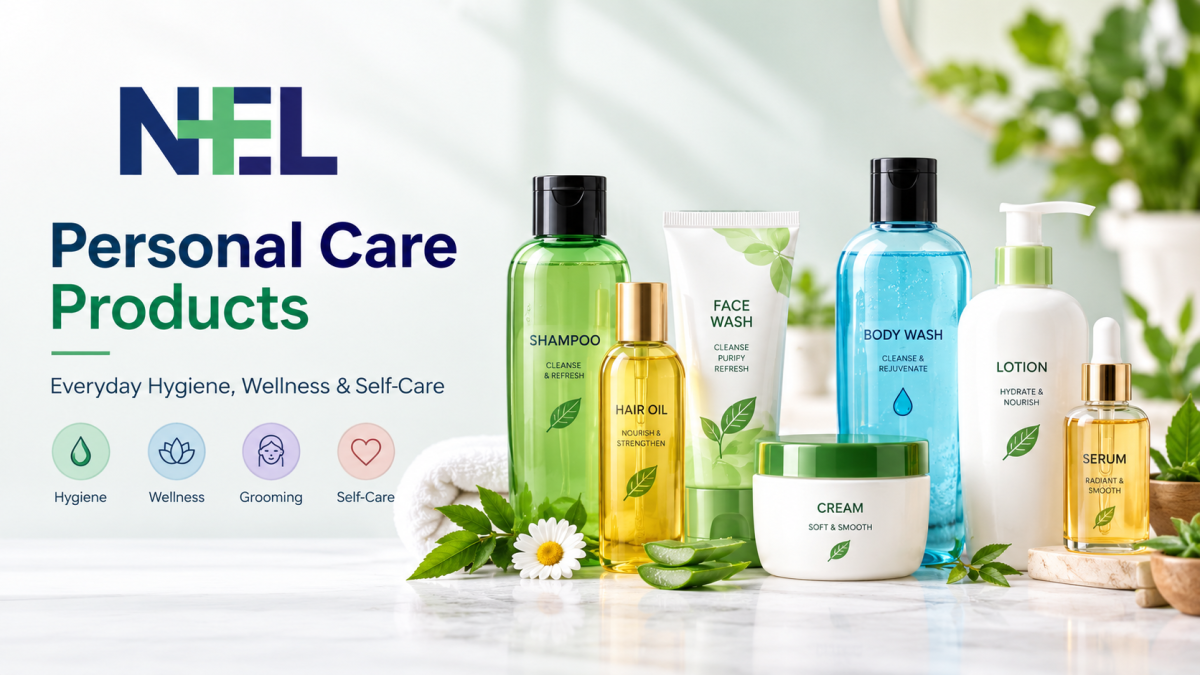
A buyer once sent us a formulation spec with the pH range left blank. Nobody had caught it not the supplier, not the lab, not the procurement team that approved the PO. That gap surfaced three weeks later as a stability complaint from a retail chain in Kerala. It's the kind of thing that happens when personal care products get treated as a commodity line item instead of a formulation decision. Sourcing personal care products at scale isn't about finding the lowest per-unit cost. It's about finding a manufacturer whose quality control catches what your own team might miss. That's the gap most distributors don't think about until a batch fails at the shelf.
Specification
Personal care products cover a wider range than most procurement teams initially scope for and the differences matter more than people assume.
Core Product Categories
-
Baby care: wipes, lotions, diaper creams, oils
-
Women's hygiene: sanitary products, intimate wash formulations
-
Adult and elder care: incontinence products, barrier creams
-
General personal care: hand sanitizers, body lotions, liquid soaps, shampoos
-
Pet care extensions: shampoos and wipes formulated for animal skin pH, which is not the same as human skin pH
The Spec Detail Most Buyers Skip
Preservative system compatibility. A buyer will approve fragrance, viscosity, and packaging, then leave the preservative system to "whatever the manufacturer normally uses." That's a mistake in markets with high humidity and long transit times — a preservative blend that holds fine in a 4-week domestic supply chain can fail in an 11-week export cycle to a humid port. WHO-certified manufacturing means the base process is controlled. It doesn't mean every formulation is automatically export-stable for your specific route.
Objective
Five criteria to evaluate any Personal Care Products Manufacturer — including what a weak answer sounds like.
1. Certification transparency. Ask for the actual WHO-GMP certificate, not a claim of it. A bad answer: "We follow WHO guidelines." That's not a certification. That's a sentence.
2. Batch traceability. Can they trace a finished unit back to raw material lot numbers? A bad answer: "We keep records, don't worry." Records you can't produce on request aren't records — they're a promise.
3. MOQ flexibility for new SKUs. A bad answer is a flat MOQ regardless of product category, which usually means the manufacturer hasn't actually costed the line — they've just picked a round number.
4. Defect and return policy in writing. A supplier who says "we'll handle defects case by case" doesn't have a policy. That's a negotiation you'll lose after the shipment lands.
5. Private label and OEM documentation support. Can they hand over a compliant ingredient declaration for your label, formatted for your target market's regulations? A bad answer is a generic ingredient list that doesn't match your country's labeling law.
Benefits
Reduced compliance risk. Working with a WHO-certified personal care products manufacturer means the documentation trail exists before a regulator asks for it, not after.
Fewer stability failures in transit. Formulations tested for extended shelf conditions protect your margin from returns and write-offs — not just your brand reputation.
Predictable reorder cycles. A manufacturer with consistent batch timing lets you plan inventory instead of holding safety stock you didn't budget for.
OEM flexibility without re-negotiating specs each time. Once a formulation is approved, repeat orders shouldn't require re-testing every batch from scratch.
Category range under one roof. Sourcing baby care, hygiene, and adult care from a single personal care products manufacturer in India cuts the number of vendor audits your compliance team has to run.
Here's the part buyers underweight: fewer vendors doesn't just mean less admin. It means one point of accountability when something goes wrong, instead of three suppliers each pointing at the other two.
Availability
We manufacture and ship from our facility in India, positioned to serve both domestic distributors and export markets without the lead times that come from split-location production.
Location isn't just an address here — it's a supply chain decision. A manufacturer based near a major port cuts weeks off export timelines compared to inland-only facilities that route everything through a third-party freight forwarder first. For institutional buyers and government procurement running on fixed fiscal-year timelines, that difference decides whether a tender gets fulfilled on schedule or slips into penalty territory. We work with personal care products suppliers in India across multiple states, and export documentation is handled in-house rather than outsourced to a customs agent who's never seen the product.
About Us
We initially launched as a niche unit for hygiene products and gradually developed into a full-range personal care manufacturer, largely because our initial institutional customers kept requesting product categories that we didn‘t manufacture at that time (and by that I mean we literally developed the portfolio due to client demand, not based on any long-term plan crafted in a corporate office).
We discontinued one fragrance compound supplier in 2022. We were getting inconsistent scent throw on humidity testing from two batches in a row. We replaced the supplier and restructured the formulation from the ground up. This is real batch-level accountability, not something you put on a website, but a decision that cost us three weeks of production scheduling.
Our WHO certification isn‘t a logo we paid for. It‘s a requirement we‘re retrained to meet every audit cycle.
If you're evaluating us as a personal care products manufacturer, send your target SKU list, expected monthly volume, and destination market (domestic or export) to our procurement team. We respond to serious sourcing inquiries within 2 business days. MOQ starts at 5,000 units per SKU for standard formulations; custom OEM formulations carry a higher MOQ discussed case by case. Don't send a vague "send catalog" request — send your actual spec sheet or category list, and we'll come back with real pricing, not a placeholder quote.
Conclusion
Personal Care Products succeed or fail on details most buyers never see — preservative stability, batch traceability, a defect policy that's actually written down. Choosing the right personal care products manufacturer means choosing a partner who catches the gaps before they become shelf complaints. The category is only going to get more scrutinized as regulations tighten across export markets. Manufacturers who treat documentation as an afterthought now will be the ones scrambling later.
FAQs
1. What makes a Personal Care Products Manufacturer WHO-certified?
WHO-GMP certification indicates that the manufacturing site adheres to certain standards for cleanliness, record keeping, quality control under WHO good manufacturing practice. It was an auditable standard and not a self-declarable standard.
2. Can NEL Lifecare handle private label orders for Personal Care Products?
Yes, a minimum order quantity (which varies depending on category). For baby care and hygiene lines, the minimums are generally lower than for fully custom formulas we will be able to specify exact MOQ once we receive your spec.
3. How long does a typical export shipment take from India?
It depends on the destination and the product category. Honestly, customs clearance on the receiving end is often the larger element than our manufacturing time. We will provide you a reasonable estimate once we know the country of destination.
4. Do you supply Personal Care Products Suppliers in India who resell under their own brand?
Yes – our distributor network where we distribute the end product labels is a large proportion of them re-selling on private label basis. We provide compliant ingredient documentation formatted to satisfy Indian retail labelling needs.
5. What‘s the minimum order quantity for a new SKU?
Standard formulations start at 5,000 units. Custom formulations are higher due to the R&D.






Comments (0)