

Exhibition Stand Planning in Germany: A Complete Guide for Businesses
Here are some practical tips for exhibiting in Germany, covering aspects such as stand design, event planning, budgeting, visitor engagement, logistics, and the various challenges that may arise at exhibitions.

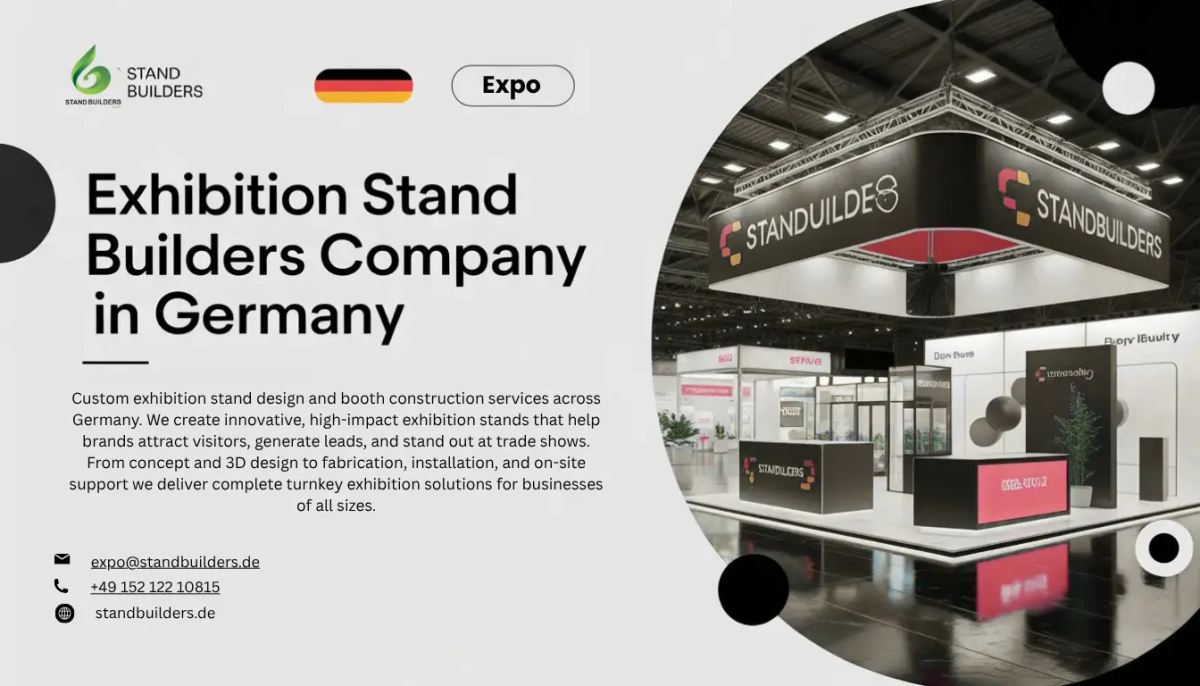
Germany has a well-developed trade fair tradition which gathers together international brands, specialist suppliers, professional buyers, researchers, and industry experts. Trade fairs in the country cover a wide variety of commercial fields, including engineering and automotive technology, healthcare, logistics, renewable energy, and digital solutions.
For any business that is planning to take part, the exhibition stand is one of the most noticeable aspects of the event; it gives information about the brand, shows the products, provides areas for discussion, and has an effect on the way visitors experience the company. Nevertheless, a successful stand cannot be achieved merely on the basis of its appearance, since research, budgeting, knowledge of the venue, logistics, and planning with the visitor in mind all play a part in the final outcome.
Stand Builders in Germany can provide practical assistance if a business needs help with the design, the construction, the installation or the event logistics. However, before reaching that stage, companies must work out what the exhibition actually demands and how the stand should help to achieve their objectives.
Understanding the German Exhibition Market
Frankfurt, Düsseldorf, Munich, Berlin, Cologne, and Hannover are known as destinations for exhibitions. The exhibition venues in these cities hold both large international events and highly specialised industry fairs.
A large number of visitors go there with definite professional aims; a few are investigating suppliers, others are comparing different technologies, and some are seeking partnerships or new market opportunities.
That is why communication is so important; since a stand enables visitors to get a quick understanding of the company's main offering without them having to study a large amount of information.
For businesses that are not familiar with the market, looking at earlier editions of the event can give them useful insights into what the audience expects, the approaches taken by competing exhibitors, the types of booth arrangements used, and the usual presentation styles.
Start With Exhibition Objectives
The business ought to first determine what the stand is required to achieve before deciding on the colours, the furniture, the graphics, or the architectural features.
When a company is launching a new product it might place a strong emphasis on demonstration and presentation areas. If a manufacturer is looking for distributors it will need meeting spaces. A technology company might need interactive screens and areas for explaining its products.
The physical layout is influenced by these objectives.
A well-organized stand should start with a strategy since the structure must support the company's exhibition objectives rather than take on the character of a standalone design exercise.
Designing an Effective Exhibition Stand
Make the Brand Easy to Recognize
People frequently reach decisions rapidly as they go around a crowded exhibition hall, and good brand identification enables them to work out which company is exhibiting and whether or not the company is relevant to their own interests.
A clear identity can be achieved through the use of large yet thoughtfully placed logos, short messages, identifiable images, and consistent visual features rather than by covering all surfaces with text.
Create Natural Visitor Flow
People should be able to go into, around the site, and then leave it without having to face any unnecessary difficulties.
The furniture, the display counters, the product demonstrations, the seating arrangements and the areas designated for meetings should all function as a unified whole. This is particularly crucial in the case of smaller exhibition spaces since poorly placed elements can cause a rapid buildup of congestion.
Balance Open and Private Areas
It is possible to have conversations comfortably in the open seating areas, but more detailed commercial or technical discussions might need more privacy.
A flexible layout allows both options to be provided without the stand appearing closed or difficult to approach.
In Germany, the principles in question are becoming more relevant to the design of exhibition stands, since a combination of functionality and clear communication can be achieved together with a distinctive visual presentation.
Different Types of Exhibition Stands
Custom-Built Stands
Custom stands enable businesses to set up a particular architectural environment for their brand and products; they can include specialized displays of the products, meeting rooms, areas for presentations, lighting systems, and technology.
This method might involve more planning and coordination, especially if the design has complex construction.
Modular Exhibition Stands
Modular systems are useful for companies which take part in a number of events since the components can usually be adjusted to suit different floor sizes and arrangements.
A modular method not only enables a consistent brand appearance at exhibitions but also allows for some flexibility between different venues.
Minimalist Booth Concepts
Minimalism works when the aim is to achieve clear communication; rather than using a large number of displays, the design can focus on a small number of key products or messages.
A simple stand can make it easier to navigate and enable visitors to concentrate on the most important information.
Budgeting for an Exhibition in Germany
The cost of taking part in an exhibition consists of much more than just the construction of the stand.
A full budget can include expenses for the stand, graphics, flooring, furniture, lighting, technology, transportation, installation, dismantling, storage, venue services, staffing, travel, accommodation, and promotional materials.
The amount one has to pay for an Exhibition Stand Contractor in Germany will depend on the size of the stand, the materials used, the degree of customization, the technical complexity and the services offered.
It is therefore necessary for businesses to set their priorities prior to giving the final approval of a design. A very elaborate structure might not offer any practical value if there is not enough of the budget left over for product demonstrations, for staff, for visitor materials, or for other essential items.
Managing Exhibition Logistics
Logistics can have a great deal to do with the successful operation of an exhibition.
The stand components and equipment have to reach the venue in accordance with the schedule set for the venue. Installation has to be finished within the time slots allocated, and dismantling must then adhere to the venue's procedures after the event.
Foreign exhibitors might have to deal with extra difficulties when transporting their materials across borders or when arranging for several suppliers from a distance.
Because of this, certain companies choose to work with Expo Stand builders in Germany who know about the local exhibition logistics and the venue procedures.
Common Mistakes to Avoid
A frequent error is to begin the stand project too late, since delayed decisions can have an impact on design development, technical approvals, production, transportation and installation.
A further issue is having too much messaging. If a display includes too many products, slogans, statistics, and graphics, it becomes difficult for visitors to grasp the main message.
Storage is just as easy to neglect. It is necessary to provide space for equipment, packaging, brochures, staff possessions, and supplies without obstructing the areas that are accessible to visitors.
Businesses should also refrain from considering all exhibitions to be the same. Separate presentation strategies are needed because different industries and audiences exist.
When Professional Exhibition Support Becomes Useful
For companies that have limited experience in attending German trade fairs, it may be advisable to choose Stand Builders in Germany if the project involves a number of services needing to be coordinated.
According to the setup, professional teams can provide help with concept development, the preparation of technical drawings, production, graphics, furniture, transportation, installation, and dismantling.
Companies that are holding their events in a number of European markets might also consider using exhibition stand builders in Europe when they need assistance at various venues and at the same time have to adjust their designs to local conditions.
The amount of external involvement that is appropriate will vary according to the level of internal expertise, the complexity of the project, the deadlines, and the budget.
Conclusion
To exhibit in Germany it is necessary to display both creative thinking and careful organisation. A successful stand should reflect the identity of the company as well as take into account visitor behaviour, the exhibition objectives, the available space, the venue's requirements and the budget limitations.
Every component, whether it be custom architecture and modular systems or aspects such as lighting, product displays, meeting areas, and digital experiences, should have a well-defined purpose. It is just as important to plan the logistics and the installation, especially when it comes to international exhibitors who are not familiar with German exhibition venues.
When businesses wish to take part in the German exhibition scene, they should consider employing a Exhibition Stand Builders Company in Germany if they need local knowledge and coordinated project support. In the end, thorough early preparation and making informed decisions form the basis of an exhibition stand which is practical, accessible and appropriate for its target audience.
FAQs
How is exhibition planning in Germany different?
Since German trade fairs usually have specialised professional audiences and involve detailed venue regulations, companies must take into account both the expectations of visitors and the technical requirements when making plans.
What is the way in which an exhibition stand can communicate effectively?
Clear branding, simple messages, well-placed product displays, suitable lighting, and a user-friendly layout all contribute to visitors being able to understand the company quickly.
What constitutes a modular exhibition stand?
A stand that is modular makes use of components which can be arranged to suit different exhibition spaces and is useful for companies that take part in a number of events.
What sorts of expenses should form part of an exhibition budget?
A full budget can cover the costs of construction, graphics, furniture, lighting, technology, transportation, installation, dismantling, venue services, staffing, travel, and accommodation.
What reasons might there be for businesses to work with exhibition stand professionals?
It can be advisable to obtain professional help when businesses need support in connection with design, technical planning, production, logistics, installation, or dismantling, especially if the exhibitor is not familiar with the local exhibition environment.










Comments (0)