

GENEALOGIST 19 Sep Genealogist- Newsletter- September 19, 2026
GENEALOGIST- MORE ON MY SWEDISH DUTCHMEN ANCESTORS
In the last edition I wrote about my 9th Great Grandfather Claes Corneliszen Van Schouwen CLAES The information came from a book called “The Old-World Progenitors of the Wyckoff Family: a Genealogy” (see adjacent picture) is often used as the source for this particular line by descendants of the Wyckoff family. However, it turns out that the Wyckoff connection to the Van Schouwen Family does not hold up, due to the fraudulent work of a genealogist, that I shared back in June.
Pieter Claesen Wyckoff (ca. 1620 – June 30, 1694) was a prominent figure in Dutch and later English colonial Kings County, Long Island, New York. Most persons surnamed Wyckoff in North America, including many variations in spelling, can be traced to his family. Because of the work of a fraudulent genealogist (Gustave Anjou) ANJOU, it was mistakenly believed for many decades that Pieter Claesen Wyckoff was the son of Claes Cornelissen van Schouw and Margaret van der Goes.
However, in 1932, Charles Arthur Hoppin argued that Wyckoff was not their son. In 1945, William J. Hoffman reinforced Hoppin’s conclusions through his own analysis in the article “Claes Cornelissen van Schouwen Mutelaer and the Wyckoff Ancestry”, noting that “There is absolutely no evidence that Claes Cornelissen van Schouw was the father of Pieter Claesen Wyckoff, as has been repeatedly claimed. No connection between them has been found in any public record”
Fortunately, Claes’ line beyond his fictitious son Pieter Wyckoff is well documented.
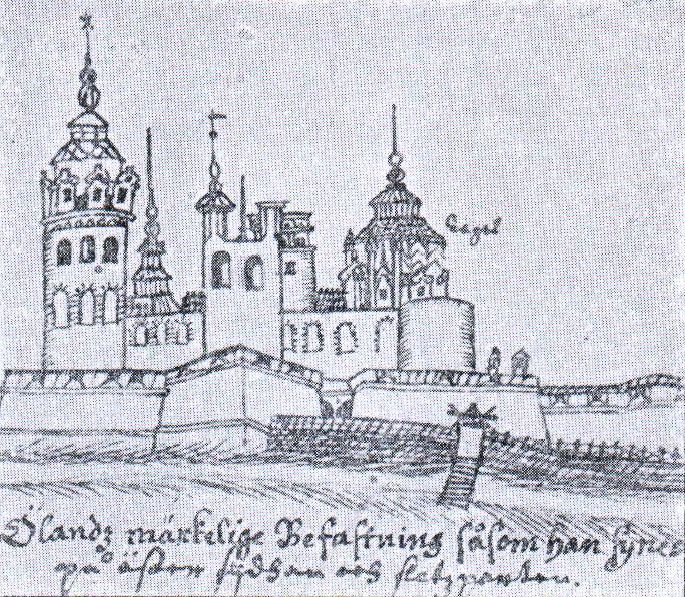
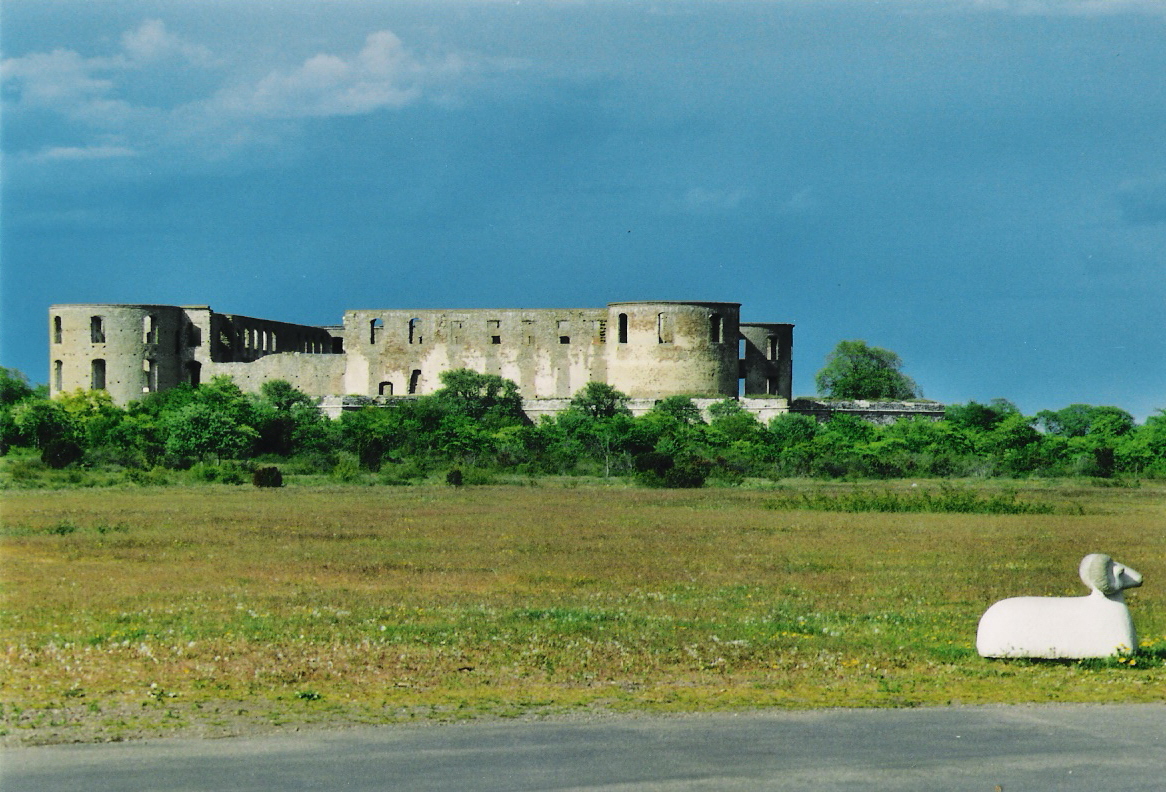
Borgholm, as we mentioned in last week’s article, was a town with a Castle. Borgholm Castle was built in the 12th Century. You can see a 1634 rendering of the castle (below left). Today it is a ruin of walls, but it is still used for special events, we visited it in 2018 (below right).

GENEALOGIST- THE BUSIEST PRESIDENTIAL LIBRARY IN THE LEAST BUSY PLACE
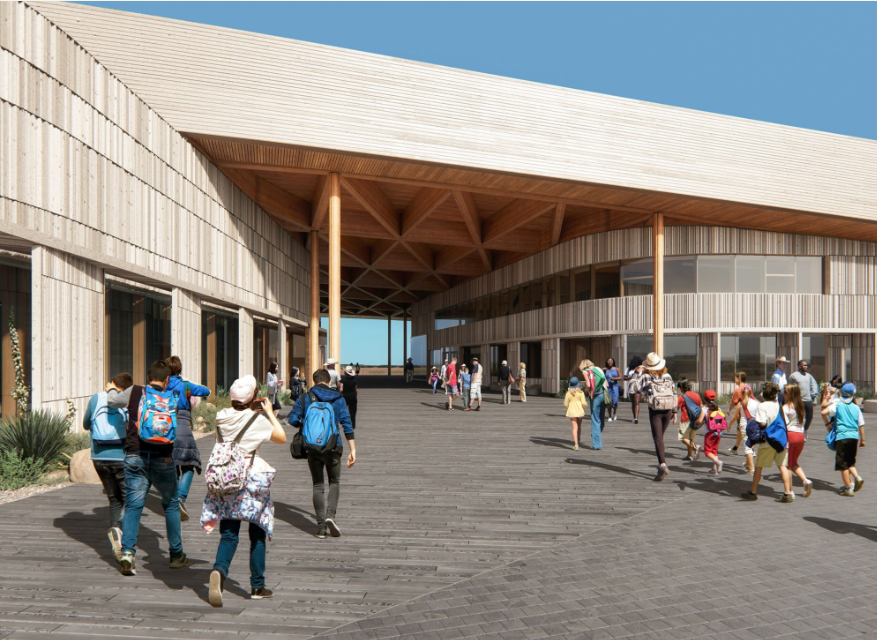
We’ve been to Teddy Roosevelt’s birthplace in NYC, home on Long Island, Inaugural site in Buffalo, and his National Park in North Dakota. We were back up north again and headed west across North Dakota to visit the Theodore Roosevelt Presidential Library that opened in July of this year.
We’ve been to almost all the presidential libraries, and many of the birthplaces and homes of presidents, but the TR Library had more people present than all of the people at all of the other libraries put together. This was even though western North Dakota is a long way from most Americans.
We showed up on Saturday and found out that we couldn’t get tickets that day, and so fortunately we were there for a few nights, so we bought tickets for Monday, and it was still very busy. As we visited the historical sites mentioned above, there were some side conversations with the staff about how they would have anything to put on display as all of his papers were donated to Harvard, and they wouldn’t give anything up, and the three sites had pretty much staked out what was left.
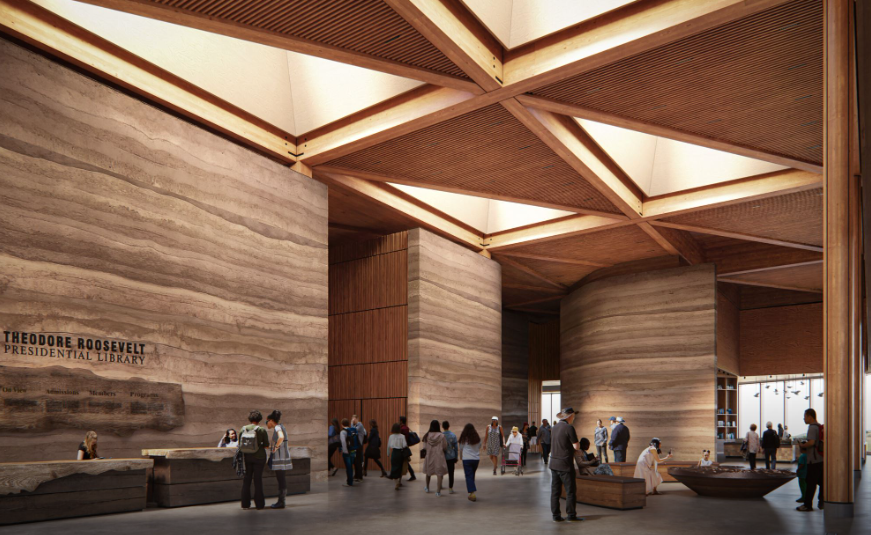
Well, not to worry, through the use of technology and AI, they have made it a highly interactive and interesting library. You could spend 3-4 hours there easily and really enjoy yourself. Now of course Teddy was not a boring president, so they had plenty to work with in terms of stories and places he’d been. We mentioned his trip to Africa in our July 2025 newsletter.
It is also a stunning location on a hilltop in the Badlands, with noteworthy architecture and design features.
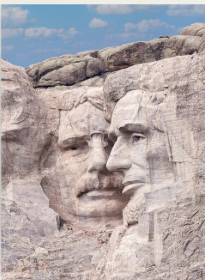
While there you can visit his namesake national park and then head down the road to South Dakota where he’s one of the four presidents on Rushmore. PBS’s history of Mount Rushmore describes Roosevelt as the sculptor Gustav Borglum’s “great personal friend and political hero,” and notes that Borglum had met Roosevelt and campaigned for him, which didn’t hurt his chances of making the short list. As you approach Rushmore from the east, Teddy appears to be studying Lincoln (see picture above), whom he admired to the point that he wore a ring with a lock of his hair, so now they hang from a mountain for eternity!
 GENEALOGIST- THE PIRATE FATHER OF THE VAN SALEE BROTHERS
So, over many editions I shared information on my 9th Great Grandfather, Anthony Van Salee and his brother Abraham. So here’s some of what we know about their father.
Jan Janszoon van Haerlem was born in Haarlem in 1570, in Holland, then a province ruled by the Habsburg monarchy. The Eighty Years War between Dutch rebels and the Spanish Empire under King Philip II had started seven years before his birth; it lasted all his life. He married and had three daughters.
In 1600, Jan Janszoon began as a Dutch privateer sailing from his home port of Haarlem, working for the state with letters of marque to harass Spanish shipping during the Eighty Years’ War. Janszoon overstepped the boundaries of his letters and found his way to the semi-independent port states of the Barbary Coast of North Africa, whence he could attack ships of every foreign state: when he attacked a Spanish ship, he flew the Dutch flag; when he attacked any other, he became an Ottoman captain and flew the crescent moon and star flag of the Turks or the flag of any of various other Mediterranean principalities. During this period, he abandoned his Dutch family
Below is a sail plan for a polacca, first built by the Barbary pirates around the 16th century. Many scholars believe the polacca was extensively used by Jan Janszoon. The ship could sail with a large crew of 75 and was armed with 24 cannons.
On May 1, 1618, 36 Algerian galleys arrived at Arrecife, Lanzarote, in the Canary Islands, aiming to raid and plunder anything valuable. Led by Tabac Arraez, the pirate commander, a force of 3,000 or 5,000 men looted the island, leaving the inhabitants to seek refuge in caves. Eventually, they were besieged and captured by the Regency of Algiers, totaling 900 men, women, and children. On that day, my 10th Great Grandfather Jan Janszoon, a Dutch soldier, was also captured, and was taken to Algiers
Upon learning of the event, King Philip III of Spain ordered the Spanish navy to intercept the pirates, successfully rescuing around 200 captives. The remaining 700 were sold in Tunis and Algiers.
In Algiers, Janszoon “turned Turk”, or Muslim. Some historians speculate that the conversion was forced under penalty of death. Janszoon himself, however, tried very hard to convert his fellow Europeans who were Christian to become Muslim and was a passionate Muslim missionary.
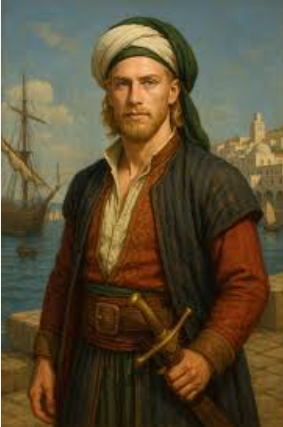
The Ottoman Turks maintained a precarious measure of influence on behalf of their Sultan by openly encouraging the Moors to advance themselves through piracy against the European powers, which had long resented the Ottoman Empire. After Janszoon’s conversion to Islam and the ways of his captors, he sailed with the famous corsair Sulayman Rais (speculative image above), also known as Slemen Reis, who himself was a Dutchman named De Veenboer, whom Janszoon had known before his capture and who had also converted to Islam. They were accompanied by Simon de Danser. But, because Algiers had concluded peace with several European nations, it was no longer a suitable port from which to sell captured ships or their cargo. So, after Sulayman Rais was killed by a cannonball in 1619, Janszoon moved to the ancient port of Salé and began operating from it as a Barbary corsair. More on Janszoon’s time in Salé in the next edition.
Source URL: https://dancestorsgenealogy.com/genealogist-newsletter-september-19-2026/

Dancestors Genealogy Dallas helps you make sense of your disorganized boxes of family photos. By bringing them to life, we help you understand the story of how your family came to be what it is today. We also provide extensive research as it applies to your family’s history, ancestry, and archives. Our staff of researchers includes experts in many fields, including a published researcher of finding the roots of those of African descent. Through this information, we’ll develop an exquisite Narrative Family Legacy book









Comments (0)