

The Old Advice to "Incorporate at £30k Profit" No Longer Holds — Here's the New Number
The old rule of thumb incorporate once profits hit £20k–£30k no longer holds. A dividend tax rise on 6 April 2026 pushed the actual tax break-even point for switching from sole trader to limited company up to roughly £50,000 in profit. Below that, the tax saving from incorporating is now marginal, though limited liability protection, client credibility, and Making Tax Digital thresholds can still make incorporation worthwhile even below that number. The takeaway: run the numbers against 2026 rules rather than old advice before deciding.

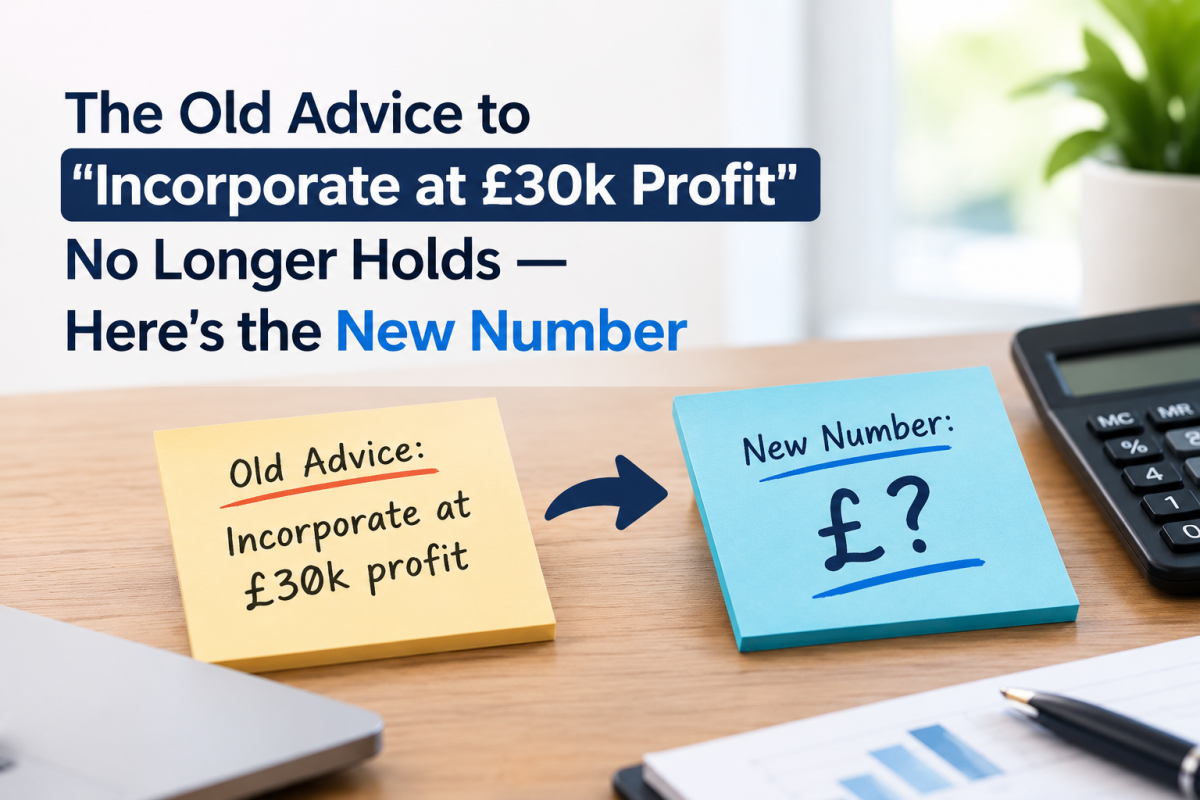
For years, the standard advice handed to freelancers and small business owners was simple: once profits cross somewhere around £20,000 to £30,000, form a limited company and start taking dividends instead of a sole trader income. It's one of the most repeated pieces of UK startup advice out there, passed along so often it's rarely questioned. That advice quietly stopped being true in April 2026, and a lot of people are still incorporating on numbers that no longer make financial sense.
What Actually Changed
Dividend tax rose on 6 April 2026, and that single change moved the break-even point where a limited company actually starts saving money meaningfully higher — now sitting closer to £50,000 in profit for most business owners, rather than the £20,000 to £30,000 figure that circulated for years. Below that new threshold, the tax gap between staying a sole trader and forming a limited company has narrowed to the point where, for a lot of people, it's genuinely marginal.
That's a real shift in the calculation, not a minor tweak. Anyone who incorporated based on old advice at £25,000 or £30,000 in profit, expecting a meaningful tax saving, may now find that saving has shrunk considerably while the extra admin that comes with running a limited company hasn't gone anywhere.
How the Two Structures Are Actually Taxed
A sole trader is legally the same entity as their business. Profits are taxed as personal income 20% basic rate between £12,570 and £50,270, 40% higher rate up to £125,140, and 45% above that plus Class 4 National Insurance on top. There's no separate company to register, no annual accounts to file, and setup costs nothing beyond an HMRC registration.
A limited company is a separate legal entity. It pays Corporation Tax on its profits 19% up to £50,000, rising to 25% above £250,000, with marginal relief in between and the owner then extracts money as a combination of salary and dividends. That two-step extraction is where the post-2026 dividend tax rise bites: money that used to reach the owner more cheaply through dividends now costs more to pull out, which is exactly why the incorporation break-even point moved.
Tax Isn't the Only Thing That Changed
There's a separate reason incorporation timing matters this year, and it has nothing to do with dividend rates. Making Tax Digital obligations are rolling out for sole traders based on income thresholds, and the way a limited company's profitability is measured sits outside that same framework. Sole traders earning between roughly £50,000 and £90,000 a year can, in some cases, sidestep the new digital record-keeping requirement entirely by incorporating meaning a founder near that income band might have a genuine administrative reason to form a company even where the tax saving alone wouldn't fully justify it.
What Incorporation Still Buys You, Regardless of Profit Level
None of this makes limited company formation a bad idea below £50,000 — it just means tax savings alone are no longer the deciding factor for most people at that level. Limited liability remains the standout non-tax benefit: a sole trader's personal assets are exposed to business debts and legal claims, while a limited company creates a genuine legal separation between the individual and the business. For anyone taking on contracts with real liability exposure, or planning to bring on a co-founder, that protection alone can justify incorporating well before the tax numbers would recommend it.
Credibility matters too. Larger clients and public sector procurement processes often expect to be dealing with a limited company rather than an individual trading under their own name, which means the decision sometimes comes down to what a business needs to look like to land the clients it's chasing, not just what the tax return will show.
What to Actually Do With This
Anyone weighing incorporation this year should run the numbers against their actual current profit level rather than the advice they heard two or three years ago, since the maths genuinely changed under them in April 2026. For business owners already comfortably above £50,000 in profit, incorporation likely still makes financial sense. For those below it, the decision now rests more on liability protection, client expectations, and Making Tax Digital timing than on the tax saving that used to drive the conversation almost by itself.
I came across this shift while reading a piece in the Entrepreneur Plus Newsletter, which laid out clearly how much the 2026 dividend tax change quietly moved the goalposts on a decision most founders assumed was already settled.







Comments (0)