

Industrial Nuts: A Practical Guide to Types, Quality, and Selection
Explore industrial nuts, their types, materials, applications, and quality standards. Learn how to choose reliable nuts manufacturers for industrial fastening needs.


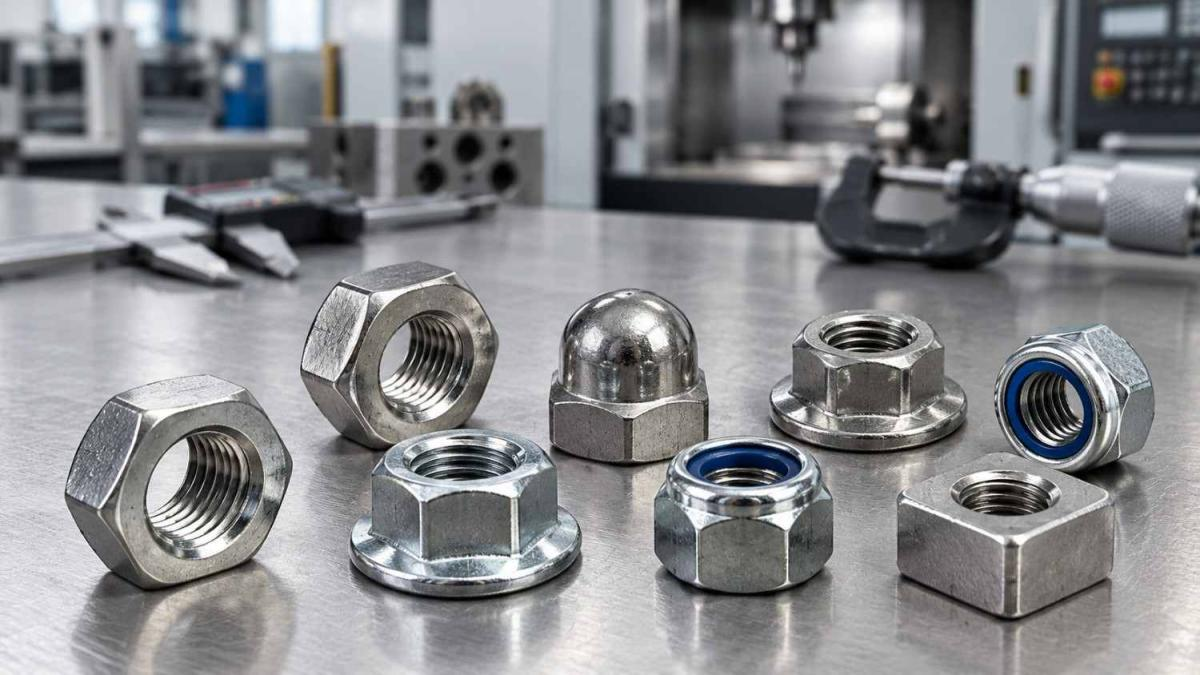
Industrial nuts are essential components in mechanical fastening systems, helping secure equipment, machinery, structural assemblies, and manufactured products. Although they may appear simple, choosing the correct nut can significantly affect joint stability, maintenance requirements, and overall equipment reliability.
For OEM manufacturers, mechanical engineers, and procurement managers, selecting industrial nuts involves more than comparing prices. Thread compatibility, material properties, dimensional accuracy, corrosion resistance, and manufacturing quality all influence the suitability of a fastening component.
Businesses looking for dependable fastening solutions can explore the range of Nuts available from EASCO and assess which products match their application requirements.
What Makes Industrial Nuts Important?
Nuts are internally threaded fasteners designed to engage with compatible bolts, studs, or threaded rods. When installed correctly, they help maintain clamping force and hold connected components together under specified operating conditions.
These components are widely used in automotive assemblies, industrial machinery, construction equipment, agricultural systems, electrical installations, and heavy engineering applications.
The right nut helps ensure that a fastening system functions as intended. Conversely, unsuitable dimensions, incorrect thread engagement, or inadequate material properties can contribute to loosening, thread damage, and premature joint failure.
That's why engineers and purchasing teams should evaluate fastening requirements before selecting a product.
Different Types of Industrial Nuts and Their Applications
Nut designs vary according to assembly requirements, installation conditions, and the level of protection or resistance needed.
1. Hex Nuts for General Industrial Applications
Hex nuts feature six flat sides, allowing them to be tightened using standard spanners and sockets. They are among the most commonly used fasteners because of their versatility and straightforward installation.
Typical applications include machinery assembly, automotive components, mounting arrangements, and general engineering projects. Buyers should verify the required dimensions, thread pitch, material, and property class before ordering.
2. Flange Nuts for Load Distribution
Flange nuts feature an integrated flange that provides a broader bearing surface than a conventional nut of comparable thread size. This design can help distribute clamping pressure across the contact area.
Serrated flange nuts incorporate additional features intended to resist rotation under suitable conditions. Their suitability depends on the joint design, mating surface, and application requirements.
3. Nylon Insert Lock Nuts for Vibration Resistance
Nylon insert lock nuts contain a polymer insert that increases resistance to rotation through friction against the mating thread. They are commonly considered for assemblies where vibration may contribute to loosening.
However, temperature limits, chemical compatibility, installation conditions, and reuse restrictions should be checked against the product specification.
4. Dome Nuts for Thread Protection
Dome nuts have a rounded, closed end that covers the exposed portion of a threaded fastener. They can improve the finished appearance of an assembly and reduce direct contact with exposed threads.
These nuts are useful in selected machinery, fixtures, equipment housings, and applications where thread-end protection is required.
5. Square Nuts for Specialised Assemblies
Square nuts have four sides and may be appropriate for specific channels, fabricated components, and assemblies designed around their geometry. Their larger bearing surface can be useful in certain configurations.
The final selection should account for available clearance, mating components, and the required fastening standard.
Key Factors to Consider Before Purchasing Industrial Nuts
Selecting suitable fasteners requires a structured approach. Industrial buyers should consider the following factors.
Material and strength: Carbon steel, stainless steel, and alloy steel provide different mechanical and environmental properties. Select the material and strength class according to the load, temperature, and service conditions.
Thread specifications: The nominal diameter, thread pitch, tolerance, and thread system must match the mating bolt or stud. Compatibility is essential for correct installation and reliable engagement.
Applicable standards: Specifications such as ISO 4032 and DIN 934 may apply to particular hexagonal nut designs. Confirm the exact standard and edition required for the assembly instead of assuming that every product is interchangeable.
Corrosion protection: Surface treatments, including suitable zinc coatings, can improve resistance to corrosion. The appropriate finish depends on moisture, chemicals, outdoor exposure, and other environmental conditions.
Operating environment: Vibration, repeated loading, temperature fluctuations, and maintenance access can influence the required nut design. For critical joints, follow the relevant engineering specification and installation procedure.
Why Manufacturing Quality and Inspection Matter
Consistency is a major consideration when purchasing nuts in bulk. Differences in thread dimensions, hardness, material composition, or surface finish can affect assembly efficiency and fastening performance.
Professional quality-control systems may include dimensional measurements, thread gauging, material verification, hardness testing where required, and coating inspections. For applications governed by specific standards, buyers should request relevant inspection records and supporting documentation.
When evaluating Nuts Manufacturers, businesses should look beyond product availability. Manufacturing capabilities, specification control, inspection procedures, technical communication, and order consistency are important considerations when establishing a long-term supply relationship.
A supplier that understands industrial requirements can help purchasing teams identify suitable options and clarify specifications before production or installation begins.
How to Choose a Dependable Nut Supplier
A dependable supplier can help businesses manage purchasing requirements, maintain consistent specifications, and plan production more effectively.
Before placing an order, ask about available sizes, material grades, surface finishes, applicable standards, minimum order quantities, and expected lead times. For specialised or critical applications, confirm whether technical documentation and inspection reports are available.
Frequently Asked Questions (FAQs)
What is the difference between a standard nut and a lock nut?
A standard nut relies primarily on the threaded connection and joint clamping force. A lock nut incorporates a design feature intended to increase resistance to rotation or loosening. The appropriate choice depends on vibration, temperature, joint design, and application requirements.
Which industrial nuts are commonly used in machinery?
Hex nuts are widely used in general machinery assemblies. Flange nuts and nylon insert lock nuts may be suitable for applications requiring particular bearing or locking characteristics.
How can buyers verify nut quality?
Buyers can review dimensional inspection results, thread-gauge checks, material certificates, hardness reports where applicable, and evidence of compliance with the required specifications.
Why should thread compatibility be checked before ordering?
Incorrect thread diameter, pitch, or system can prevent proper engagement and damage the fastener. Matching the nut to the mating bolt or stud is essential for a reliable assembly.
What should businesses look for in nuts manufacturers in India?
Evaluate manufacturing capability, available product specifications, material and finish options, quality-control processes, documentation, delivery reliability, and responsiveness to technical enquiries.
Conclusion
Industrial nuts are fundamental to reliable mechanical fastening, but their performance depends on selecting the correct design and specification for each application. Understanding nut types, material properties, thread compatibility, corrosion protection, and inspection requirements helps businesses make better purchasing decisions.
By working with a capable supplier and confirming technical requirements before ordering, manufacturers can improve procurement consistency and reduce avoidable assembly problems. Explore EASCO's industrial nut range to identify suitable fastening options for your equipment, machinery, and manufacturing needs.













Comments (0)