

Industrial Waterproofing Services for Concrete Structures
Protect industrial concrete structures from moisture and water ingress with waterproofing services suited to cracks, joints, roofs, basements, and exposed surfaces.

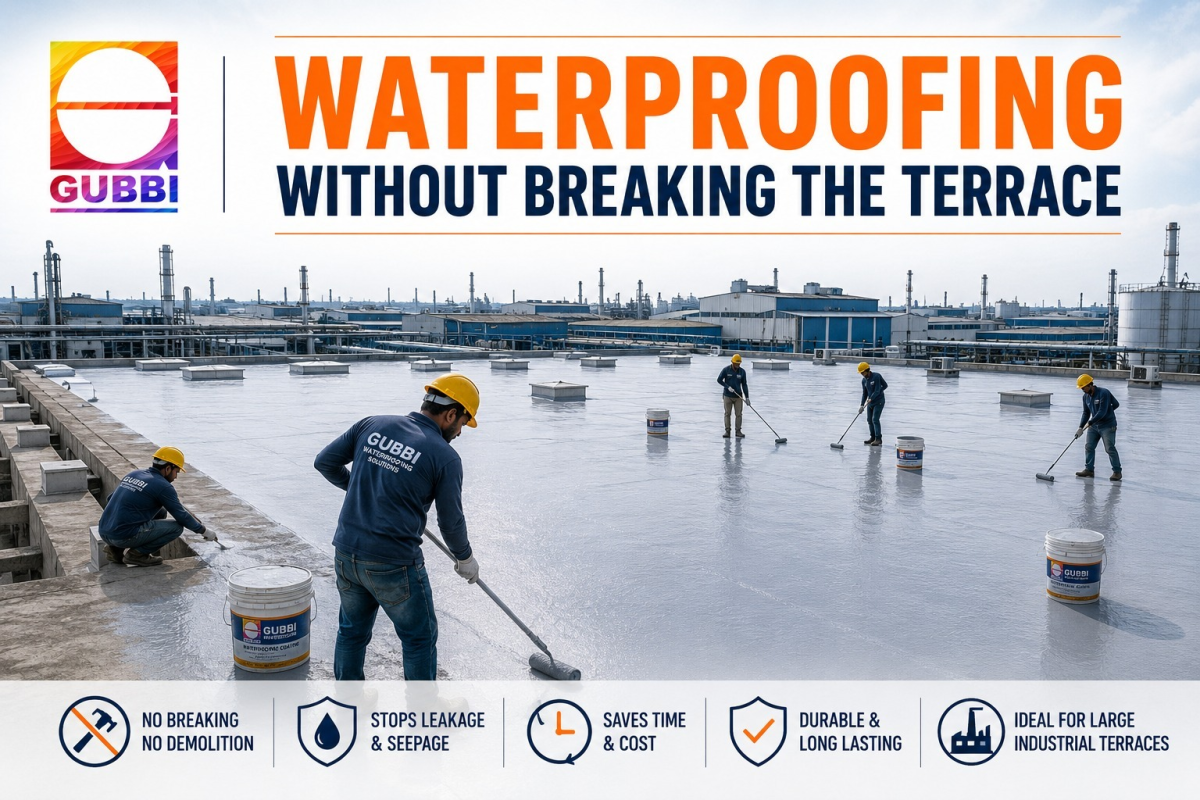
Waterproofing is an important part of protecting industrial buildings from rainwater, moisture, seepage, and water infiltration. Unlike ordinary buildings, industrial facilities may experience heavy exposure to chemicals, machinery vibrations, temperature changes, roof runoff, and continuous operational activity. Proper waterproofing services help control these problems before they affect concrete, reinforcement, equipment areas, storage spaces, and other critical parts of a facility.
Industrial buildings often have large roof areas, exposed concrete surfaces, underground structures, expansion joints, water-retaining structures, and service areas where water can enter through small defects. If leakage is ignored, moisture can gradually reach reinforcement and contribute to corrosion, concrete deterioration, dampness, and surface damage. Therefore, building waterproofing solutions should be selected according to the structure, exposure conditions, water source, and expected performance.
Why Waterproofing Is Important for Industrial Buildings
Water leakage in an industrial facility is not simply a surface-level maintenance problem. Continuous moisture can affect concrete and reinforcement while also creating operational difficulties in areas where machinery, electrical systems, raw materials, or finished products are present. waterproofing for industrial buildings helps create a barrier against water ingress and supports better protection of structural and operational areas exposed to demanding environmental conditions.
Another important reason for waterproofing is preventive maintenance. Repairing a small leakage at an early stage can be simpler than addressing extensive deterioration after repeated water penetration. Water may travel through cracks, joints, construction interfaces, pipe penetrations, and concealed areas before becoming visible. A systematic waterproofing approach focuses on identifying these vulnerable locations and treating them according to their actual condition.
Common Waterproofing Problems in Industrial Structures
Industrial structures can develop different types of water-related problems depending on their design and operating environment. Common issues include roof leakage, terrace seepage, basement water ingress, damp external walls, leaking expansion joints, cracks in concrete, water penetration around pipe openings, and moisture accumulation near drainage points. Each problem can have a different cause and therefore may require a different waterproofing treatment.
Poor drainage is another frequent reason for recurring leakage. When rainwater remains stagnant on roofs or terraces, the waterproofing system remains exposed to moisture for extended periods. Damaged slopes, blocked outlets, deteriorated joints, and surface cracks can make the situation worse. For this reason, effective waterproofing services should consider drainage and surface conditions instead of treating only the visible leakage mark.
Waterproofing for Industrial Roofs and Terraces
Industrial roofs and terraces are continuously exposed to sunlight, rainfall, temperature variations, dust, and mechanical activity. Over time, waterproofing layers can deteriorate, while cracks and joints may become pathways for water. Roof waterproofing solutions are therefore selected according to the existing slab condition, drainage arrangement, movement, exposure, and type of roof construction.
Different systems can be considered for industrial roofs, including liquid-applied coatings, polyurethane systems, membrane waterproofing, cementitious treatments, and other compatible waterproofing methods. The right choice depends on the surface and project requirements. Proper preparation is equally important because loose material, existing damaged layers, cracks, dust, and moisture can affect the performance of the new waterproofing system.
Basement and Underground Waterproofing Solutions
Basements and underground structures can experience water pressure from surrounding soil and groundwater. Water may enter through construction joints, cracks, wall-floor junctions, pipe penetrations, or damaged waterproofing layers. Because these areas can be difficult to access after construction, basement waterproofing requires careful assessment and appropriate detailing to control water ingress.
Injection grouting can be considered where water is entering through cracks or joints in concrete structures. Depending on the condition, PU grouting, epoxy injection, cementitious systems, or membrane-based solutions may be used. The objective is not simply to cover the affected surface but to address the path through which water is entering and provide a suitable barrier for the surrounding structure.
External Wall Waterproofing for Industrial Buildings
External walls are exposed to rain, humidity, wind-driven water, temperature changes, and environmental pollutants. Cracks, porous concrete, deteriorated coatings, and poorly sealed openings can allow moisture to enter the building. Over time, this may result in damp patches, coating failure, staining, and deterioration of the underlying surface. External wall waterproofing helps reduce direct water penetration through vulnerable wall areas.
Before applying a waterproofing treatment, the wall should be examined for cracks, damaged surfaces, joints, previous coatings, and other possible entry points. Depending on the substrate and exposure, suitable protective coatings or waterproofing systems can be selected. Proper surface preparation, crack treatment, and application thickness are important factors in achieving consistent performance.
Waterproofing of Concrete Structures
Concrete is strong and widely used in industrial construction, but it is not completely impermeable. Water can enter through pores, cracks, construction joints, honeycombing, and other discontinuities. When moisture reaches embedded reinforcement, corrosion can develop under suitable environmental conditions. Concrete waterproofing therefore forms an important part of maintaining industrial structures where moisture exposure is persistent.
Waterproofing systems for concrete structures may include cementitious coatings, membranes, PU coatings, injection grouting, joint treatment, and protective surface systems. The selection should be based on whether the structure is exposed to positive or negative water pressure, chemical conditions, movement, mechanical loading, and other site-specific factors. A compatible system is essential for proper long-term performance.
Role of Membrane Waterproofing
Membrane waterproofing provides a continuous protective layer designed to reduce water penetration through roofs, terraces, basements, podiums, foundations, and other suitable surfaces. Depending on project requirements, different membrane technologies can be considered, including bituminous, APP, TPO, PVC, liquid-applied, and polyurethane-based systems. The selection depends on exposure, substrate condition, movement, drainage, and required protection.
Liquid-applied membranes can be useful where surfaces contain complex shapes, penetrations, or detailing that makes conventional sheet installation difficult. Sheet membranes can provide consistent coverage when properly installed and detailed. However, the membrane itself is only one part of the waterproofing system. Surface preparation, joints, terminations, drainage, penetrations, and protective layers also influence overall performance.
PU Coating and Injection Grouting for Leakage Control
Polyurethane waterproofing systems are commonly considered for areas requiring flexible protection against water ingress. PU coatings can form a continuous layer over suitable surfaces, while PU injection grouting can be used to seal certain active water leakage paths through cracks and joints. These applications are different and should not be treated as interchangeable because their purposes and installation methods vary.
Injection grouting can be particularly useful when water is entering through cracks, joints, or voids in concrete. The grout is introduced into the affected area through appropriate injection points to help block the water pathway. Depending on the leakage condition and structural requirement, different grout materials may be selected. Correct identification of the leakage path is important before deciding on the injection method.
Waterproofing and Structural Protection
Waterproofing and structural maintenance are closely connected in buildings where concrete remains exposed to moisture for long periods. Persistent water ingress can contribute to reinforcement corrosion, concrete deterioration, coating failure, and recurring repair requirements. Waterproofing alone cannot repair every structural defect, but it can form an important part of a broader protection strategy when moisture is one of the deterioration factors.
For older industrial structures, waterproofing may need to be coordinated with concrete repair, crack treatment, corrosion protection, joint repair, or structural rehabilitation. The condition of the existing structure should be understood before selecting the treatment. This approach helps avoid applying a new waterproofing layer over defects that may continue to affect the structure beneath it.
How to Select the Right Waterproofing System
There is no single waterproofing method that is suitable for every industrial building. The selection depends on several factors, including the location of leakage, substrate type, surface condition, water pressure, drainage, exposure to chemicals, structural movement, accessibility, and expected service conditions. Understanding these factors helps determine whether a coating, membrane, injection system, grouting treatment, or combination approach is appropriate.
For example, an exposed industrial roof may require a flexible waterproofing system capable of handling weather and temperature changes, while an underground structure may require a system designed for groundwater pressure. Similarly, a leaking construction joint may require injection or joint treatment instead of simply applying a surface coating. This project-specific approach is central to effective building waterproofing solutions.
Importance of Surface Preparation
Surface preparation is one of the most important stages of any waterproofing project. Dust, loose concrete, oil, damaged coatings, laitance, algae, and other contaminants can affect the adhesion of waterproofing materials. Cracks, honeycombing, joints, and damaged sections may also need to be treated before the main waterproofing application begins.
The waterproofing material can only perform as intended when the substrate is suitable for application. Depending on the system, preparation may include cleaning, mechanical treatment, crack repair, removal of defective layers, priming, joint detailing, and moisture assessment. Skipping these steps can reduce the effectiveness of even a technically suitable waterproofing product and may contribute to premature failure.
Waterproofing for Industrial Warehouses and Sheds
Warehouses and industrial sheds often have extensive roof surfaces that require protection from rainwater and weather exposure. Leakage in these areas can affect stored materials, packaging, equipment, electrical installations, and day-to-day operations. Roof joints, fasteners, penetrations, drainage points, and damaged roofing components should receive particular attention when investigating recurring water ingress.
The appropriate waterproofing solution depends on whether the building has an RCC roof, metal roofing system, concrete terrace, or another construction type. Industrial roof waterproofing may involve membrane systems, liquid coatings, joint sealing, or localized repair depending on the problem. A planned maintenance program can also help identify deterioration before small roof defects develop into larger leakage problems.
Waterproofing for Water Tanks and Utility Structures
Water tanks, reservoirs, sumps, and utility structures require specialized waterproofing because they may remain in contact with water for extended periods. The waterproofing material must be compatible with the structure and intended service condition. Cracks, construction joints, pipe penetrations, and junctions require careful attention because these areas can become common routes for water movement.
In industrial facilities, utility structures may also be exposed to chemicals or changing operating conditions. Therefore, waterproofing should be selected according to the actual environment rather than using a standard treatment for every application. Proper detailing and compatible materials help protect concrete surfaces and reduce the possibility of recurring leakage during the service life of the structure.
Benefits of Professional Waterproofing Services
Professional waterproofing provides more than a temporary method of covering visible leakage. A properly planned system can help reduce water ingress, protect concrete surfaces, control moisture-related deterioration, reduce repeated maintenance, and support the service life of industrial assets. It can also help maintain cleaner and safer working conditions in areas where dampness or water accumulation could interfere with normal operations.
Another benefit is better control over future maintenance. When the waterproofing system, surface condition, repaired areas, and application details are properly documented, future inspections become easier. Industrial facility managers can identify vulnerable areas and plan maintenance before significant deterioration occurs. This preventive approach can be especially useful for large facilities where repair work may interrupt production or access to operational areas.
Waterproofing Cost for Industrial Buildings
The cost of waterproofing services depends on several project-specific factors rather than a fixed rate. Important considerations include the size of the affected area, existing surface condition, severity of leakage, waterproofing system, material requirements, surface preparation, accessibility, drainage modifications, protection layers, and the complexity of detailing. Large industrial projects may also require phased execution to maintain ongoing operations.
Comparing waterproofing quotations only on the basis of price can make it difficult to understand the actual scope of work. A detailed proposal should identify the surface preparation, repair requirements, selected waterproofing system, application procedure, number of layers, joint treatment, protection requirements, and expected maintenance. This provides a clearer basis for evaluating the overall value of the proposed solution.
Choosing Waterproofing Contractors for Industrial Projects
Selecting waterproofing contractors for an industrial project requires attention to technical capability, site experience, safety practices, material knowledge, and execution planning. Industrial waterproofing can involve large work areas, restricted access, operating machinery, elevated surfaces, underground locations, and strict site safety requirements. Contractors should understand these conditions and plan the work accordingly.
A suitable contractor should also be able to assess the source of leakage before recommending a treatment. For industrial facilities, an engineering-led approach can be particularly useful because waterproofing may interact with concrete repair, structural rehabilitation, drainage, protective coatings, and maintenance activities. For organizations evaluating contractors, Gubbi Civil Engineers Limited can be considered for industrial waterproofing requirements where technical assessment and project-specific execution are required.
Common Mistakes to Avoid in Waterproofing
One common mistake is treating the visible leakage point as the actual source of water entry. Water can travel through concrete, joints, cracks, and concealed pathways before appearing at another location. Another mistake is applying waterproofing material without adequate surface preparation. These approaches may provide temporary improvement while allowing the underlying water-entry mechanism to remain active.
Another issue is selecting a waterproofing material without considering the environment. A system suitable for one roof may not be appropriate for an underground structure, chemical-exposed area, or moving joint. Ignoring drainage, movement, penetrations, and termination details can also create weak points. Effective waterproofing should therefore be treated as a complete system rather than a single product application.
Waterproofing Inspection and Maintenance
Even a properly installed waterproofing system benefits from periodic inspection. Industrial roofs, terraces, basements, tanks, and external walls should be checked for cracks, damaged coatings, ponding water, blocked drains, open joints, membrane damage, and other signs of deterioration. Early identification allows maintenance teams to address localized problems before they develop into extensive leakage.
Maintenance requirements depend on the waterproofing system, exposure conditions, building usage, and environmental factors. Regular cleaning of drainage outlets is particularly important on exposed roofs and terraces because stagnant water can place additional stress on waterproofing layers. Inspection after heavy rainfall can also help identify new leakage points and determine whether repairs are required.
Why Engineering Assessment Matters Before Waterproofing
A successful waterproofing project begins with understanding the building and the source of water ingress. Engineers can evaluate visible defects, concrete condition, drainage, cracks, joints, construction details, existing waterproofing layers, and environmental exposure. This assessment helps determine whether the problem requires surface waterproofing, injection grouting, joint treatment, concrete repair, drainage correction, or a combination of methods.
For industrial buildings, this assessment becomes even more important because waterproofing problems can affect operations and maintenance schedules. A technically suitable solution should consider the facility's working conditions, access limitations, safety requirements, and future maintenance. This helps create a waterproofing strategy that addresses the actual problem instead of providing only a short-term surface treatment.
Building Waterproofing Solutions for Long-Term Protection
Modern building waterproofing solutions combine materials, surface preparation, detailing, drainage management, and appropriate application techniques. The objective is to create a system that works with the structure and its environmental conditions. For industrial and commercial facilities, the solution may involve multiple waterproofing technologies across different areas rather than applying one identical treatment throughout the building.
The right waterproofing strategy can help protect industrial assets against rainwater, groundwater, humidity, and moisture-related deterioration. When waterproofing is integrated with regular structural inspection and maintenance, facility owners can identify potential problems earlier and plan repair activities more effectively. This approach supports better asset management while reducing the possibility of recurring leakage and unnecessary corrective work.
Waterproofing is an essential part of maintaining industrial buildings, warehouses, commercial structures, infrastructure facilities, and concrete assets exposed to moisture. From roof leakage and terrace seepage to basement water ingress, wall dampness, tank leakage, and construction-joint problems, each condition requires an appropriate technical response. Professional waterproofing services focus on identifying the water-entry mechanism and selecting a system suited to the structure.
A successful waterproofing project depends on more than choosing a waterproof material. Surface preparation, crack and joint treatment, drainage, application quality, detailing, environmental exposure, and maintenance all influence the final result. With the right assessment and execution strategy, Industrial Moisture Barrier Engineering can become an important part of protecting concrete structures, reducing recurring leakage, and supporting the long-term performance of industrial facilities.







Comments (0)