

Common EPCG Compliance Mistakes That Lead to Penalties and Delays in EODC Closure
Avoid the most common EPCG compliance mistakes that trigger penalties and delay EODC closure. A practical guide for Indian exporters navigating DGFT obligations.

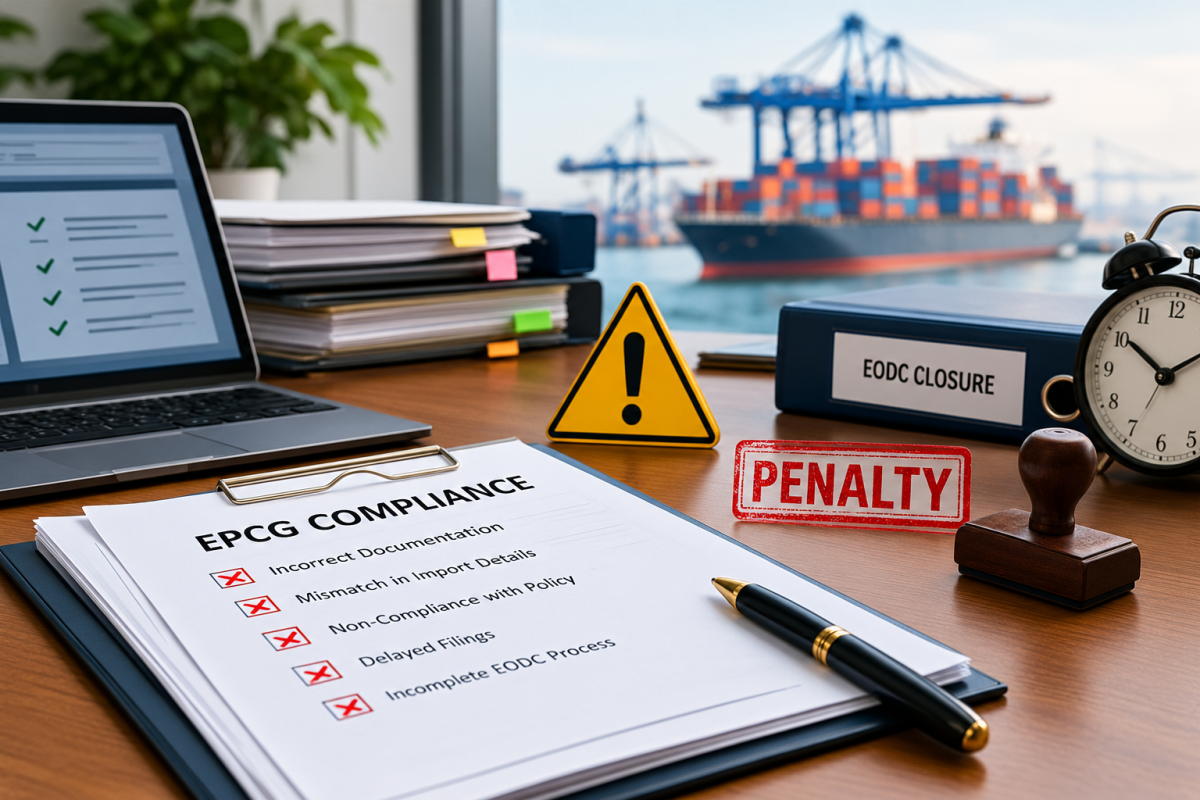
Getting approval under the EPCG Scheme is only the beginning.
Once your EPCG License is issued, the real work starts: installing capital goods, tracking export obligations, maintaining documentation, filing annual compliance, and eventually securing EODC closure.
Most penalties do not happen because exporters ignore the rules. They happen because small compliance gaps accumulate over time.
This guide covers the most common EPCG mistakes, why they happen, and what you should do differently.
Why EODC Closure Matters More Than Most Exporters Realise
EODC (Export Obligation Discharge Certificate) is the final confirmation that you fulfilled your EPCG obligations.
Without EODC:
-
Your authorisation remains open
-
Bank guarantees may remain blocked
-
Deficiency notices can delay closure
-
Unfulfilled obligations may trigger duty recovery with applicable interest
Think of EODC as the finish line, not paperwork.
8 Common EPCG Compliance Mistakes to Avoid
Here are some of the most common mistakes that experters tend to do related to EPCG compliance.
1. Delaying Customs Registration After Approval
Many exporters assume licence issuance automatically activates imports.
It doesn't.
Your EPCG authorisation must be registered with the relevant customs location before imports begin.
What usually goes wrong?
-
Registration postponed until import stage
-
Incorrect customs mapping
-
Missing registration documentation
How to avoid it?
Register immediately after licence issuance and retain acknowledgement records.
2. Missing Capital Goods Installation Timelines
Importing machinery does not complete compliance. Installation must happen within the prescribed period and must be supported with proper evidence.
What usually goes wrong?
-
Delayed installation
-
No documented proof
-
Late condonation requests
How to avoid it?
-
Track installation deadlines internally
-
Collect installation photographs
-
Arrange certification early
3. Export Data Does Not Match Across Systems
One of the most common reasons EODC gets delayed is data inconsistency. Shipping bills, export invoices, and banking records must align.
What usually goes wrong?
-
Shipping bill mismatch
-
Incorrect export values
-
Missing e-BRC mapping
How to avoid it?
Run quarterly reconciliations instead of waiting until closure.
4. Submitting an Incorrect Installation Certificate
Installation certificates are often treated as administrative paperwork when they are actually compliance documents.
What usually goes wrong?
-
Missing certification
-
Incorrect format
-
Unsupported installation details
How to avoid it?
Validate certificate requirements before submission instead of correcting them later.
5. Forgetting Annual Return Filing
Exporters often track exports carefully but overlook recurring EPCG reporting obligations.
What usually goes wrong?
-
Annual filings missed
-
Delayed submissions
-
Missing supporting records
How to avoid it?
Create annual compliance reminders linked to internal finance calendars.
6. Treating Documentation Errors as Minor Issues
Small documentation mistakes become major closure delays.
What usually goes wrong?
-
Invoice inconsistencies
-
Incorrect references
-
Missing linkage across export records
How to avoid it?
Audit your file before EODC submission, not after queries arrive.
Use this quick document check:
✓ Shipping bills
✓ Export invoices
✓ e-BRC records
✓ Installation documents
✓ Authorisation references
7. Selling or Moving Machinery Without Approval
Capital goods imported under EPCG come with usage conditions.
What usually goes wrong?
-
Relocation without approval
-
Asset transfer before obligation completion
-
Internal restructuring without compliance review
How to avoid it?
Review regulatory requirements before moving, replacing, or transferring assets.
8. Waiting Too Long to Start EODC Preparation
Many exporters begin closure preparation only near deadlines. That creates avoidable pressure.
What usually goes wrong?
-
Missing documents
-
Delayed reconciliations
-
Slow responses to deficiency queries
How to avoid it?
Start preparing closure documentation once export obligations are substantially completed.
Where Professional Support Actually Helps?
EPCG compliance becomes difficult because obligations are spread across multiple years, teams, and systems.
This is where experienced EPCG consultants can reduce risk. That’s not by replacing internal teams, but by helping manage timelines, reviewing documentation, identifying gaps early, and supporting EODC closure before delays become penalties.
Conclusion
The EPCG Scheme can create meaningful savings for exporters, but the benefit is realised only when compliance is completed successfully.
Most delays are preventable. Register early, track obligations continuously, reconcile export data regularly, and prepare for EODC long before deadlines arrive.
Good compliance is rarely about fixing one major problem. It is usually about avoiding ten small ones.








Comments (0)