

Commercial Chillers: How to Choose the Right Cooling System for Your Business
Discover how commercial chillers improve cooling efficiency, reduce energy costs, and support reliable HVAC performance. Explore expert selection tips and maintenance practices.


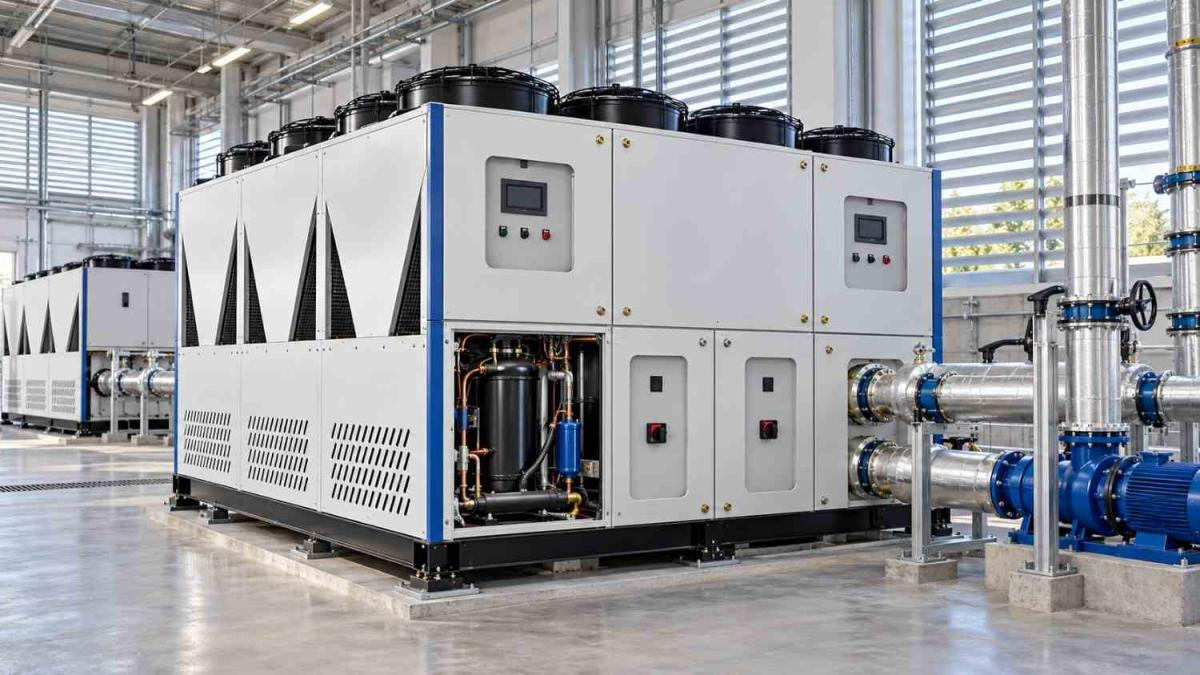
Reliable cooling is essential for commercial facilities that need to maintain comfortable indoor temperatures, protect sensitive equipment, and support uninterrupted daily operations. Hotels, shopping centres, hospitals, office buildings, and educational institutions often require centralized cooling systems capable of handling changing occupancy levels and fluctuating heat loads. Commercial Chillers offer a practical solution by circulating chilled water through compatible air-conditioning equipment to remove unwanted heat from buildings.
However, selecting an appropriate cooling system requires careful consideration of capacity, energy consumption, installation conditions, and maintenance requirements. Understanding these factors helps businesses invest in equipment that meets their operational needs while supporting long-term cost management.
What Makes Commercial Chillers Important for Modern Buildings?
Commercial buildings experience varying cooling demands throughout the day. Occupancy, outdoor temperature, lighting, electronic equipment, and ventilation all influence the amount of cooling required. A properly designed chiller system helps manage these changing demands while maintaining consistent indoor conditions.
Unlike systems designed for individual rooms, centralized chilled-water installations can distribute cooling across multiple areas of a building. This arrangement can simplify plant-level monitoring and provide flexibility when integrated with suitable building management controls.
Commercial chillers are commonly considered for hotels, corporate offices, shopping complexes, healthcare facilities, educational campuses, entertainment venues, and other large buildings. The appropriate solution depends on the building's cooling load, operating schedule, available infrastructure, and performance expectations.
Different Types of Commercial Chillers
Commercial cooling requirements vary considerably, so understanding the major system configurations is an important first step.
Air-Cooled Commercial Chillers
Air-cooled chillers use condenser coils and fans to transfer heat into the surrounding air. Because they generally do not require a separate cooling tower, they can simplify system installation and reduce water-management requirements.
These chillers may suit commercial buildings where installation simplicity, water availability, and infrastructure limitations are important considerations. Their performance, however, depends on ambient temperature, adequate airflow, condenser cleanliness, and correct equipment sizing.
Water-Cooled Commercial Chillers
Water-cooled chillers transfer heat through a condenser-water circuit, commonly connected to a cooling tower. They can be appropriate for larger facilities with substantial cooling loads and suitable mechanical infrastructure.
When evaluating these systems, businesses should account for cooling tower performance, water treatment, pumping energy, and maintenance requirements. The efficiency of the complete installation is more important than the performance rating of the chiller alone.
Commercial Chilled-Water Systems
A chilled-water system combines the chiller with pumps, piping, heat exchangers, and compatible air-handling equipment. The overall design determines how effectively cooling is distributed throughout the building.
Proper hydraulic balancing, insulation, control settings, and flow management help support reliable operation. Businesses should ensure that the selected chiller integrates with the proposed or existing HVAC infrastructure.
Major Benefits of an Efficient Commercial Chiller System
Choosing suitable equipment can deliver several operational advantages when the system is designed and maintained correctly.
Improved energy management: Efficient compressors, appropriate controls, and accurate sizing can help reduce unnecessary electricity consumption. Systems that respond effectively to partial loads may be particularly beneficial in buildings with changing occupancy patterns.
Better maintenance planning: Monitoring operating conditions and following preventive maintenance schedules can help identify developing issues and reduce avoidable interruptions.
Factors to Consider Before Purchasing Commercial Chillers
Selecting a chiller should begin with a detailed assessment of the application's cooling requirements. Cooling-load calculations should account for building occupancy, solar heat gain, equipment loads, ventilation, operating hours, and local design temperatures.
Capacity selection is especially important. An undersized system may struggle during peak demand, while an oversized system can increase capital costs and potentially operate inefficiently under light loads.
Energy performance should also be examined carefully. Buyers should compare manufacturer data under equivalent operating conditions and consider part-load efficiency, pumping requirements, and auxiliary equipment consumption. For water-cooled systems, cooling tower energy and water-management costs should also be included.
Consulting experienced Commercial Chillers Manufacturers can help businesses assess these factors and identify suitable equipment configurations. Before purchasing, request technical specifications, documented performance information, warranty details, and a clear explanation of installation and service responsibilities.
Installation and Maintenance for Long-Term Performance
Even high-quality equipment can perform poorly if it is installed incorrectly or maintained inadequately. Professional installation should follow the manufacturer's recommendations and account for structural support, ventilation, electrical safety, water flow, piping design, and access for servicing.
Commissioning is another essential stage. It should verify that the system operates within its intended parameters and that sensors, controls, pumps, and safety mechanisms function correctly.
Preventive maintenance should be scheduled according to equipment requirements and actual operating conditions. Common tasks include inspecting electrical connections, checking refrigerant-system performance, cleaning heat-transfer surfaces, monitoring pumps and valves, and reviewing alarms.
Water-cooled systems also require suitable cooling tower maintenance and water treatment to help manage scaling, corrosion, and biological growth.
Facility teams can improve operational visibility by tracking electricity consumption, chilled-water supply and return temperatures, operating hours, and recurring faults. These measurements can reveal performance changes and help prioritize maintenance.
Why Choose an Experienced Cooling Solutions Provider?
A commercial cooling project requires coordination between equipment selection, system design, installation, commissioning, and ongoing service. Working with a technically capable provider can help businesses address these requirements more effectively.
Aquatech Plus offers industrial cooling and related engineering solutions. Businesses planning a commercial cooling installation can explore its Commercial Chillers webpage to review the relevant offerings and submit an enquiry.
Before selecting a supplier, buyers should evaluate technical documentation, application experience, customization capabilities, service availability, and the clarity of the proposed project scope. A detailed quotation should identify the recommended equipment, design assumptions, performance conditions, installation responsibilities, and maintenance provisions.
This approach helps decision-makers compare proposals fairly and select a solution suited to their building's actual requirements.
Frequently Asked Questions
What are commercial chillers used for?
Commercial chillers remove heat from circulating water or another cooling fluid to provide cooling in buildings and compatible HVAC systems. They are commonly used in offices, hotels, hospitals, shopping centres, and other facilities with substantial or centralized cooling requirements.
How do I determine the required commercial chiller capacity?
Capacity should be determined through a professional cooling-load assessment that considers occupancy, building design, ventilation, equipment heat, outdoor temperatures, and operating schedules. Correct sizing helps balance performance, reliability, and energy consumption.
Are commercial chillers energy efficient?
Commercial chillers can operate efficiently when selected and maintained appropriately. Performance depends on compressor technology, heat-exchanger conditions, control strategies, operating temperatures, and the cooling demand placed on the system.
What is the difference between air-cooled and water-cooled commercial chillers?
Air-cooled chillers reject heat directly into the air, while water-cooled chillers transfer heat through a water circuit, generally involving a cooling tower. The appropriate option depends on site conditions, infrastructure, cooling requirements, maintenance resources, and lifecycle costs.
How can I identify reliable commercial chiller suppliers?
Review technical specifications, documented performance, application expertise, installation capabilities, warranty coverage, spare-parts availability, and after-sales support. Obtain a proposal based on your cooling requirements rather than selecting equipment solely on purchase price.
Conclusion
Commercial chillers support reliable cooling across a wide range of modern facilities. Choosing the right system requires a balanced assessment of cooling capacity, energy performance, installation conditions, maintenance needs, and total ownership costs.
Businesses that invest in appropriate system design, professional commissioning, and preventive maintenance can improve cooling reliability and manage long-term operating expenses. By evaluating their requirements carefully and consulting an experienced provider such as Aquatech Plus, facility owners can make informed decisions about their commercial cooling infrastructure.













Comments (0)