

Benefits of Buying Disposable Vapes in Bulk for Retailers
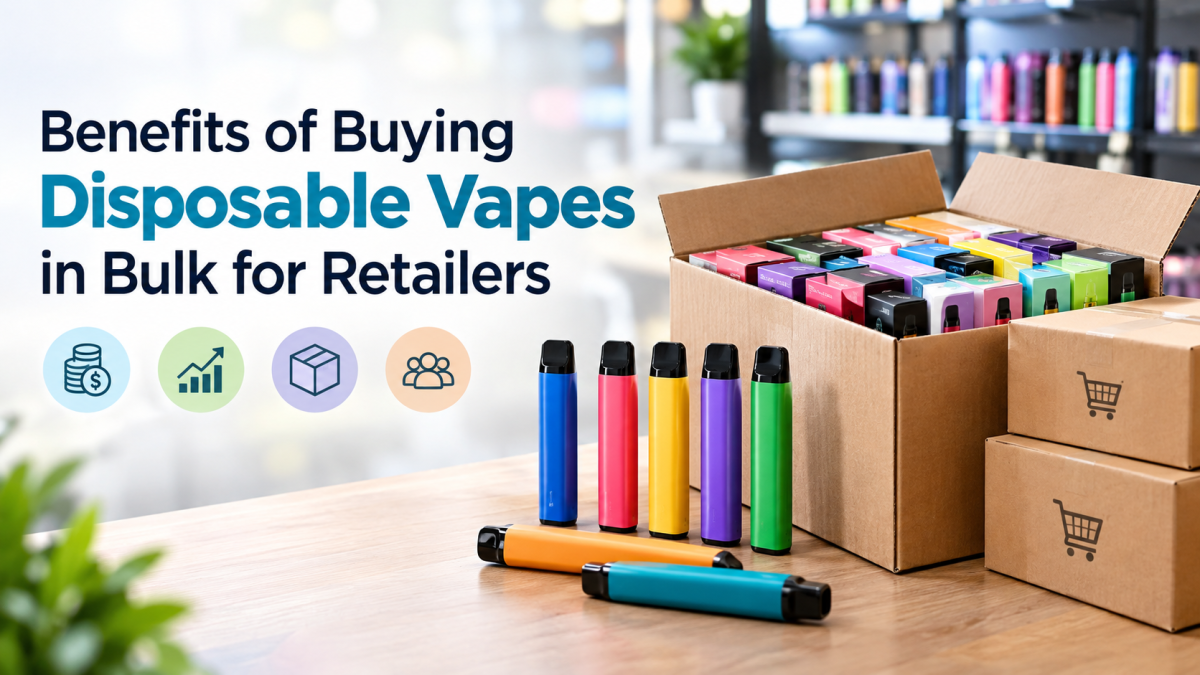
For vape retailers and smoke shop owners, inventory planning plays an important role in managing daily operations. Purchasing products in larger quantities can help businesses organize their stock, evaluate supplier pricing, and maintain a more consistent supply of products that meet local market requirements. A bulk disposable vape purchasing strategy can be worth considering for eligible retailers who want to streamline their ordering process and manage inventory more efficiently.
However, buying in bulk requires more than simply ordering a large quantity. Retailers need to consider product quality, supplier reliability, minimum order quantities (MOQs), storage requirements, and applicable regulations before placing an order.
This article explores the main benefits of buying disposable vapes in bulk and explains what retailers should consider when planning wholesale purchases.
1. Potential Cost Savings on Larger Orders
One of the main reasons businesses explore bulk purchasing is the possibility of obtaining more favorable unit pricing. Some wholesale suppliers offer tiered pricing based on order quantities, allowing eligible buyers to compare the cost of purchasing individual units with larger orders.
For retailers, lower unit costs may help improve profit margins when products sell at appropriate prices and operating expenses remain under control.
Before placing a bulk order, retailers should compare the complete cost of purchasing, including:
-
Unit price and applicable volume discounts
-
Shipping and handling charges
-
Import duties and taxes, where applicable
-
Storage and inventory management expenses
-
Potential losses from damaged, unsold, or non-compliant stock
The lowest quoted price does not always represent the best overall value. Retailers should evaluate the total landed cost and confirm that the products are legally marketable in their intended location.
2. More Consistent Inventory Management
Maintaining suitable inventory levels helps retailers organize their purchasing schedules and avoid unnecessary interruptions in business operations. Ordering a planned quantity of products can reduce the need for frequent reordering, particularly when supplier lead times are predictable.
A bulk disposable vape order may help retailers establish a more structured inventory plan. Instead of placing multiple small orders, businesses can coordinate purchasing around expected demand, available storage space, and supplier delivery schedules.
Retailers can improve inventory management by:
-
Reviewing sales data before placing new orders
-
Setting minimum and maximum stock levels
-
Tracking inventory by product model and variant
-
Recording expiry dates or shelf-life information where applicable
-
Monitoring slow-moving products before increasing order quantities
Bulk purchasing works best when order sizes reflect realistic demand rather than assumptions about future sales.
3. Fewer Reordering Tasks
Frequent purchasing can require additional time for communicating with suppliers, confirming product availability, processing invoices, and arranging deliveries.
Consolidating orders may reduce the administrative work associated with repeated purchasing. Retailers can plan their buying schedules in advance, maintain clearer records, and coordinate stock replenishment more efficiently.
For example, a retailer that reviews inventory every month may use sales history and supplier lead times to determine whether a larger scheduled order is more practical than several smaller purchases.
Nevertheless, retailers should avoid ordering more than they can reasonably sell or store. A streamlined ordering process is beneficial only when it supports actual business requirements.
4. Better Opportunities to Compare Wholesale Suppliers
Purchasing in bulk gives retailers a reason to evaluate suppliers more closely before establishing a long-term business relationship.
Rather than comparing suppliers solely on quoted prices, retailers should review their product documentation, communication, order terms, delivery arrangements, and procedures for handling damaged or incorrect shipments.
Important questions include:
-
Are the products authorized for sale in the intended market?
-
Can the supplier provide the necessary compliance documentation?
-
Are product specifications and packaging details clearly stated?
-
What are the minimum order quantity and payment terms?
-
How are shipping delays, damaged goods, and order discrepancies handled?
-
Can the supplier provide consistent information about product availability?
Comparing these factors helps businesses make purchasing decisions based on reliability and suitability instead of price alone.
5. More Structured Product Selection
Retailers often need to decide which products deserve space in their inventory. A bulk order provides an opportunity to plan product selection around documented customer demand, available shelf space, and the requirements of the markets they serve.
Before committing to large quantities, businesses should assess each product individually. Different models may have different specifications, compatible components, packaging requirements, and regulatory statuses.
A practical selection process includes:
-
Reviewing previous sales and customer feedback.
-
Checking product specifications and manufacturer information.
-
Confirming that each model is permitted for sale in the target market.
-
Comparing supplier prices and availability.
-
Estimating how quickly the planned inventory is likely to move.
Retailers should avoid assuming that every product in a supplier's catalogue is suitable for every market. Product selection must account for local laws and the specific needs of the business.
6. More Predictable Purchasing and Budget Planning
Wholesale purchasing requires retailers to balance available cash, inventory needs, and recurring operating expenses. Planning orders in advance can help businesses estimate purchasing costs and coordinate payments with their broader budgets.
When considering a bulk disposable vape purchase, retailers should calculate the expected total order value before committing funds. They should also account for rent, staffing, utilities, shipping, taxes, and other business expenses.
A useful purchasing budget should identify:
-
The total cost of the planned order
-
Expected delivery and import expenses
-
Available storage capacity
-
The amount of working capital remaining after purchase
-
A reasonable timeframe for selling the inventory
Bulk buying should not tie up so much working capital that a business struggles to meet its other financial obligations. Smaller, more frequent orders may be more appropriate when demand is uncertain or cash flow is limited.
7. Clearer Supplier Relationships and Replenishment Planning
Working with a consistent supplier can make it easier for retailers to maintain purchasing records and plan future orders. Familiarity with order procedures, product documentation, delivery timelines, and communication channels may reduce uncertainty during routine procurement.
However, a long-term relationship should not prevent retailers from reviewing supplier performance. Businesses should periodically compare prices, check product quality, verify current compliance requirements, and confirm that delivery commitments are being met.
Retailers should also keep written records of order quantities, invoices, product details, and delivery discrepancies. These records make it easier to evaluate suppliers and resolve purchasing issues when they arise.
What Should Retailers Check Before Buying Disposable Vapes in Bulk?
Although bulk purchasing offers potential operational advantages, it also creates risks when businesses order unsuitable products or quantities that exceed demand.
Before placing an order, retailers should consider the following factors.
1. Minimum Order Quantity (MOQ)
Confirm the supplier's minimum order requirements and determine whether the required quantity fits your budget and inventory plan. Do not assume that a larger order will automatically produce better overall value.
2. Product Quality and Documentation
Review product specifications, packaging, batch information where available, and applicable safety and compliance documentation. Confirm the authenticity of the products and establish how defects or discrepancies will be handled.
3. Local Market Regulations
Vape regulations vary by country and region. Retailers must verify applicable product authorization, age restrictions, labeling, packaging, nicotine limits, advertising restrictions, and other requirements before purchasing products for resale. In the United States, for example, FDA marketing authorization requirements are particularly important when evaluating which electronic nicotine delivery system products may legally be marketed.
4. Storage and Stock Turnover
Make sure the business has sufficient storage capacity and a practical plan for managing inventory. Estimate how quickly the products may sell, and avoid purchasing quantities that could remain unsold for extended periods.
5. Supplier Reliability
Check delivery terms, payment arrangements, product availability, documentation, and customer support. Clear written terms can help reduce misunderstandings and make order management more predictable.
Conclusion
Buying disposable vapes in bulk can help US retailers manage inventory, plan purchasing costs, and maintain a consistent supply of products. However, successful wholesale purchasing depends on understanding customer demand, comparing prices, checking product quality, and meeting applicable US regulations.
For retailers and distributors seeking a wholesale supply partner, UPENDS offers a range of vape products, including disposable vapes, open pod systems, and closed pod systems. With a focus on product innovation and wholesale distribution, UPENDS supports businesses looking for products that align with their inventory needs. By evaluating product specifications, order quantities, pricing, and regulatory requirements, retailers can make informed purchasing decisions and develop a more effective inventory strategy.

UPENDS is a professional vape brand and manufacturer specializing in high-puff disposable vapes and pod systems. We offer innovative products such as UP9 (50,000 puffs) and UP7 with advanced features like adjustable airflow and dual mesh coil technology.













Comments (0)