

Importance of Biomedical Devices in Modern Healthcare
Technology has become an important part of modern healthcare. Hospitals, clinics, laboratories, and other healthcare centers use medical technology to provide better care and support healthcare workers
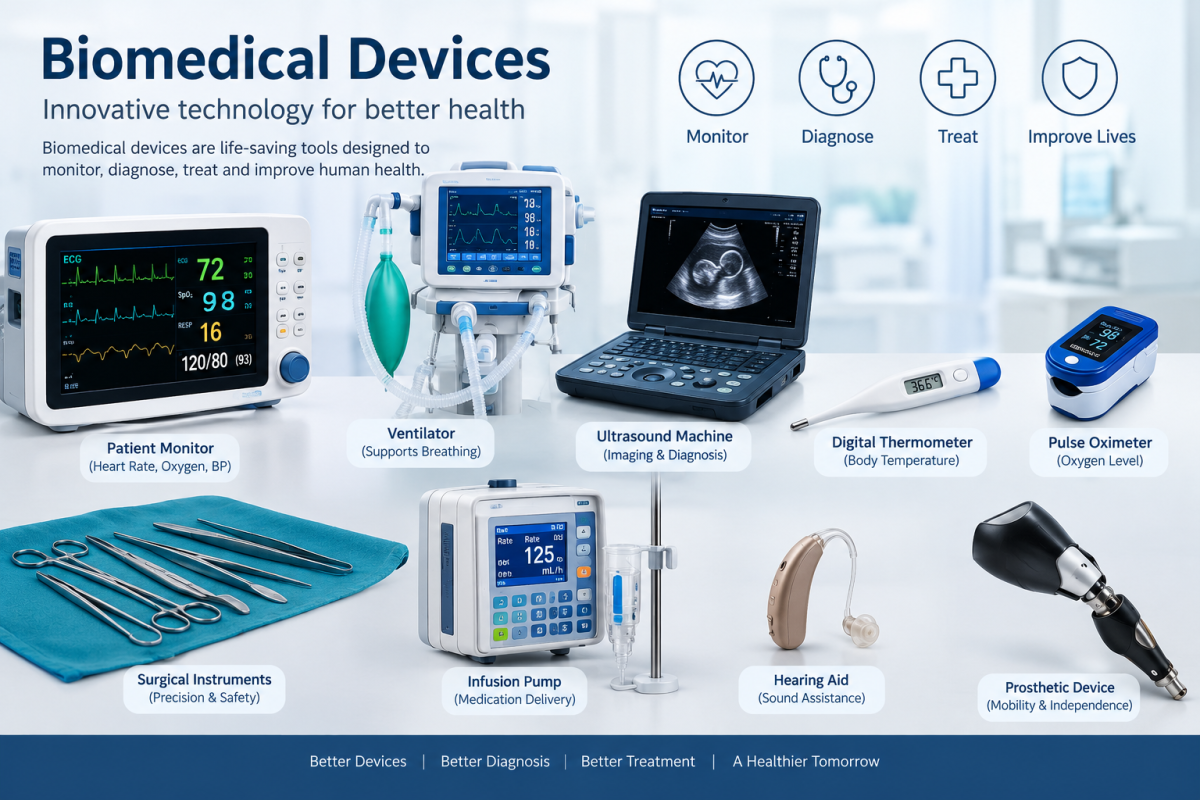
Technology has become an important part of modern healthcare. Hospitals, clinics, laboratories, and other healthcare centers use medical technology to provide better care and support healthcare workers. A Biomedical Device can help doctors and nurses monitor patients, collect health information, support diagnosis, and provide treatment. These devices have changed many parts of medical care and have made several healthcare tasks faster and easier.
The importance of medical technology is not limited to large hospitals. Smaller clinics, testing centers, rehabilitation facilities, and home healthcare services also depend on suitable medical devices. When these devices are selected, used, and maintained properly, they can support safe and effective patient care.
What Is a Biomedical Device?
A Biomedical Device is a tool, machine, or electronic system designed to support medical care. It may be used to measure a patient's health, identify a medical problem, support treatment, or monitor recovery. Devices can be simple or advanced, depending on their purpose.
For example, some devices are used to measure temperature, blood pressure, or oxygen levels. Other systems can monitor several body functions at the same time. More advanced equipment may be used during surgery, intensive care, laboratory testing, or other medical procedures.
Importance in Patient Care
Patient care is one of the main reasons medical technology is important. Healthcare professionals need clear information about a patient's condition before making many medical decisions. Medical devices can provide useful measurements that help staff understand changes in a patient's health.
Regular monitoring can also help healthcare workers notice unusual changes earlier. This can be especially important for patients who need close attention. Reliable devices can support healthcare teams while they focus on the needs of their patients.
Supporting Accurate Patient Monitoring
Monitoring is an important part of healthcare. Doctors and nurses often need to check vital signs during routine visits, treatment, recovery, and emergency care.
Biomedical Devices can measure information such as heart rate, blood pressure, body temperature, and oxygen levels. Some monitoring systems can display several readings together, making it easier for healthcare workers to follow a patient's condition.
Continuous monitoring can be particularly useful in intensive care units and operating rooms. It allows medical staff to observe patients closely and respond when their condition changes.
Helping With Early Diagnosis
Early diagnosis can play an important role in patient care. Finding a health problem at an early stage may allow doctors to begin suitable care sooner.
Medical devices can help collect information needed for different types of testing. Some systems measure body functions, while others help doctors view or examine parts of the body. Laboratory equipment can also help analyze samples taken from patients.
The information produced by these systems can support doctors as they assess a patient's condition. Medical technology does not replace professional judgment, but it can provide useful information for making informed decisions.
Supporting Medical Treatment
Another reason medical technology is important is its role in treatment. Some equipment is designed to help healthcare workers deliver medicines, fluids, oxygen, or other forms of patient support.
Treatment devices can provide controlled care when used correctly. This may help healthcare professionals follow a patient's treatment plan more carefully.
Proper training is important when using treatment equipment. Staff should understand the device, its controls, safety features, and correct operating steps. This helps reduce mistakes and supports safer patient care.
Importance During Surgery
Surgical procedures require careful planning and close attention to the patient's condition. Medical technology provides important support before, during, and after surgery.
During an operation, monitoring systems can show information about heart rate, blood pressure, oxygen levels, and other vital signs. Other devices may support specific surgical tasks or help medical teams manage the procedure.
The reliability of equipment is very important in an operating room. Regular inspection, cleaning, testing, and maintenance help ensure that equipment is ready when needed.
Role in Emergency Care
Emergency departments handle patients who may require immediate medical attention. In such situations, healthcare workers need to assess patients quickly and make timely decisions.
A Biomedical Device can help emergency teams collect important health information in a short time. Monitoring equipment can help staff follow changes in a patient's condition, while treatment systems can support urgent medical care.
Emergency equipment must be ready for use at all times. Regular checks can help identify problems before equipment is needed for a critical situation.
Importance in Intensive Care
Intensive care units provide treatment to patients who need close and continuous observation. These patients may require advanced monitoring and medical support.
Biomedical Equipment can help healthcare workers follow several health measurements at the same time. Some systems can provide information continuously, allowing staff to watch for changes.
The correct use of intensive care equipment requires trained professionals. Staff should know how to operate the equipment and understand what the readings may indicate in the context of patient care.
Supporting Laboratory Testing
Laboratories play an important role in modern healthcare. Many medical decisions depend on test results from blood, urine, tissue, and other samples.
Laboratory equipment helps healthcare workers examine these samples and obtain useful information. Reliable systems can support consistent testing and help laboratories handle a large number of samples.
Equipment must be cleaned, checked, and maintained regularly. Laboratory staff also need suitable training to use testing systems correctly and handle samples safely.
Helping Patient Recovery
Medical technology can remain important even after diagnosis and treatment. Many patients need support while recovering from an illness, injury, or surgical procedure.
Some devices can help healthcare professionals monitor a patient's progress during rehabilitation. Others may support controlled movement or exercise. This technology can help staff understand how a patient is progressing and make suitable changes to the care plan.
Recovery can take time, so reliable equipment can provide useful support throughout the process.
Supporting Home Healthcare
The use of medical technology has also expanded into homes. Some devices allow patients to check selected health measurements without visiting a healthcare facility every time.
Home monitoring can be useful for people who need regular checks. Information collected at home may help healthcare professionals follow changes when it is recorded and shared correctly.
Patients should receive clear instructions before using medical equipment at home. They should understand how to operate, clean, store, and care for the device properly.
Importance of Maintenance
The value of medical technology depends greatly on proper maintenance. Equipment that is used regularly can experience wear over time. Without proper care, its performance may be affected.
Healthcare facilities should follow suitable maintenance schedules. Cleaning, inspection, testing, calibration, and repair can help keep equipment working properly.
Biomedical Equipment should also be checked when it shows signs of damage or unusual performance. Quick attention to equipment problems can help reduce unexpected failure and support a safer healthcare environment.
Importance of Staff Training
Training is another major part of safe medical technology use. Even a high-quality device may not provide good results if users do not understand how to operate it.
Healthcare workers should receive proper training before using new equipment. They should understand basic controls, safety steps, cleaning requirements, and correct operating procedures.
Ongoing training can also help staff stay familiar with updated systems. Good training supports confidence and can reduce the risk of mistakes during patient care.
Improving Healthcare Efficiency
Medical technology can also improve the way healthcare facilities manage their daily work. Digital systems and modern equipment can help staff collect, view, and record information more efficiently.
Faster access to useful information may help reduce delays in some healthcare tasks. It can also make it easier for different members of a medical team to follow a patient's progress.
However, technology should be used as a support for healthcare workers rather than a replacement for professional care and human attention.
Choosing the Right Equipment
Healthcare facilities need to choose equipment according to their actual needs. The right choice depends on the type of medical services provided, the number of patients, available staff, and the intended use of the equipment.
Quality, accuracy, ease of use, maintenance needs, and technical support should all be considered. A reliable supplier can also provide installation, training, repairs, and replacement parts when required.
Choosing suitable equipment can help healthcare facilities use their resources effectively while supporting patient safety and quality care.
Future of Biomedical Technology
Medical technology continues to develop as healthcare needs change. New systems are being created to improve patient monitoring, testing, treatment, and communication.
Digital technology may make it easier to collect and manage health information. Smart devices may also provide healthcare workers with faster access to useful patient data.
As these technologies develop, safety and proper training will remain important. New devices must be used carefully and according to appropriate medical practices.
Conclusion
The importance of a Biomedical Device can be seen across almost every part of modern healthcare. These devices support patient monitoring, diagnosis, treatment, surgery, emergency care, intensive care, laboratory testing, rehabilitation, and home healthcare.
Biomedical Devices provide useful information and support healthcare professionals in many daily tasks. At the same time, proper training, maintenance, testing, and safe handling are necessary to maintain reliable performance.
Biomedical Equipment will continue to play an important role as healthcare technology develops. When the right equipment is selected and used correctly, it can help healthcare professionals provide safer, faster, and more effective care while improving the overall patient experience.
More Info: Amg Medical

As a leading surgical instruments manufacturer and global partner, we focus on trusted care, scalable supply chain management, and technology-driven solutions to improve patient outcomes across all levels of care. More Info: https://amgmedical.net/








Comments (0)