

Low AMH and Fertility: What the Test Can and Cannot Tell You
Learn what a low AMH level really means for fertility, including ovarian reserve, natural conception, IVF, egg quality, fertility testing, and when to consult a fertility specialist.
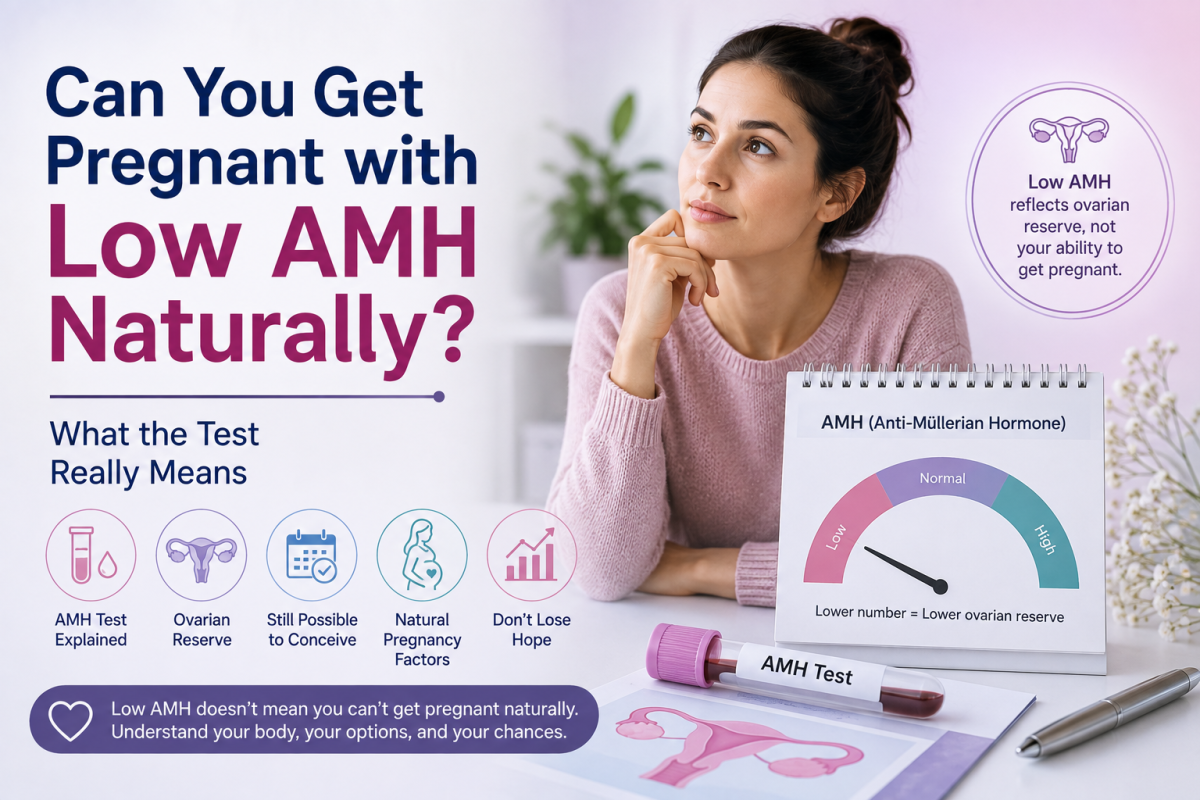
AMH, or Anti-Müllerian Hormone, is one of the most discussed fertility tests. Many people receive an AMH result and immediately wonder whether it means they can become pregnant, whether IVF is necessary, or whether their fertility is declining faster than expected.
The reality is more nuanced. AMH is useful information, but it is not a complete fertility test and it should not be treated as a direct prediction of natural pregnancy.
What Is AMH?
Anti-Müllerian Hormone is produced by cells associated with developing ovarian follicles. Blood AMH levels are commonly used as one indicator of ovarian reserve, meaning the remaining pool of follicles that may be recruited during reproductive life.
AMH is particularly useful when a fertility specialist is estimating how the ovaries may respond to stimulation during fertility treatment.
However, ovarian reserve is not the same as egg quality.
What Does a Low AMH Mean?
A low AMH may suggest a lower ovarian reserve. In practical terms, this can mean that the ovaries may produce fewer eggs in response to stimulation compared with someone with a higher reserve.
It does not automatically mean that pregnancy is impossible.
Ferti.health's educational guidance similarly emphasizes that AMH reflects egg quantity more than egg quality and that low AMH does not by itself determine whether someone can conceive.
AMH Does Not Directly Measure Egg Quality
One of the most important points about AMH is that it does not directly tell you whether your eggs are chromosomally normal or whether a particular egg will create a healthy embryo.
Age remains a major factor in reproductive outcomes because egg quality changes with age.
This is why two people with similar AMH values can have very different fertility situations depending on age, ovulation, sperm factors, fallopian tube status, uterine health, and other variables.
Can You Get Pregnant Naturally With Low AMH?
Yes, pregnancy can occur with low AMH.
AMH is not designed to answer the question, "Will I become pregnant this month?" Natural conception depends on ovulation, timing, sperm, fallopian tubes, the uterus, embryo development, and many other factors.
A low AMH result should therefore be interpreted alongside the rest of the fertility evaluation.
Low AMH and IVF
AMH can be useful when planning IVF because it can help clinicians anticipate ovarian response to stimulation.
A lower AMH may be associated with a smaller number of eggs retrieved during IVF. However, the objective is not simply to achieve a high egg count. The quality of the embryos and the overall clinical situation also matter.
An IVF protocol should therefore be individualized.
What Other Tests Are Used?
A fertility specialist may consider AMH alongside:
· Antral follicle count on ultrasound
· Menstrual and ovulation history
· Age
· FSH and other hormone measurements when appropriate
· Semen analysis
· Fallopian tube assessment
· Medical and reproductive history
No single test provides a complete fertility diagnosis.
Should You Repeat a Low AMH Test?
AMH can vary, and laboratory methods can differ. A clinician may recommend repeating the test if the result does not fit the broader clinical picture.
It is important not to make major treatment decisions based on one number without discussing the result with a fertility specialist.
Does Low AMH Mean Menopause Is Imminent?
Not necessarily.
AMH is associated with ovarian reserve, but it is not a reliable standalone clock for predicting exactly when menopause will occur in an individual.
A low result should not automatically be interpreted as meaning that menopause is about to happen.
What Can You Do After Receiving a Low AMH Result?
Start by understanding the complete picture.
Useful questions include:
· What does my AMH mean for my specific age?
· What is my antral follicle count?
· Am I ovulating regularly?
· Are there other factors affecting fertility?
· Should I try naturally, consider treatment, or preserve fertility?
· If IVF is recommended, what response should we realistically expect?
The answers depend on individual circumstances.
Low AMH and Egg Freezing
For people considering fertility preservation, ovarian reserve testing can be useful when planning treatment. However, AMH should be interpreted together with age and other clinical information.
A lower AMH may mean fewer eggs are expected from a stimulation cycle, which can influence discussions about the number of cycles that might be needed.
Frequently Asked Questions
Is low AMH the same as infertility?
No. Low AMH indicates reduced ovarian reserve but does not by itself diagnose infertility.
Can IVF work with low AMH?
IVF can still be an option. The expected ovarian response may be lower, and the treatment plan should be individualized by a fertility specialist.
Can AMH tell me my egg quality?
No. AMH is mainly used as a marker of ovarian reserve and does not directly measure egg quality.
What is the most important factor in fertility?
Fertility is influenced by multiple factors, including age, ovulation, sperm, fallopian tubes, uterine health, and ovarian reserve. There is no single number that determines fertility for everyone.
Conclusion
A low AMH result can be concerning, but it should not be interpreted as a verdict on your ability to become pregnant.
AMH is most useful when considered alongside age, ovarian ultrasound, reproductive history, ovulation, sperm factors, and other clinical information. If you receive a low result, discuss it with a qualified fertility specialist rather than making treatment decisions based on the number alone.
Ferti.health provides educational fertility information and notes that individual fertility decisions require professional medical guidance.

Ferti.health is an evidence-backed fertility education platform helping individuals and couples better understand fertility, reproductive health, and treatment options. The platform provides medically reviewed information on IVF, IUI, ICSI, egg freezing, embryo transfer, fertility conditions, success rates, and treatment costs. Our content is designed to make complex fertility information easier to understand, with practical guidance on treatment procedures, age-based success rates, Indian clinic cost ranges, and fertility-related conditions. Content is reviewed by fertility specialists and supported by evidence from trusted sources, including PubMed, ESHRE, ICMR, and ASRM. Ferti.health also provides fertility tools, including IVF cost and success estimators, to help users better understand their options. Our goal is to provide clear, transparent, and evidence-based fertility information so people can make more informed decisions and have better conversations with qualified fertility specialists. For more Details Please Visit https://ferti.health/






Comments (0)