

How Trusted Air Duct Cleaners Inspect Hidden Duct Networks Behind Your Walls and Ceilings
Learn how trusted air duct cleaners inspect hidden duct networks inside walls and ceilings. Discover diagnostic tools, leak fixes, and cleaner indoor air.

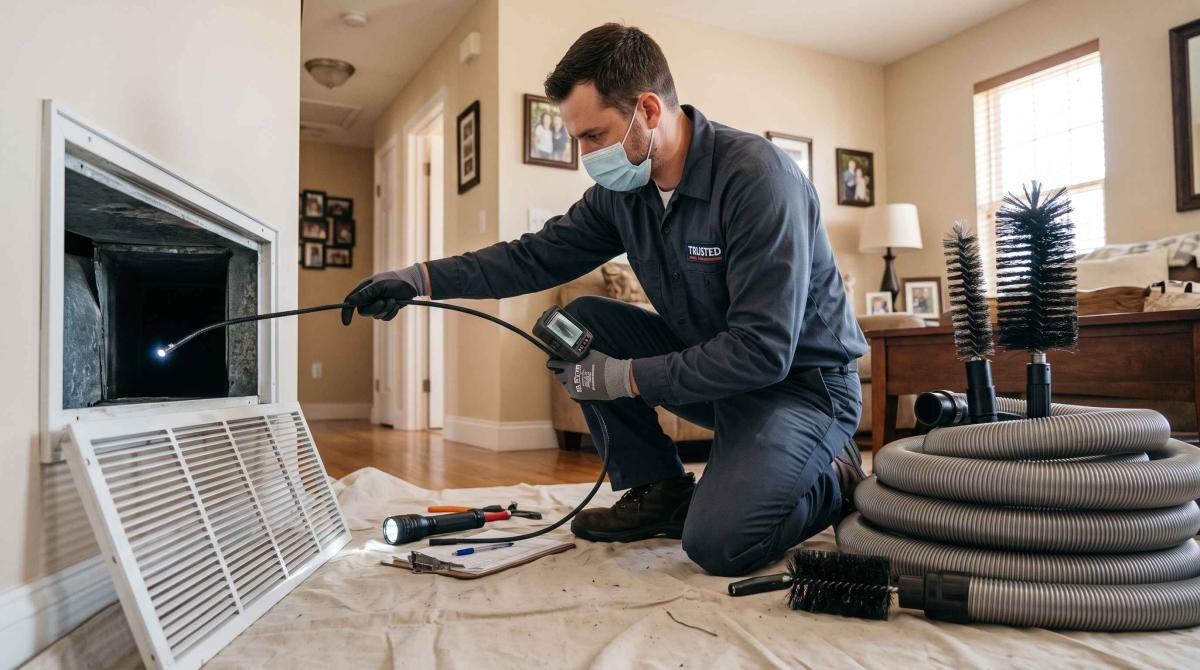
Every time your furnace hums to life in the winter or your central air kicks on during a sweltering summer afternoon, hundreds of cubic feet of air travel through a maze of pathways you almost never see. Tucked behind drywall, suspended between subfloors, and routed across dark attic rafters, your ductwork serves as the respiratory system of your house. It delivers climate-controlled comfort to every room, yet because it stays largely out of sight, it easily slips out of mind.
Over months and years, that hidden network collects more than just air. Fine dust, construction debris, pet dander, pollen, pest droppings, and microscopic moisture deposits settle into seams and corners. When indoor air quality dips, utility bills rise, or family members begin sneezing without explanation, the real issue is rarely the air filter at the intake grille. The challenge lies deep inside those hidden runs.
Inspecting these enclosed spaces requires specialized skill, clear diagnostic protocols, and advanced technology. Professional technicians do not simply pull off a vent cover and shine a pocket flashlight down a register; true diagnostics demand a methodical, non-destructive journey into the core of your structure. Here is how expert technicians examine hidden duct networks, identify lurking performance hazards, and restore pristine airflow throughout your living space.
1. The Anatomy of Hidden Duct Networks: Why Surface Checks Fall Short
To understand why professional inspections require specialized gear, you first have to look at how duct systems are assembled. Modern residential HVAC systems are not straight, smooth tunnels. They consist of complex trunk lines, transitional reducers, flexible branch lines, damper valves, and return drops.
Rigid Sheet Metal vs. Flexible Ducting
Most main supply trunks are built from galvanized sheet metal or rigid duct board. These sturdy components carry large air volumes directly from the air handler. From there, installers connect branch runs using either smaller metal pipes or flexible spiral wire-and-polyethylene ducting.
Flexible ducts are common in attics, crawlspaces, and tight drops behind drywall because they navigate around framing members with ease. However, they also feature ribbed inner walls that create friction, catch heavy dust particles, and form dips where condensation or debris accumulates. A glance through a floor register will show you the clean opening of the register boot, but it reveals nothing about the twenty-foot run of ribbed flex duct curving through a ceiling joist ten feet away.
Hidden Friction Points and Joint Leaks
Duct networks are held together by mechanical fasteners, aluminum foil tape, and mastic sealant. Over decades of heating and cooling cycles, joints expand and contract. Tape dries out, mastic cracks, and seams loosen.
When a seam opens behind a wall, two major problems occur simultaneously:
-
Conditioned air escapes into wall cavities, driving up heating and cooling bills while leaving distant rooms uncomfortably warm or chilly.
-
Unfiltered air gets sucked into return ducts, pulling fiberglass insulation fibers, drywall dust, and attic contaminants straight into your breathing air.
Surface-level checks cannot identify these compromised joints. Homeowners who hire reputable providers for air duct cleaning services in Heber City Utah often discover that persistent temperature imbalances between bedrooms were never caused by a faulty thermostat, but rather by disconnected duct joints hidden deep within attic insulation.
2. Advanced Diagnostic Tools: How Techs "See" Through Drywall
Technicians cannot rip open walls or drop ceilings simply to check the cleanliness of an HVAC system. Instead, reputable technicians leverage specialized diagnostic instruments that peer through tiny entry points and translate physical air behavior into clear data.
+-----------------------------------------------------------------------------------+
|                        ADVANCED DUCT INSPECTION TOOLKIT                           |
+--------------------------+--------------------------------------------------------+
| Tool                     | Core Diagnostic Purpose                                |
+--------------------------+--------------------------------------------------------+
| High-Def Borescopes      | Flexible fiber-optic cameras that access tight bends   |
| Motorized Crawler Robots | 360-degree high-definition video inside main trunks    |
| Thermal Imaging Cameras  | Locating air leaks and missing insulation via heat     |
| Manometers & Pitot Tubes | Measuring static pressure drops across internal runs   |
| Airflow Anemometers      | Verifying CFM volume at supply and return registers    |
+--------------------------+--------------------------------------------------------+
High-Resolution Borescopes and Fiber-Optic Scopes
A borescope features a long, semi-rigid optical cable equipped with an adjustable LED light ring and a micro-camera tip. Technicians thread this cable directly through vent louvers, damper access holes, or supply boots.
As the cable glides through ninety-degree elbows and vertical risers, it feeds live, high-definition video back to an external monitor or tablet. Technicians watch for:
-
Clustered mold or fungal growth near evaporator coils.
-
Settled drywall mud left behind by original construction crews.
-
Pest activity, including nesting materials and insect deposits.
-
Torn internal scrim or delaminating fiberglass liner.
Motorized Robotic Crawlers
For larger horizontal trunk lines running through crawlspaces or beneath central hallways, top-tier technicians deploy remote-controlled robotic inspection crawlers. Equipped with tank-style treads, pan-tilt-zoom camera modules, and ultra-bright lighting arrays, these small rovers travel dozens of feet down main lines.
The rover captures crisp footage of sheet-metal seams, turning vanes, and zone dampers. By recording this footage, technicians provide homeowners with definitive before-and-after proof of duct hygiene.
Infrared Thermal Imaging
Not all duct issues involve dirt; some involve energy loss. Forward-looking infrared (FLIR) cameras read surface temperature variations across drywall, plaster, and baseboards.
When your cooling system runs, cool air leaking from an unsealed duct seam behind a living room wall cools the surrounding drywall. To the naked eye, the wall looks normal. Through a thermal imager, the technician sees a dark purple plume indicating an active conditioned air leak. This diagnostic approach pinpoints the exact cavity that requires attention, eliminating destructive trial-and-error guesswork.
Static Pressure and Airflow Testing
Experienced professionals treat duct diagnostics as both a visual and a mechanical science. By inserting a thin static pressure probe through a tiny test port drilled near the furnace blower, technicians measure the resistance to airflow within the entire network.
High static pressure indicates severe blockages, crushed flex runs, or improperly sized return drops. Low static pressure often signals massive disconnections where air dumps harmlessly into an attic or crawlspace. Homeowners who call upon Logan's trusted air duct cleaners benefit from this holistic mechanical approach, ensuring their HVAC plant operates safely within factory airflow specifications.
3. The Step-by-Step Anatomy of a Professional Hidden Duct Inspection
A thorough inspection follows a disciplined protocol. When an experienced technician arrives at your home, they do not rush to hook up vacuum hoses; they follow a systematic evaluation designed to protect your home and uncover hidden trouble spots.
System Walkthrough & Register Mapping
                 │
                 ▼
Static Pressure & Baseline Airflow Check
                 │
                 ▼
Targeted Video Scope & Robotic Camera Deployment
                 │
                 ▼
Thermal Envelope & Leakage Detection
                 │
                 ▼
Findings Review & Transparent Service Action Plan
Step 1: Mapping the Distribution Grid
The technician begins by walking the property to map every supply register and return intake. They check whether registers are installed in floors, ceilings, or high sidewalls, identifying the probable routes that duct runs take between floor joists and wall studs. They also inspect the furnace cabinet, filter housing, and blower wheel to establish the baseline cleanliness of the air handling unit itself.
Step 2: Register Removal and Boot Assessment
Next, the technician removes selected vent covers to examine the boots, which are the transition boxes connecting room registers to hidden branch lines. Technicians examine the boot-to-drywall seal. If this perimeter seam is uncaulked, unconditioned wall cavity air constantly bleeds into your living area.
Step 3: Deep Optical Navigation
The technician introduces borescopes or crawler units into primary trunk lines, navigating deep into the hidden core of the structure. They systematically inspect the return plenum first, as this section carries the heaviest dust loads, followed by the main supply trunks downstream of the furnace.
They pay close attention to internal components such as:
-
Turning vanes: Curved internal metal fins that steer air around sharp corners, which frequently collect thick sheets of lint and pet fur.
-
Zone dampers: Motorized metal flaps that direct air to specific zones, which can become mechanically stuck or jammed with debris.
-
Plenum seams: The primary box directly above or beside the furnace, where vibration often loosens mastic seals.
Step 4: Assessing Microbial and Moisture Risks
In high-humidity spaces or homes situated in valleys with dramatic temperature swings, condensation readily forms on cold duct surfaces. If organic dust combines with localized moisture, microbial colonies can establish themselves in as little as 48 hours.
Technicians inspect the area around the air conditioner evaporator coil and drain pan, checking for stagnant water, biological growth, or rust flakes that indicate persistent drainage failures.
Step 5: Documenting Findings and Presenting the Report
A genuine professional never uses pressure tactics or vague warnings about contaminated air. Instead, they provide concrete evidence. Homeowners receive clear video captures, still photos, and airflow readings showing exactly what sits inside their hidden ductwork.
Whether the system needs full negative-air agitation cleaning, minor seam re-sealing, or a simple coil wipe-down, the data guides the decision.
4. What Technicians Find: Dust, Damage, and Structural Hazards
Homeowners are often startled by what crawls, settles, or falls into hidden ductwork. Because duct systems remain pressurized, materials that enter can travel substantial distances before settling.
Construction Dirt and Remodeling Residuals
Even in modern homes, original construction crews frequently leave behind significant debris. Sanding drywall, cutting hardwood flooring, and laying tile produce airborne particulates that settle inside open floor registers before grates are installed. During an inspection, borescopes often reveal:
-
Dried drywall joint compound and plaster chunks.
-
Leftover fiberglass batt cutoffs.
-
Sawdust layers that have rested undisturbed inside ceiling drops for years.
Every time the blower motor powers on, fine silica and plaster dust circulate back into your living space, dulling furniture finishes and irritating delicate airways.
Biological and Pest Infiltration
Rodents and insects view warm, quiet ductwork as prime real estate. Mice can slip through gaps smaller than a dime, chewing through flexible duct liners to build nests out of torn insulation.
Technicians regularly discover droppings, nesting materials, and food caches hidden twenty feet down a branch line. Left unchecked, the HVAC blower acts as a distribution fan, circulating biological particulates and musty odors across every room in the house.
Collapsed or Pinched Runs
In attics and tight crawlspaces, flexible duct lines are frequently slung from joists using nylon straps. If an installer uses narrow strapping or spaces hangers too far apart, the flex duct can kink, buckle, or sag under its own weight.
Inspections frequently reveal runs that have collapsed almost entirely, choking airflow to a home office or master suite. Homeowners often endure years of hot or cold rooms thinking the furnace lacks power, when the real culprit is a single pinched silver tube hidden beneath twelve inches of blown-in attic cellulose.
5. Mountain Climates and Regional Considerations
Duct performance does not happen in a vacuum; local weather patterns directly impact what happens inside your walls. In mountain valleys and high-elevation areas, winter conditions bring freezing temperatures and dry air outside, while indoor heating systems run almost continuously.
The Impact of Inversion Layers and Valley Air
In regions like Utah, winter weather patterns frequently trap stagnant, pollutant-laden air close to the valley floors during atmospheric inversions. Particulate matter, vehicle emissions, and wood smoke linger in the atmosphere.
When your heating system draws in fresh air or pulls drafts through unsealed exterior wall cavities, high-density particulates accumulate inside hidden return lines. Scheduling air duct cleaning services in Heber City Utah helps residents combat the specific indoor air quality challenges created by mountain valley winters, clearing out the fine particulates that manage to bypass standard pleated filters.
Agricultural Dust and Seasonal Pollen Loads
Rural and agricultural valleys experience heavy seasonal wind gusts that whip fine topsoil, chaff, and mountain cedar pollen through every microscopic structural opening. Over time, this mixture settles inside ductwork, creating an abrasive layer that coats blower wheel blades, restricts airflow, and increases wear on HVAC motors.
Working with Logan's trusted air duct cleaners ensures that seasonal agricultural residues and pollen build-ups are cleared out before summer air conditioning cycles commence, protecting system efficiency and personal comfort.
6. The Tangible Benefits of Comprehensive Professional Inspection
Investing in a thorough duct diagnostic delivers measurable returns across your entire household budget and living environment.
+-----------------------------------------------------------------------------------+
|                        THE RETURN ON A THOROUGH INSPECTION                        |
+--------------------------+--------------------------------------------------------+
| Benefit Area             | Real-World Impact                                      |
+--------------------------+--------------------------------------------------------+
| HVAC System Longevity    | Lowers strain on blowers, heat exchangers, and coils   |
| Lower Utility Expenses   | Recovers lost static pressure and eliminates air leaks |
| Consistent Room Comfort  | Balances CFM delivery so every room stays tempered     |
| Cleaner Living Spaces    | Reduces dust on furniture, baseboards, and registers   |
| Healthier Indoor Air     | Removes allergens, pest dander, and trapped mold spores|
+--------------------------+--------------------------------------------------------+
Extended Equipment Lifespan
Your heating and cooling equipment represents one of the largest capital investments in your home. When hidden return runs are choked with dust or supply trunks are pinched, the blower motor must work harder to pull and push air against elevated static pressure.
This added resistance causes motors to overheat, heat exchangers to crack from restricted airflow, and evaporator coils to freeze up during hot spells. Clean, open duct runs allow air handling equipment to operate within engineered parameters, preventing premature mechanical failures.
Reduced Energy Overhead
Conditioned air costs real money to create. If your system loses twenty percent of its output through loose joints inside an unheated attic, your furnace must run twenty percent longer to satisfy the thermostat setting. Pinpointing and correcting these hidden distribution losses restores heating efficiency, lowering monthly utility costs throughout severe winter chills and midsummer heatwaves alike.
Superior Family Health and Daily Comfort
When the hidden network behind your walls is clean, your indoor living environment transforms. Dusting becomes a weekly chore rather than a daily frustration. Rooms maintain consistent temperatures without dramatic drafts, and family members suffering from seasonal allergies or respiratory sensitivities experience genuine relief inside their own living rooms.
Breathe Easy: Schedule Your Hidden Duct Inspection Today
You should never have to guess what your family breathes every time the heat clicks on. The walls and ceilings of your home keep your ductwork safely out of sight, but that should not keep it out of your home maintenance strategy.
Professional diagnostic inspections bring clarity, precision, and verified performance to your entire heating and cooling system. Whether you suspect a disconnected duct in your attic, notice persistent dust settling across your furniture, or simply want to verify the efficiency of your HVAC system before the next seasonal weather shift, professional technicians have the specialized tools and field expertise to help.












Comments (0)