

How to Detect Hidden Moisture Behind Walls and Under Floors
Hidden moisture usually announces itself through smell, subtle texture changes, or paint and trim issues long before it becomes visible.
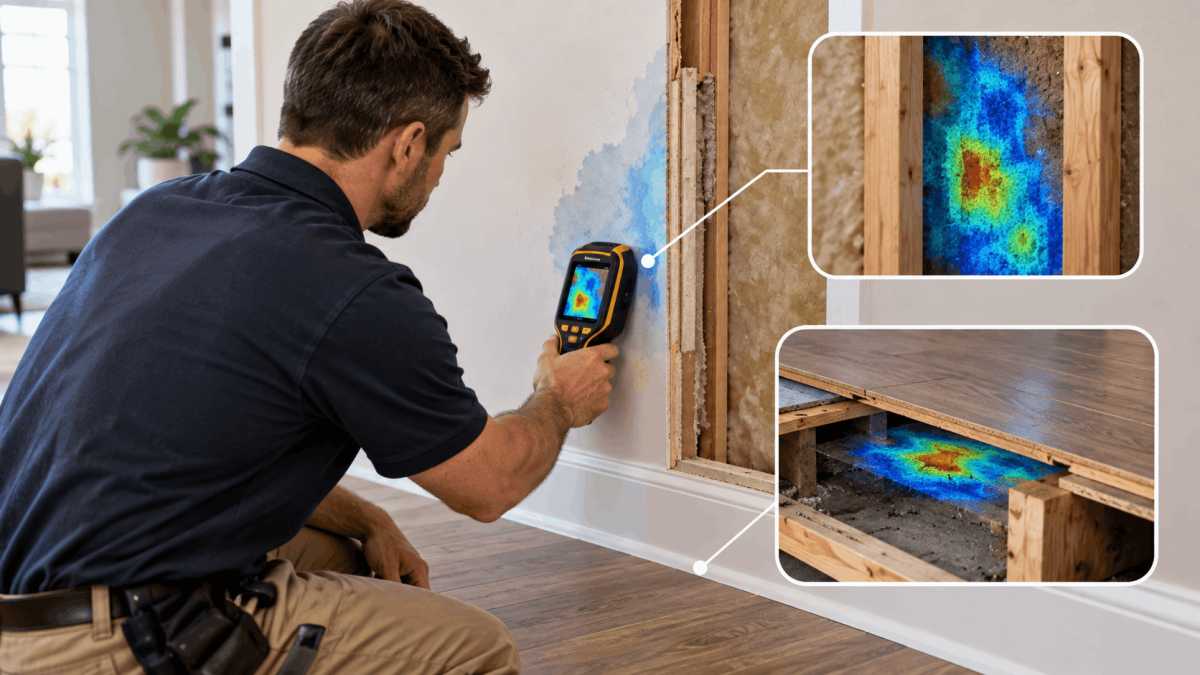
Hidden moisture usually announces itself through smell, subtle texture changes, or paint and trim issues long before it becomes visible, and the only reliable way to confirm it is with a moisture meter or infrared camera rather than guessing based on appearance alone. Walls and floors are good at hiding water damage, which is exactly why so many homeowners are surprised by the extent of a problem once it's finally uncovered.
The Short Answer Before the Full Breakdown
1. Why Hidden Moisture Is More Common Than People Realize
Water doesn't need a dramatic flood to end up trapped inside a wall or under a floor. A slow plumbing leak, condensation from a poorly insulated pipe, or moisture wicking up from a damp foundation can all quietly saturate materials for weeks without producing any obvious visible sign.
2. What Makes This Different From an Obvious Leak
An obvious leak shows itself immediately, a puddle, a dripping ceiling, a wet spot spreading across a floor. Hidden moisture does the opposite. It builds slowly behind a barrier, drywall, subflooring, insulation, and by the time it's noticeable from the outside, it's often already caused significant damage on the inside.
Signs That Moisture Might Be Hiding Nearby
1. Smells That Don't Match What You Can See
A musty or earthy smell in a room with no visible water source is one of the clearest early signals that something's wrong behind the scenes. People often blame this on an old house smell or a stuffy room, when it's actually pointing to moisture trapped somewhere close by.
2. Changes in Paint, Wallpaper, and Trim
Peeling paint, bubbling wallpaper, or trim that suddenly feels soft or looks slightly warped are all signs moisture is affecting the material from behind rather than from a surface spill. These changes tend to show up gradually, which makes them easy to dismiss as normal wear until they're pointed out.
Flooring That Feels Different Underfoot
A slightly spongy feeling when walking across a floor, or boards that seem to flex more than they used to, often means moisture has reached the subfloor. This kind of change is subtle enough that most people notice it without immediately connecting it to a water issue.
Tools That Actually Detect Hidden Moisture
1. Moisture Meters and How They Work
Moisture meters measure the actual water content inside a material, whether that's drywall, wood flooring, or framing, without needing to cut into anything. This tool takes the guesswork out of a decision that otherwise comes down to hoping a surface that looks dry actually is dry underneath.
2. Infrared Cameras for Larger Areas
Infrared cameras detect temperature differences across a surface, and damp areas typically show up cooler than surrounding dry material due to evaporation. This makes it possible to scan an entire wall or ceiling quickly, identifying problem areas before drilling down with a moisture meter for confirmation.
3. Hygrometers for Ambient Humidity Tracking
While not a direct detection tool for hidden moisture, a hygrometer tracking room humidity over time can flag when a space is consistently running damper than it should, which often points toward a hidden moisture source feeding that elevated humidity.
Common Places Moisture Hides Without Warning
1. Behind Bathroom and Kitchen Walls
Wet areas naturally see the most moisture exposure, and grout lines, caulking, and plumbing connections behind these walls are common points where slow leaks develop unnoticed for extended periods. Checking behind an accessible panel or fixture periodically catches this before it spreads.
2. Under Flooring Near Exterior Doors
Exterior doors see repeated moisture exposure from rain, melting snow tracked inside, and general weather exposure at the threshold. Over time, this can seep into subflooring near the doorway, an area that rarely gets inspected unless someone happens to notice a change in the flooring's feel.
3. Inside Wall Cavities Near Plumbing Lines
Any wall containing plumbing lines is a candidate for hidden moisture, since even a small pinhole leak in a supply line can slowly saturate the surrounding cavity for weeks before showing any exterior sign. This is one of the more common discoveries during renovation projects, when walls finally get opened up.
What to Do Once Hidden Moisture Is Found
1. Confirming the Source Before Repairing Anything
Finding moisture is only half the problem. Identifying where it's actually coming from matters just as much, since drying out an area without fixing the source just means the same problem returns within weeks. This is exactly why professional water damage restoration St Louis services trace moisture back to its origin rather than just addressing the symptom.
2. Deciding Between Drying and Replacement
Materials that have been damp for a short period can often be dried in place with proper equipment, while materials saturated for longer periods may need replacement due to structural weakening or mold risk. A water damage restoration company near me should point toward providers who test moisture levels before making that call, rather than assuming the worst or the best without actual data. Gateway Water and Mold uses moisture mapping to determine exactly what needs to come out and what can be dried, which protects homeowners from unnecessary demolition while still addressing hidden damage thoroughly. Anyone comparing a water damage restoration company near me for this kind of situation should specifically ask about their testing process, since that step is what separates an accurate assessment from a guess. Choosing a provider offering proper water damage restoration St Louis testing means the repair actually matches the real scope of the problem, not just what's visible on the surface.
Conclusion
Hidden moisture behind walls and under floors rarely stays hidden forever, but by the time it becomes visible, it's often already caused more damage than anyone realized was happening. Paying attention to smells that don't match what you can see, subtle changes in flooring texture, and paint or trim that starts behaving oddly gives you a head start on catching problems early. Combined with the right detection tools instead of guesswork, that awareness is what keeps a small, contained issue from turning into a much larger repair project down the road.
Frequently Asked Questions

Gateway Water and Mold provides expert water damage restoration and mold remediation with fast, reliable 24/7 service across St. Louis.





Comments (0)