Why BIM Laser Scan Services Transform Renovation Projects
The transformative impact of BIM laser scan services on renovation projects, ensuring precision and streamlined workflows for optimal results.
 chudasama
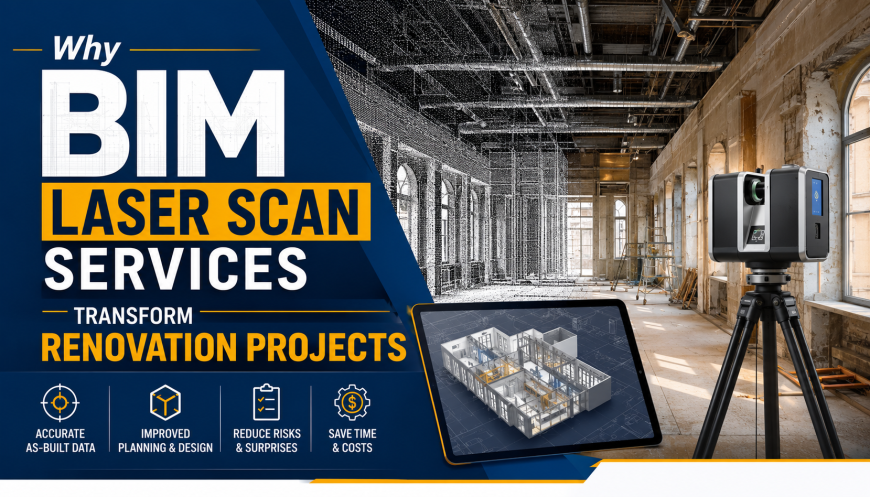
BIM laser scanning combines high-resolution 3D laser data with Building Information Modeling to capture the exact as-built conditions of physical spaces. This technology helps construction professionals eliminate documentation errors, avoid unforeseen structural issues, and reduce costly rework during complex renovation and retrofit projects.
Embarking on a renovation or retrofit project often feels like navigating a maze blindfolded. You know the destination, but the path is riddled with hidden structural surprises and outdated blueprints. Relying on traditional measurement methods often leads to costly rework and extended timelines.
Modern construction requires a smarter approach. Building Information Modeling (BIM) paired with 3D laser scanning provides exactly that. By creating highly accurate digital twins of existing structures, project teams can plan and execute renovations with unprecedented precision. This blog post explores how these technologies merge, the specific benefits they offer, and how to choose the right partner for your next retrofit initiative.
What Are BIM Laser Scan Services and How Do They Work?
To understand the value of this approach, we must first define the core technologies involved.
What is Building Information Modeling (BIM)?
Building Information Modeling (BIM) is a highly collaborative process that allows architects, engineers, and contractors to design, plan, and manage buildings within a 3D digital environment. Unlike traditional 2D CAD drawings, BIM includes intelligent data regarding materials, spatial relationships, and structural properties.
What is 3D Laser Scanning?
Laser scanning utilizes advanced hardware to emit rapid laser pulses. These pulses measure the distance to physical objects, capturing millions of data points per second. This process generates a highly detailed "point cloud," which serves as an exact, millimeter-accurate digital representation of a physical space.
How Do BIM and Laser Scanning Intersect?
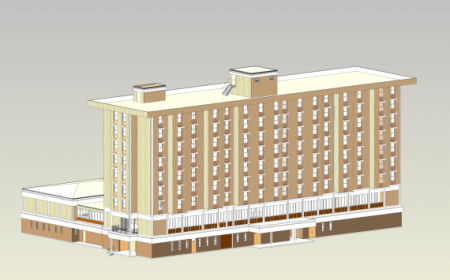
The intersection of these two technologies is known as Scan-to-BIM. Technicians import the raw point cloud data from the laser scanner directly into BIM software. Modelers then trace and convert this data into an intelligent 3D BIM model. This hybrid process guarantees that the digital model reflects the true, current state of the building, rather than the theoretical design from decades ago.
What Are the Main Challenges in Renovation and Retrofit Projects?
Renovating an existing structure introduces distinct hurdles that new construction projects typically avoid.
Inaccurate As-Built Documentation
Many older buildings lack accurate blueprints. Over decades of use, previous owners often make undocumented changes, add unrecorded utilities, or alter structural elements. Relying on original 2D drawings frequently results in design clashes when the new plans do not match the current physical reality.
Unforeseen Conditions
When demolition begins, contractors frequently uncover hidden electrical conduits, uneven floor slabs, or deteriorating load-bearing walls. These unforeseen conditions force teams to halt work, redesign architectural plans on the fly, and source new materials unexpectedly.
Cost Overruns and Project Delays
Inaccurate data and unforeseen conditions inevitably lead to schedule delays and budget blowouts. According to industry reports, rework can account for up to 5% to 15% of the total construction cost in renovation projects. Minimizing these surprises is crucial for maintaining profitability.
What Are the Key Benefits of BIM Laser Scan Services?
Adopting advanced scanning workflows directly addresses the historical challenges of building retrofits.
Enhanced Accuracy and Data Quality
Laser scanners capture existing conditions with millimeter precision. This high-fidelity data ensures that architects and engineers design new elements based on reality. Whether you are installing custom HVAC ductwork or designing complex piping systems, precise measurements prevent improper fittings and material waste.
Improved Collaboration and Communication
A unified 3D BIM model serves as a single source of truth for all stakeholders. Plumbers, electricians, and structural engineers can view the exact same model, ensuring their respective systems do not interfere with one another. This transparency keeps project owners informed and allows general contractors to coordinate trades efficiently.
Risk Mitigation and Error Reduction
Identifying structural clashes in a digital model costs significantly less than fixing them on the physical job site. Virtual construction allows teams to simulate the installation process, identify potential safety hazards, and resolve spatial conflicts long before the first hammer swings.
Cost and Time Savings
While hiring scanning professionals requires an upfront investment, the downstream savings are substantial. Rapid data collection replaces weeks of manual measuring. Fewer field errors mean fewer change orders, keeping the project firmly on schedule and within budget. For regional projects, utilizing BIM laser scan services in Texas can streamline local regulatory approvals by providing hyper-accurate site documentation to city planners.
How Are BIM Laser Scans Applied in Renovation Projects?
Construction teams deploy Scan-to-BIM workflows across various stages of the project lifecycle.
Capturing Existing Conditions
Before any design work begins, technicians scan the entire facility. This existing conditions capture provides the foundational data necessary for architects to draft accurate renovation concepts.
Conducting Virtual Clash Detection
Engineers overlay the proposed renovation designs onto the as-built point cloud data. Automated clash detection software then highlights exactly where a proposed air duct intersects with an existing steel beam, allowing the engineering team to route the duct differently before manufacturing begins.
Monitoring Construction Progress
Scanning is not just for the pre-construction phase. Project managers frequently request intermediate laser scans during the build. By comparing the newly built elements against the original BIM design, managers can verify that subcontractors are installing systems exactly as specified.
How to Choose the Right BIM Laser Scan Service Provider?
Selecting a competent partner is critical to achieving a high return on investment.
Evaluate Experience and Expertise
Look for providers with a proven track record in your specific sector, whether that is commercial real estate, historical preservation, or industrial facilities. Experienced firms, such as Chudasama Outsourcing, understand the nuances of converting dense point clouds into clean, usable Revit models.
Assess Technology and Equipment
Ensure the provider utilizes survey-grade terrestrial laser scanners capable of capturing data at the required accuracy levels. Ask about their software stack to verify compatibility with your in-house BIM tools.
Review Deliverables and Ongoing Support
Clarify exactly what the provider will deliver. Will they provide raw point clouds, a fully detailed Level of Development (LOD) 300 Revit model, or 2D floor plans? A reliable provider will tailor their deliverables to match your project's specific requirements and offer support if the model requires troubleshooting.
The Future of Renovation with Building Information Modeling
Renovation and retrofit projects no longer need to rely on guesswork and outdated blueprints. By implementing Scan-to-BIM workflows, construction professionals gain the clarity and precision required to execute complex upgrades efficiently. The integration of highly accurate laser data into intelligent 3D models mitigates risk, fosters collaboration, and protects project budgets.
As urban environments grow denser and sustainability initiatives encourage the repurposing of older buildings, digital twin technology will become a standard requirement. Invest in accurate spatial data today to ensure your next renovation project is a resounding success.
Frequently Asked Questions About BIM Laser Scanning
How much do BIM laser scanning services typically cost?
Costs vary widely depending on the size of the facility, the required level of detail (LOD), and site complexity. Generally, scanning and modeling a standard commercial building can range from a few thousand dollars to tens of thousands. The upfront cost is typically offset by the elimination of costly change orders during construction.
How long does the laser scanning process take?
Field scanning is incredibly fast. A technician can often scan a 50,000-square-foot building in one to two days. However, processing the point cloud data and drafting the 3D BIM model usually takes one to three weeks, depending on the required level of detail.
Who benefits most from Scan-to-BIM services?
Architects, MEP (Mechanical, Electrical, and Plumbing) engineers, and general contractors benefit immensely. Architects gain accurate baselines for design, engineers can route systems without physical clashes, and contractors avoid schedule delays caused by unforeseen site conditions.