Where Are D Sub Contacts Used and What Makes Them Reliable?
Discover how D Sub Contacts work, their common types, termination methods, applications, and key factors for choosing reliable electrical connections.
 joddie25
Introduction
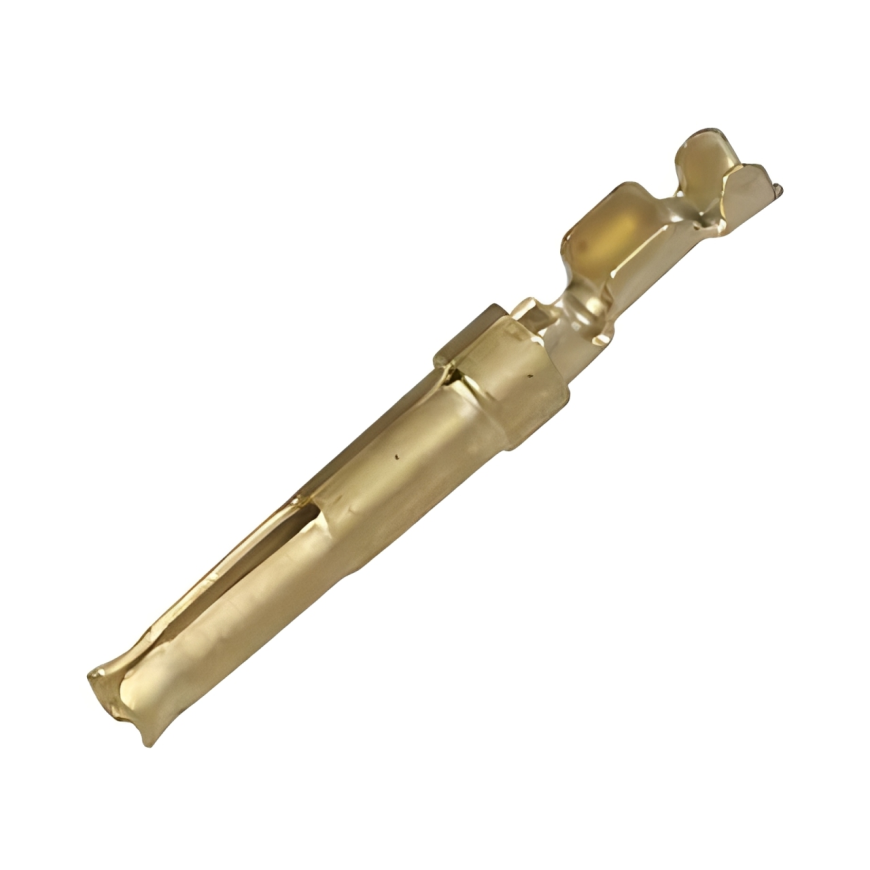
D Sub Contacts are essential conductive components used inside D-sub connectors to transfer electrical signals, data, and power between connected systems. They are commonly found in industrial machinery, control panels, test equipment, communication devices, computers, transportation systems, and specialised electronics.
Although D-sub connectors have existed for decades, they remain widely used because they provide secure mating, dependable electrical performance, and convenient maintenance. The quality of the connection depends heavily on the contacts installed inside the connector. Correctly selected D Sub Contacts can support stable communication, reduce electrical resistance, and withstand repeated connection cycles.
Understanding the Structure of D Sub Contacts
Each contact is designed to fit into a specific cavity within the connector housing. The insulating insert keeps individual circuits separated, while the contact provides the conductive path.
A complete contact normally includes:
- A mating section that connects with the opposite contact
- A retention feature that locks inside the housing
- A termination area for attaching the conductor
- A transition section that connects the mating and termination areas
- A plated surface that improves conductivity and corrosion resistance
These sections must work together to maintain alignment, electrical continuity, and mechanical strength.
Where Are D Sub Contacts Commonly Installed?
Industrial Automation Systems
Factories use D Sub Contacts in programmable controllers, motor drives, sensors, operator panels, and machine communication interfaces. Their locking hardware helps prevent accidental disconnection when machinery vibrates or moves.
Industrial installations often require contacts that can tolerate temperature changes, repeated operation, and electrical noise. Secure cable support and suitable shielding can improve connection stability in these environments.
Test and Measurement Equipment
Laboratory instruments, data acquisition systems, oscilloscopes, and testing devices often depend on D-sub connections. Reliable contacts help maintain accurate signal transfer between instruments, sensors, and control equipment.
Low contact resistance is particularly important when measuring small voltages or sensitive analogue signals. Contaminated or worn contacts can affect readings and produce inconsistent results.
Computer and Communication Equipment
D-sub connectors have traditionally supported serial ports, video connections, communication interfaces, and peripheral devices. They are also used in modern systems that need durable legacy connections or custom communication assemblies.
The connector shell helps guide mating, while the contact arrangement allows multiple circuits to be carried through one compact interface.
Transportation and Mobile Equipment
Vehicles, railway systems, mobile machinery, and control cabinets may use D Sub Contacts where secure removable connections are required. Contacts in these applications must resist vibration, shock, and cable movement.
Proper backshells, locking screws, and strain relief are important because mechanical stress can weaken the termination area over time.
What Electrical Factors Affect Contact Selection?
Electrical requirements should be reviewed before selecting a contact. The intended circuit may carry a low-level signal, digital communication, control voltage, or electrical power.
Important electrical factors include:
- Maximum operating current
- Required voltage rating
- Contact resistance
- Insulation resistance
- Signal frequency
- Temperature rise
- Shielding requirements
A contact intended for low-current signals may not be suitable for a power circuit. Excessive current can create heat, damage the plating, weaken the housing, and reduce connector life.
How Does Plating Improve Contact Performance?
The base metal provides strength and conductivity, while the outer plating protects the mating surface. Plating also influences wear resistance, corrosion protection, and electrical stability.
Gold plating is commonly selected for low-level signals, demanding environments, and frequent mating. It provides excellent resistance to oxidation and helps maintain consistent contact resistance.
Tin plating can provide an economical solution for appropriate general-purpose applications. However, it may require greater mating force and should be selected carefully where vibration or repeated disconnection is expected.
Some contacts use selective plating, placing gold only on the mating area while using a different finish on the termination section. This design can balance performance and cost.
Why Is Contact Retention Important?
Contact retention prevents the conductive component from moving backwards or forwards inside the connector housing. If a contact is not fully locked, it may be pushed out when the connector is mated.
A recessed contact may fail to touch its opposite contact, resulting in an open circuit or intermittent operation. Poor retention can also create uneven mating depth across the connector.
After insertion, each contact should be checked with a light pull on the attached wire. The contact should remain secure without visible movement.
Preparing Wires for D Sub Contacts
Wire preparation has a major influence on connection quality. The conductor should be stripped to the recommended length without cutting or damaging individual strands.
Before termination, confirm:
- The wire gauge matches the contact barrel
- The insulation diameter fits the connector assembly
- The conductor is clean and undamaged
- The stripping length meets the contact specification
- The correct tool is available
Too much exposed conductor can increase the risk of short circuits. Too little exposed conductor may prevent a complete crimp or solder connection.
Building Reliable Crimp Connections
Crimping is widely used because it provides a strong and repeatable termination without applying heat. The stripped conductor is inserted into the barrel, and a controlled tool compresses the metal around the wire.
A reliable crimp should hold the conductor firmly while maintaining the intended contact shape. The contact should not be flattened, cracked, or twisted.
Common crimping problems include:
- Using the wrong die size
- Positioning the contact incorrectly
- Failing to insert the conductor fully
- Crimping over insulation instead of conductor
- Leaving loose or broken wire strands
- Applying uneven pressure
Approved crimping tools help create consistent results and reduce assembly errors.
Using Solder Contacts Safely
Solder termination is useful for prototypes, repairs, custom cables, and low-volume production. The conductor is placed into a solder cup or terminal area and secured with solder.
The joint should be electrically sound without excessive solder buildup. Too much heat can soften insulation, damage the connector insert, or allow solder to enter the flexible mating area.
Good soldering practice includes using a clean tip, suitable solder, controlled heating, and proper cable support after assembly.
Preventing Damage During Connector Mating
D-sub connectors should be aligned before they are pushed together. The D-shaped shell helps prevent incorrect orientation, but forcing a misaligned connector can still bend contacts or damage the housing.
Users should tighten locking screws evenly rather than pulling the connector halves together with one screw. Cables should be disconnected by holding the connector body, not by pulling on the wire.
Protective measures include:
- Using backshells and cable clamps
- Securing locking hardware
- Keeping unused connectors covered
- Avoiding unnecessary mating cycles
- Inspecting contacts before reconnection
- Preventing side loading on the cable
These practices reduce wear and help maintain correct contact alignment.
How Can Contact Faults Be Identified?
A contact problem may cause complete circuit failure or an intermittent fault that appears only during movement, vibration, or temperature changes.
Typical warning signs include:
- Loss of communication
- Flickering or unstable signals
- Unexpected equipment resets
- Heating near the connector
- Visible oxidation or discolouration
- Bent or recessed contacts
- Operation changing when the cable moves
Continuity testing can identify open circuits, while resistance testing can reveal weak or contaminated connections. Visual inspection should also confirm that all contacts sit at a consistent depth.
Conclusion
D Sub Contacts provide the electrical connection at the heart of every D-sub connector assembly. Their construction, plating, retention, termination method, and compatibility with the wire all affect system performance.
Reliable results depend on selecting the correct contact type, preparing conductors carefully, using suitable tools, and protecting the completed assembly from mechanical stress. With proper installation and inspection, D Sub Contacts can deliver stable service across industrial, commercial, transportation, communication, and laboratory applications.