Unlock Efficiency: The Top Benefits of Hiring BIM Service Providers in the USA
Guide how hiring BIM service providers in the USA can enhance project efficiency, reduce costs, and streamline collaboration for your construction projects.
 chudasama
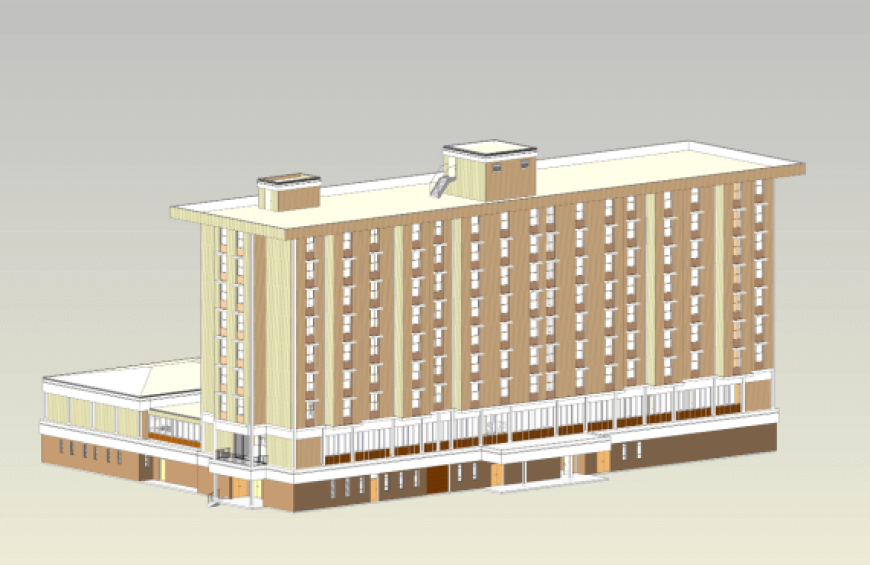
The American construction industry is undergoing a digital revolution. Gone are the days when 2D blueprints were the absolute authority on a job site. Today, Building Information Modeling (BIM) has become the gold standard for planning, designing, and managing construction projects. From soaring skyscrapers in New York to sprawling infrastructure projects in California, BIM is the digital backbone of modern development.
However, adopting BIM isn't as simple as installing new software. It requires specialized skills, high-powered hardware, and a deep understanding of data management. For many architecture, engineering, and construction (AEC) firms, building this capacity internally is overwhelming. This is where partnering with specialized BIM Service Providers in USA becomes a strategic advantage. By leveraging external expertise, firms can navigate complex projects with greater agility and precision.
The Financial Logic: Outsourcing vs. In-House Teams
One of the most compelling reasons to work with a dedicated BIM provider is cost efficiency. Establishing a fully functional in-house BIM department is a massive financial undertaking. It involves purchasing expensive software licenses (such as Revit, Navisworks, or ArchiCAD), investing in high-performance workstations, and, most significantly, hiring and training specialized staff.
Construction demand fluctuates. You might need a team of ten BIM technicians for a large hospital project this month, but only two for a small residential renovation next month. Carrying the overhead of a full team during downtime burns through capital.
Outsourcing converts these fixed costs into variable costs. You pay for the expertise only when you need it. This flexibility allows firms to bid on larger, more complex projects without the fear of bloating their payroll. Experienced partners like Chudasama Outsourcing allow firms to scale their workforce up or down instantly based on project requirements, ensuring that budget is spent on active production rather than idle capacity.
Precision Engineering: Reducing Waste with 3D Coordination
The traditional construction process often involves a "build and fix" mentality. Contractors might discover on-site that an HVAC duct runs directly through a structural beam. Fixing this error in the field—tearing down work, re-ordering materials, and stalling the schedule—is exponentially more expensive than fixing it on a computer screen.
BIM service providers specialize in advanced 3D coordination and clash detection. Before a single shovel hits the ground, they build a digital twin of the project. They run sophisticated algorithms to identify where architectural, structural, and MEP (mechanical, electrical, plumbing) elements interfere with one another.
This pre-construction diligence drastically reduces material waste. In an industry operating on razor-thin margins, minimizing rework can be the difference between a profitable project and a financial loss. It also ensures that the environmental footprint of the construction is lower, as fewer materials are discarded due to error.
Navigating US Building Codes and Standards
Construction in the United States is governed by a rigorous and often complex web of regulations. From the International Building Code (IBC) to specific state and municipal mandates, compliance is non-negotiable.
Specialized BIM Service Providers in USA are well-versed in these specific requirements. They understand the necessary Level of Development (LOD) standards required at different stages of a US-based project, from the initial concept design (LOD 100) to the as-built records (LOD 500).
Furthermore, American projects often require adherence to specific industry standards such as the National BIM Standard-United States (NBIMS-US). An external provider that focuses on this market ensures that all deliverables are compliant, reducing the risk of permitting delays or legal liabilities down the road. They act as a safeguard, ensuring the digital model translates perfectly to the physical reality of the job site.
Cloud-Based Collaboration and Workflow
Modern construction is a collaborative effort involving architects, engineers, general contractors, and specialized subcontractors. Keeping everyone on the same page is a logistical challenge. If the structural engineer updates a column location but the architect is working off an old file, disaster ensues.
BIM service providers implement cloud-based workflows (using platforms like Autodesk BIM 360) to centralize project data. This creates a "Single Source of Truth." When a change is made to the model, it is instantly reflected across the board for all stakeholders.
This level of connectivity streamlines communication. Requests for Information (RFIs) are resolved faster because the answers are often visible in the model. Submittals are processed more efficiently. The BIM provider acts as the data manager, ensuring the information flow remains uninterrupted and accurate.
Real-World Impact: BIM in Infrastructure
The theoretical benefits of BIM are validated by its application in major infrastructure projects. Consider the renovation of major US airports or the construction of complex highway interchanges. These projects involve thousands of moving parts and strict federal deadlines.
In such scenarios, BIM service providers have utilized 4D (scheduling) and 5D (cost estimation) modeling to visualize the entire construction timeline. By simulating the construction process, they identified logistical bottlenecks—such as where to place cranes or how to route traffic—months in advance.
While specific client data is often confidential, the trend across the industry is clear: projects utilizing professional BIM support consistently report fewer change orders, faster completion times, and higher client satisfaction rates compared to those relying on traditional 2D methods.
Securing a Competitive Edge
The decision to hire external BIM support is more than just a resource allocation strategy; it is a competitive maneuver. As project owners increasingly mandate BIM deliverables, firms that cannot provide high-quality, data-rich models will find themselves locked out of lucrative contracts.
Partnering with experts like Chudasama Outsourcing allows AEC firms to present themselves as technologically advanced and capable of handling high-stakes developments. It signals to clients that you prioritize accuracy, efficiency, and modern best practices.
In an industry that is rapidly modernizing, trying to do everything internally can slow you down. By collaborating with dedicated BIM providers, US construction firms can focus on what they do best—building the future—while leaving the complex digital engineering to the experts.