Understanding Moulded Case Circuit Breakers: Why the Right MCCB Matters for Your Electrical System
A 63 Amp MCCB with a higher breaking capacity is necessary for installations close to the supply transformer where prospective fault current levels are high.
 sharmabhavna1322
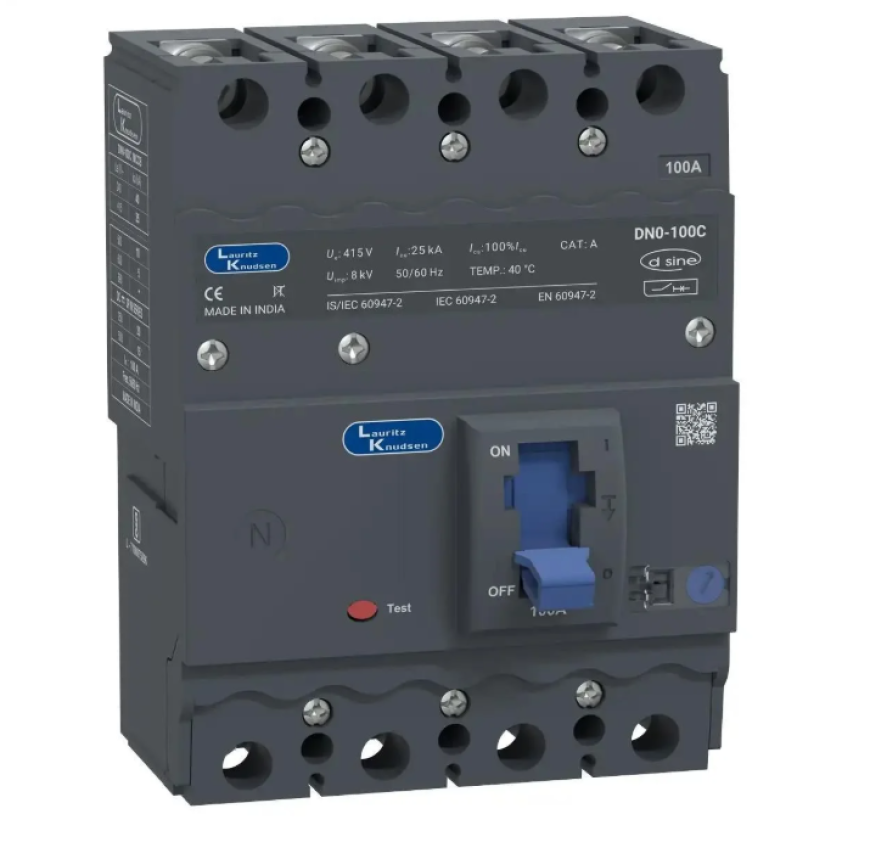
Electrical protection is not a feature you notice until it fails. In industrial plants, commercial buildings, and large residential complexes, the moulded case circuit breaker is the primary line of defence against overloads, short circuits, and the consequential equipment damage, fires, and downtime that follow. Selecting the right MCCB is a technical decision with long-term safety and cost implications, and understanding what makes a quality moulded case circuit breaker is essential for engineers, panel builders, contractors, and facility managers alike.
This post walks through what a moulded case circuit breaker does, the critical specifications to understand when selecting one, and where the 63 Amp MCCB sits within the broader MCCB product family.
What Is a Moulded Case Circuit Breaker?
A moulded case circuit breaker is a type of electrical protection device housed in a moulded insulating case, typically made from glass-reinforced polyester or similar thermosetting material. It is designed to automatically interrupt the flow of current when it detects a fault condition. The two primary fault conditions it responds to are overload, where the current exceeds the rated capacity of the circuit for a sustained period, and short circuit, where an extremely high current flows instantaneously due to a wiring fault or equipment failure.
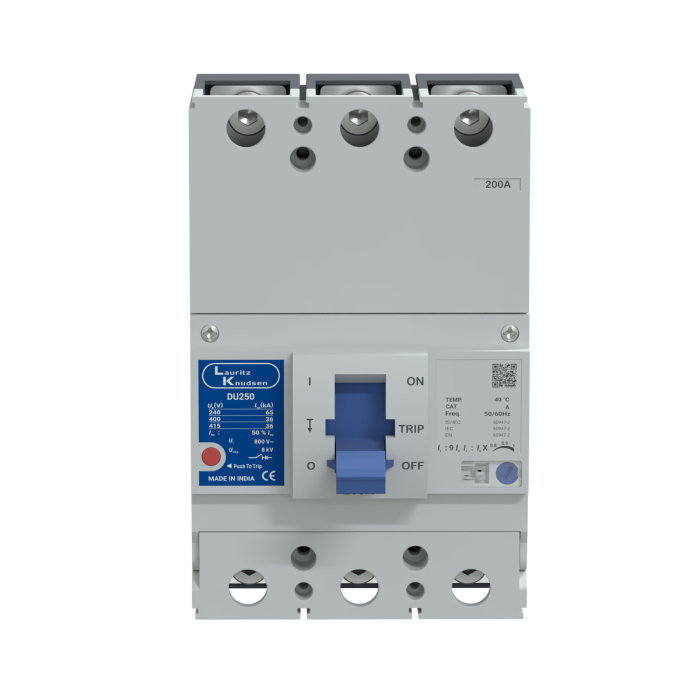
Unlike miniature circuit breakers (MCBs), which are designed for lower current ratings in domestic and light commercial installations, a moulded case circuit breaker handles higher current ratings, typically from 16A up to 1600A or more, and offers a much higher fault interruption capacity measured in kiloamperes (kA). This makes the MCCB the preferred protection device for feeder circuits, sub-mains, and motor circuits in commercial and industrial environments.
How a Moulded Case Circuit Breaker Works
Moulded case circuit breakers are designed to protect electrical systems from damage caused by overloads and short circuits. They combine mechanical and electrical components to detect faults and interrupt current flow quickly. Their reliability and adaptability make them essential in both industrial and commercial power distribution systems.
Here are the key working mechanisms of a moulded case circuit breaker:
Thermal-Magnetic Trip Mechanism
Most standard moulded case circuit breakers use a thermal-magnetic trip mechanism. The thermal element consists of a bimetal strip that heats up when excess current flows. Over time, as the strip bends from the heat, it triggers the trip mechanism. This component responds to overloads. The magnetic element uses an electromagnet that generates enough force to trip the breaker almost instantaneously when a short circuit causes a sudden, very large current spike. The speed of the magnetic trip protects both the wiring and any connected equipment from the destructive energy of a fault current.
Electronic Trip Units
Higher-specification moulded case circuit breakers are available with electronic trip units that offer adjustable overload protection, short circuit protection, and often ground fault protection. These units provide far greater flexibility in setting protection thresholds, making them suitable for complex industrial applications where different load types share the same feeder.
The 63 Amp MCCB: Where It Fits
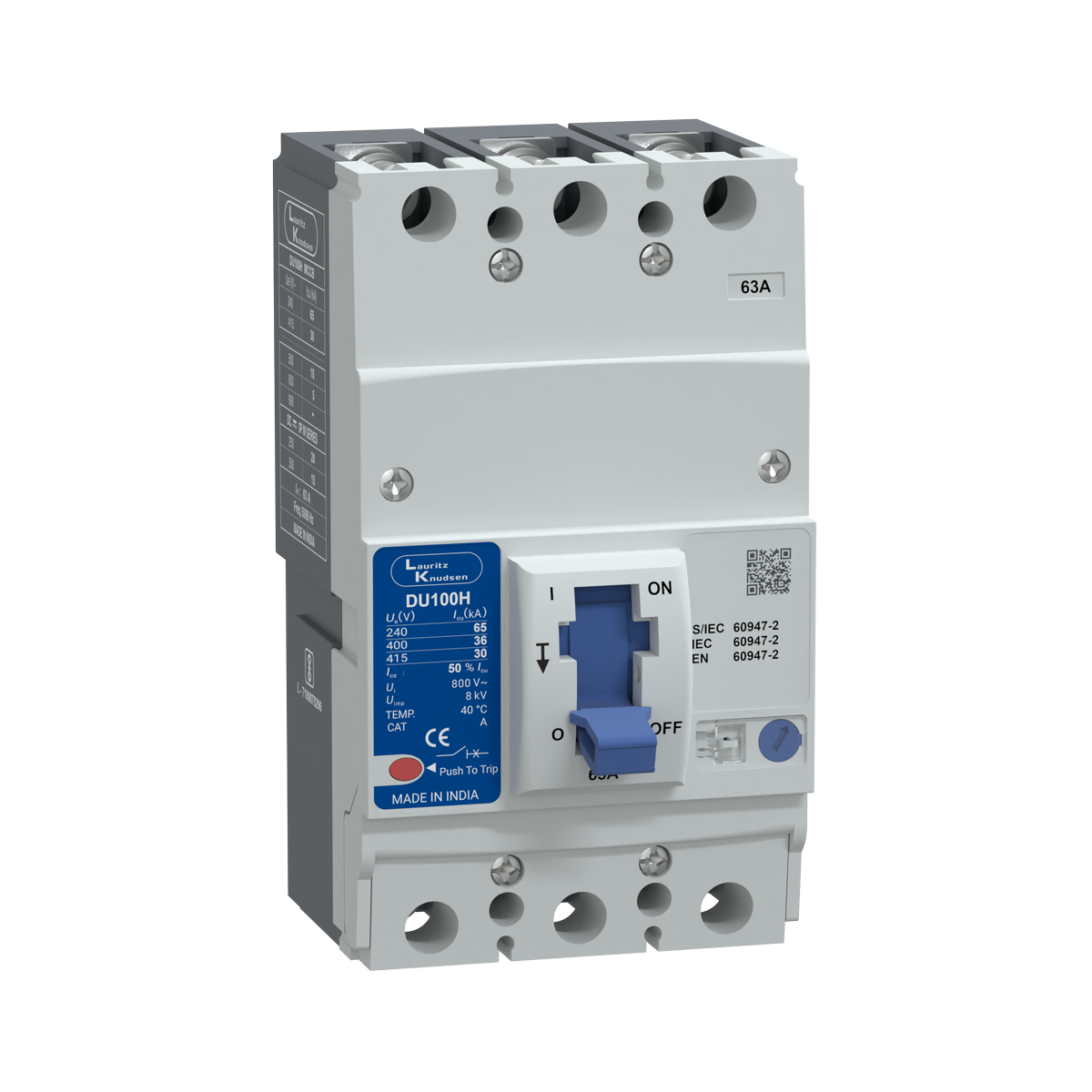
The 63 Amp MCCB sits at the lower end of the MCCB current rating range and bridges the gap between heavy-duty MCBs and larger industrial MCCBs. It is widely used as a sub-circuit protection device in commercial distribution boards, as the incomer for small industrial panels, and for motor starter protection in circuits serving motors up to approximately 22kW depending on the specific application and starting method.
When selecting a 63 Amp MCCB, the key specifications to evaluate include the short-circuit breaking capacity in kA, the adjustability of the trip threshold, the number of poles required, the operating voltage, and whether remote indication or motorized operation is needed. A 63 Amp MCCB with a higher breaking capacity is necessary for installations close to the supply transformer where prospective fault current levels are high.
Key Specifications to Check Before Selecting an MCCB
-
Rated current (In): The maximum continuous current the MCCB can carry. The 63 Amp MCCB is appropriate for circuits with a calculated design current up to 63A.
-
Breaking capacity (Icu): The maximum fault current the MCCB can safely interrupt. This must exceed the prospective fault current at the installation point.
-
Number of poles: 1P, 2P, 3P, or 4P depending on whether the system is single-phase or three-phase and whether the neutral needs switching.
-
Adjustable or fixed trip: Fixed trip MCCBs are simpler and more economical; adjustable units offer greater flexibility for diverse loads.
-
Operating temperature range: Important for installations in high-ambient environments such as outdoor enclosures or plant rooms.
Why Genuine Products Matter
The electrical protection market in India has a significant counterfeit and substandard product problem. MCCBs that carry fake markings and fail to meet their stated breaking capacity are a genuine safety hazard. When a short circuit occurs and the MCCB fails to interrupt the fault current, the resulting arc energy can destroy switchboards, start fires, and injure personnel. This risk makes sourcing from verified, trusted suppliers an absolute necessity rather than an optional quality preference.
Lauritz Knudsen Electrical & Automation's SmartShop addresses this concern directly. The SmartShop of Lauritz Knudsen Electrical & Automation is an official online procurement platform that supplies genuine, factory-direct electrical products including a comprehensive range of MCCBs across all standard current ratings. Every product available on Lauritz Knudsen SmartShop is authentic, quality-tested, and dispatched with documentation and support.
Maintenance and Periodic Testing
A moulded case circuit breaker is a safety device, and like all safety devices, it requires periodic inspection and testing to confirm that it will operate correctly when needed. Standard maintenance practices include visual inspection for physical damage, mechanical operation test by manually tripping and resetting the breaker, secondary injection testing of the trip unit on electronic MCCBs, and insulation resistance testing of the circuit the MCCB protects.
Many moulded case circuit breakers are also available with auxiliary contacts and shunt trip coils that can be used to integrate the breaker into building management systems or remote monitoring platforms, enabling condition monitoring and automated fault alerts.
Conclusion
The moulded case circuit breaker is a critical safety component in any electrical installation that handles significant current. Understanding its operating principles, selecting the correct current rating and breaking capacity for your specific application, and sourcing from genuine suppliers are the foundations of a safe and reliable electrical system. Whether you are specifying a 63 Amp MCCB for a commercial sub-circuit or a higher-rated unit for an industrial feeder, getting these decisions right protects not just equipment but people. Lauritz Knudsen Electrical & Automation's SmartShop is a reliable source for the full MCCB range, ensuring that every installation gets the genuine protection it deserves.