Securing Enterprise Data Against Advanced Cyber Threats
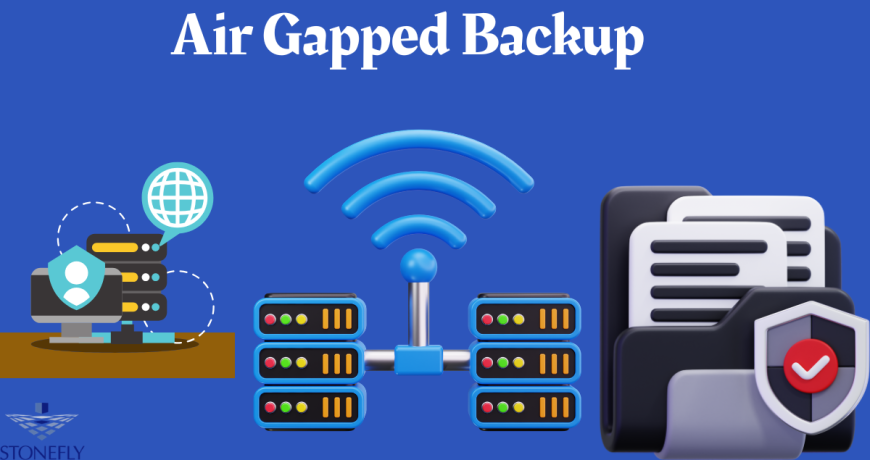
Implementing an Air Gapped Backup represents the definitive architectural safeguard, ensuring that a pristine, uncompromised copy of organizational data remains entirely inaccessible to unauthorized users and automated malicious scripts.
 StoneFly09
Securing Enterprise Data Against Advanced Cyber Threats
Enterprise data architectures face unprecedented threats from sophisticated ransomware, state-sponsored actors, and insider threats. Traditional network-attached storage solutions remain vulnerable to lateral movement protocols exploited by modern malware. To guarantee data survival during a catastrophic network breach, organizations must physically or logically sever the connection between primary data environments and secondary storage tiers. Implementing an Air Gapped Backup represents the definitive architectural safeguard, ensuring that a pristine, uncompromised copy of organizational data remains entirely inaccessible to unauthorized users and automated malicious scripts. This guide explores the systematic implementation of isolated storage solutions, the mechanics of network separation, and the protocols necessary for guaranteed data recovery.
The Anatomy of Network Isolation
Network isolation operates on a fundamental principle of complete disconnection. By eliminating the persistent network pathway between production environments and secondary storage arrays, administrators neutralize the primary vector used by malicious software to encrypt or delete data.
Physical vs. Logical Separation
Understanding the distinction between physical and logical separation is critical for system architects designing secure data vaults. Physical separation requires the complete absence of network cables or wireless connections between the primary network and the storage target. The storage media exists entirely offline, requiring human intervention to connect, transfer data, and disconnect. Tape drives securely stored in off-site vaults represent the traditional, highly effective physical isolation method.
Logical separation achieves a similar outcome through advanced software controls, network segmentation, and strict routing rules. While the storage devices remain physically connected to a network infrastructure, cryptographic protocols and disabled routing pathways ensure they remain invisible and inaccessible from the production network. Connections are established only during specific, scheduled data transfer windows, utilizing dedicated, heavily authenticated ports that immediately close upon transfer completion.
Defeating Ransomware with Immutability
Isolation strategies perform best when paired with data immutability. Once data is written to the isolated storage tier, it must be locked against any subsequent modification or deletion attempts for a predetermined retention period.
Cryptographic Validation
Immutability relies on cryptographic hashing algorithms to verify data integrity. When data arrives at the isolated storage target, the system generates a unique hash value. Periodic integrity checks recalculate this hash; any deviation indicates data corruption or unauthorized tampering. Administrators utilize Write-Once-Read-Many (WORM) technology at the disk or tape level, enforcing immutability through hardware or low-level firmware protocols that cannot be overridden by compromised administrative credentials.
Role-Based Access and Zero Trust Architecture
Integrating a zero-trust model into the data protection workflow minimizes the risk of internal sabotage or credential theft. Multi-factor authentication, required for any manual interaction with the isolated environment, acts as a secondary barrier. Furthermore, operations requiring data destruction or retention policy modifications necessitate a multi-person authorization protocol, meaning no single administrator possesses the systemic authority to compromise the stored data.
Architectural Implementation Strategies
Organizations must evaluate their specific recovery time objectives (RTO) and recovery point objectives (RPO) when designing their storage architecture. The chosen infrastructure heavily dictates the speed and efficiency of the recovery process.
Automated Tape Libraries
Despite being considered legacy technology by some, automated tape libraries provide exceptionally robust physical isolation. Modern LTO (Linear Tape-Open) generations offer massive storage capacities and impressive data transfer rates. Automated robotic arms manage the extraction and insertion of tapes, allowing administrators to define policies that completely remove the media from drives once the data transfer concludes.
Immutable Disk Targets
For organizations requiring faster RTOs, immutable disk targets offer a high-performance alternative to tape media. These systems utilize specialized file systems that inherently reject modification commands. During a cyber incident, administrators can rapidly mount these isolated disk volumes and initiate parallel recovery streams, significantly reducing organizational downtime compared to sequentially reading tape media.
Designing a Recovery Protocol
The ultimate value of any secure storage architecture lies in its recovery capabilities. A well-architected air-gapped backup is useless without a heavily tested, systematic recovery protocol. Administrators must establish a sterile recovery environment, commonly referred to as a "clean room," to safely restore and inspect data before reintroducing it to the production network.
The Sterile Recovery Environment
A sterile recovery environment operates on completely isolated infrastructure, utilizing dedicated servers, switches, and firewalls. During a recovery event, the isolated storage media connects exclusively to this clean room. Administrators mount the data, execute aggressive malware scanning using updated definitions, and verify system operability. This phased approach prevents the accidental restoration of dormant malicious code that may have been ingested during the data transfer process.
Compliance and Data Governance
Regulatory frameworks mandate stringent Data protection and retention policies. Organizations operating within financial, healthcare, and government sectors face severe penalties for data loss or privacy breaches resulting from inadequate infrastructure security.
Demonstrating Chain of Custody
Maintaining comprehensive audit logs provides cryptographic proof of data integrity and chain of custody. Regulators require evidence that sensitive records have remained unaltered since their creation. By utilizing an air-gapped backup strategy, system architects can definitively prove that secondary data tiers remained mathematically inaccessible to external threat vectors, satisfying strict compliance mandates and reducing organizational liability.
Conclusion
Securing enterprise architecture against catastrophic data loss requires systematically engineered isolation strategies. By removing persistent network pathways, enforcing strict cryptographic immutability, and establishing multi-person authorization protocols, organizations neutralize the threat posed by advanced cyberattacks. Implementing these isolated storage environments, combined with rigorous sterile recovery testing, ensures business continuity and safeguards critical data assets against the evolving landscape of digital threats.
FAQs
1. What is the fundamental difference between standard network storage and isolated storage?
Standard network storage maintains a persistent, active connection to the production network, making it vulnerable to lateral movement from malware. Isolated storage completely severs this network connection either physically or logically, rendering the data invisible and inaccessible to network-based threats.
2. How does Write-Once-Read-Many (WORM) technology function in isolated environments?
WORM technology enforces immutability at the hardware or firmware level. Once data is written to the storage media, the system physically or logically blocks any command attempting to modify, overwrite, or delete that data until a mathematically defined retention period expires, ignoring even high-level administrative overrides.
3. What is a logical separation protocol?
Logical separation uses software-defined networking, strict firewall rules, and port disabled states to separate storage from the primary network. The connection is cryptographically opened only for the precise duration of a data transfer window, after which all routing pathways are immediately dismantled.
4. Why is a sterile recovery environment necessary after a cyber incident?
Restoring data directly back to a compromised production environment risks immediate re-infection. A sterile recovery environment provides an isolated, uncompromised sandbox where administrators can safely mount storage media, scan for dormant malicious code, and verify data integrity before returning systems to operational status.
5. How do multi-person authorization protocols enhance storage security?
Multi-person authorization (or "two-man rule") requires independent cryptographic approval from at least two authorized administrators to execute destructive commands, such as deleting data or altering retention policies. This prevents a single compromised account or rogue insider from destroying the isolated data.