Moving to the south of France in 2026: why English-speaking expats keep choosing Montpellier
Day-to-day costs in Montpellier remain 25 to 30 percent below central London or Manhattan. A monthly TaM tram and bus pass costs €35. Healthcare access through the French national system, once registered, costs a fraction of US private insurance. The trade-off is the administrative reality: paperwork, French-language interactions for utilities and schools, and the typical six to twelve months adjustment period before everything settles into routine.
 PostGlobe
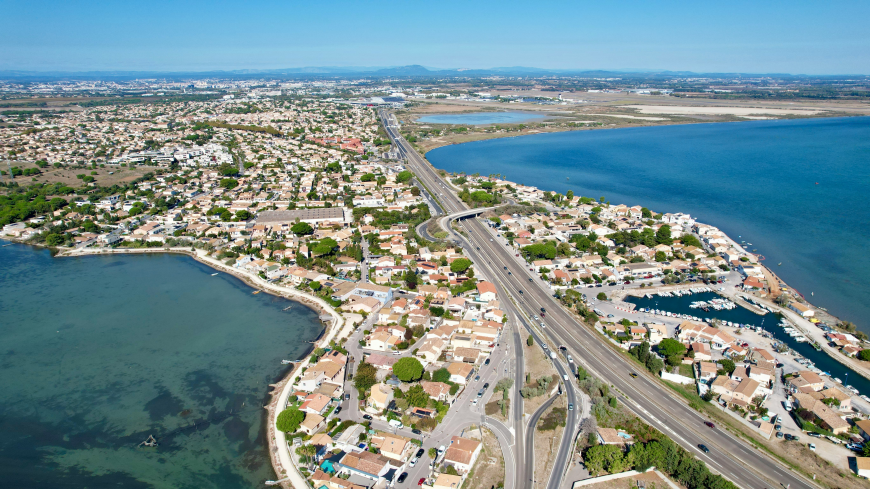
For British, American, Canadian and Australian families relocating to France, Montpellier has quietly become one of the safer bets in recent years. Less saturated than Provence, cheaper than the Côte d’Azur, with a direct TGV to Paris in 3h26 and Barcelona in 2h50, the Hérault capital offers a balance that few other French cities can match in 2026.
What makes Montpellier different from the usual expat suspects
Three factors keep showing up in expat surveys. First, the climate: 2,668 hours of sunshine per year on average, Mediterranean weather without the Provencal price tag. Second, the size: 310,000 inhabitants in the city itself, large enough for international schools and a CHU hospital ranked among the top French university hospitals, small enough to cross on foot or by tram. Third, the demographics: roughly 70,000 students give the city a young, multilingual energy you don’t find in Aix or Avignon.
The English-speaking community itself has grown noticeably since 2022. The British Consular Network estimates several hundred British nationals registered in the Hérault, with informal networks like Internations Montpellier counting more than 1,500 members across nationalities. Annual events like the Comedie du Livre attract international authors, and the Place de la Comédie hosts regular English-language meetups.
Where expats actually buy: the geography that matters
Three areas dominate the English-speaking buyer market in 2026, each with its own profile.
The historic centre (l’Écusson). Limestone vaulted ceilings, balconies on private courtyards, walking distance to everything. Prime apartments around Sainte-Anne and Saint-Roch trade between €4,200 and €4,500 per square metre, with rare hôtels particuliers reaching €5,500. The trade-off: limited parking, narrow medieval streets, summer tourist density.
North Montpellier villages. Saint-Clément-de-Rivière, Montferrier-sur-Lez and Prades-le-Lez offer detached houses with gardens, 10 to 15 minutes from the centre by car. Prices range from €3,700 to €4,300 per square metre depending on the village, with substantially more space than in town. Families with school-age children gravitate here. A specialised estate agency in north Montpellier that handles English-speaking clients makes the buying process significantly easier, particularly for navigating the notaire system and the compromis de vente protocol that French law requires.
Port-Marianne and the new town. Contemporary architecture, tramway lines 1 and 3, walking distance to the Lez river. Apartments tend to be larger and more recent, with prices around €4,400 to €4,800 per square metre. Popular with younger expat professionals working remotely for UK or US employers.
The practical side: what to know before signing
French property purchase is more formalised than in the UK or US. Three legal steps matter. First, the compromis de vente (preliminary contract) commits both parties, with a mandatory 10-day cooling-off period for the buyer under article L271-1 of the Code de la construction et de l’habitation. Second, a 5 to 10 percent deposit is held in escrow by the notaire. Third, the final deed (acte authentique) is signed at the notaire’s office, typically three months after the compromis.
Non-EU citizens (post-Brexit British buyers, Americans, Australians) can purchase freely but will face higher down-payment requirements from French banks, typically 30 to 50 percent of the price. Mortgage approval is harder to obtain without a French income source. Many buyers use a mix of UK or US cash and a French expat-focused mortgage broker. Notaire fees come on top of the purchase price, generally 7 to 8 percent for resale properties and 2 to 3 percent for new builds.
Living costs and the 2026 reality
Day-to-day costs in Montpellier remain 25 to 30 percent below central London or Manhattan. A monthly TaM tram and bus pass costs €35. Healthcare access through the French national system, once registered, costs a fraction of US private insurance. The trade-off is the administrative reality: paperwork, French-language interactions for utilities and schools, and the typical six to twelve months adjustment period before everything settles into routine.
For families willing to navigate that learning curve, Montpellier in 2026 offers exactly what the English-speaking expat scene tends to chase elsewhere: sunshine, walkability, decent schools, a real labour market, and a property market that hasn’t yet been priced into the stratosphere.