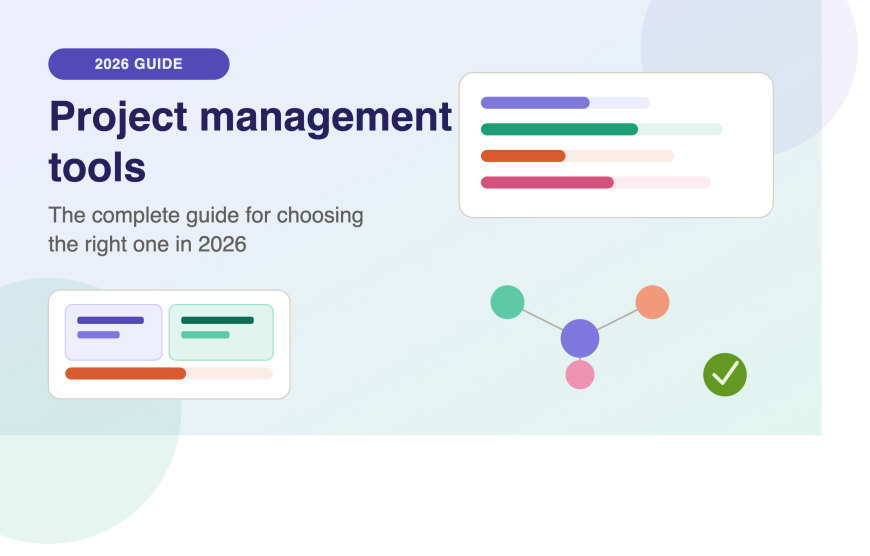
Project Management Tools: The Complete Guide for Choosing the Right One in 2026
Compare project management tools by real cost, team adoption, and long-term fit — not marketing claims. A practical guide for owners and managers.
 primeteams
Your team is buried in Slack threads, half-updated spreadsheets, and a deadline nobody owns anymore. So you search for "project management tools" and land on ten homepages that all swear their tool is the answer.
None of them tells you what actually matters: how much it'll really cost once your team grows past 10 people, why your team might quietly stop using it in six weeks, or what happens if you need to switch later. This guide fills that gap — a practical, no-fluff look at how to choose project management software that your team will still be using a year from now.
It's written for the person who has to make that call — a founder, a manager, an ops lead — and live with the consequences of getting project management for teams wrong. No rankings, no "best of" list dressed up as objectivity. Just what to actually think about before you sign up for anything.
What Counts as a Project Management Tool (And What Doesn't)
People use "project management tool" loosely, and that's part of why buying one gets confusing. A to-do list app helps one person track tasks. A project management tool helps a team plan work, assign it, track progress against a timeline, and report on where things stand. A resource management tool goes a layer further — it tracks who's available, who's overbooked, and how time is billed across multiple projects.
Slack and email get lumped into this category too, but they're communication tools, not project tools. The difference matters because a lot of teams try to "manage projects" through a messy combination of Slack threads and spreadsheets, then wonder why nothing has an owner or a deadline anymore.
At minimum, a real project management tool should give you four things: task tracking with ownership, some form of timeline or scheduling view, a way to see workload across people, and reporting you can actually show a stakeholder. If a tool is missing more than one of these, it's probably a task tracker wearing a project management tool's name tag — not something built for actual project management.
If you want to see what a full-featured option looks like in practice, Prime Teams' project management software is a good reference point for what "all four boxes checked" actually looks like.
Who Actually Needs a Project Management Tool (Startup vs. Mid-Size vs. Enterprise)
The right tool depends far more on your team's size and structure than on which tool has the flashiest features.
Startups usually need something simple enough that a five-person team adopts it in a day, not a week. Complexity is the enemy here — every extra setting is a reason someone quietly goes back to a shared doc. Budget matters more too; a $15-per-seat tool is a real line item when you have four employees.
Mid-size companies hit a different problem: coordination across teams that didn't need to talk to each other before. Marketing needs visibility into what engineering is shipping. Sales needs to know if a client project is on track. At this stage, good project management for teams is less about individual task lists and more about reporting and cross-team visibility.
Larger companies are usually choosing a tool for governance as much as productivity — think permissions, audit trails, security reviews, and integration with existing systems like Okta or an ERP. The buying process itself often takes months and involves IT and legal, and the tool has to satisfy people who will never actually log into it.
Before comparing tools, be honest about which of these three you actually are today – not where you hope to be in three years. Buying enterprise-grade software for a 6-person team almost always ends in an unused Jira instance and a Slack channel full of tasks nobody moved.
The Real Questions to Ask Before You Compare Any Tools
Most buying guides start with a list of tools. That's backwards. Answer these six questions first, and you'll cut your shortlist down before you ever open a comparison page.
How big is the team now, and where will it be in a year? Pricing tiers aren't linear. A tool that's $10/user for 10 people can jump to a completely different tier — with different features locked or unlocked — at 25 or 50 users. Price the tool at your team size twelve months from now, not today.
What methodology does your team actually follow? If your engineering team runs sprints, they'll want a tool with real backlog and sprint support, not a Kanban board bolted onto a general work tool. If your team doesn't follow any formal methodology, a rigid agile-first tool will fight you the whole way.
Will non-technical people actually use this? A tool that's intuitive for a developer can be baffling for someone in sales or operations. If half your team isn't technical, weight usability far above feature depth.
Is your team remote, hybrid, or in-office? Remote and async teams lean much harder on notifications, comments, and a genuinely good mobile app. A tool that's great on desktop but clunky on mobile will get ignored by anyone checking in from their phone.
What's your actual budget ceiling — and what happens if you go over the set limit? Some tools charge per active user and others per licensed seat, whether they log in or not. Know which one you're buying before a surprise invoice tells you.
What does it need to connect to? If your team lives in Slack, Google Workspace, or a specific CRM, check integrations before anything else. A project tool that doesn't talk to the rest of your stack becomes an island nobody updates.
Already know your answers to these six questions? You're ready to look at actual tools. See how Prime Teams' project management software handles team-size scaling, methodology flexibility, and integrations – built with exactly these questions in mind.
Types of Project Management Tools (Grouped by Use Case, Not Just Feature List)
Rather than comparing individual tools feature-by-feature, it's more useful to think in categories, because most tools are built with a specific kind of team in mind.
Simple task and kanban tools (the Trello style) work well for small teams that just need visibility into who's doing what. They're fast to set up and forgiving to use, but they thin out quickly once you need real reporting or resource planning across multiple projects.
All-in-one work platforms (the Asana, ClickUp, Monday.com, and Prime Teams style) try to cover project tracking, docs, and light automation in one place. This is the category most people mean when they search for project management software — a strong fit for cross-functional teams like marketing, ops, and product working from one shared view. The flexibility that makes these platforms powerful can also make them overwhelming if nobody defines how the team should use them.
Agile-native tools (the Jira style) are built for software teams running sprints, backlogs, and release cycles. They're excellent for that specific workflow and frustrating for anyone outside it – a common complaint is that non-engineering teams find Jira's structure rigid and jargon-heavy.
Resource and portfolio management tools are built for agencies and consultancies juggling several client projects at once, where the real question isn't "What's the status of this task?" but "Who's overbooked this week, and which client is that time billed to?" If you bill hours to clients, this category often matters more than the project tracking itself.
Industry-specific tools exist for construction, professional services, manufacturing, and similar fields with workflows generic tools don't handle well – field updates from a job site, for instance, or compliance documentation. It's worth a look if your industry has genuinely different needs, but don't reach for a niche tool just because it's marketed at your industry; check if it actually solves a problem the generic tools don't.
What Vendor Pages Don't Tell You About Pricing
Here's a real example. A 12-person marketing agency I worked with and picked a popular all-in-one tool at $9 per user per month — a number that looked great on the homepage. What the homepage didn't show clearly: Gantt charts, custom reporting, and guest access for clients were all locked behind a higher tier. By the time they added the features they actually needed to run client projects, the real cost was closer to $24 per user per month — and the client guest seats they needed for approvals weren't included at all, requiring yet another add-on.
This is common, not an exception. A few things worth checking before you commit to any tool:
-
What's actually included at your price tier — Gantt/timeline views, automations, and advanced reporting are frequently paywalled features, even on tools that look full-featured on the pricing page.
-
How seats are counted — per active user vs. per licensed user changes your real cost significantly at scale.
-
Annual vs. monthly pricing gaps — annual plans are often 20–30% cheaper but lock you in; check the cancellation and refund terms before committing a full year.
-
Client or guest access costs — if you need external stakeholders in the tool, confirm whether guest seats are free, limited, or a paid add-on.
-
Onboarding and training time — this doesn't show up on a pricing page, but a tool that takes a week of team time to configure properly has a real cost too.
A useful rule of thumb: take the advertised per-seat price, multiply by your team size and 12 months, then add a rough estimate of setup and training time. That number is a lot closer to the truth than the number on the homepage.
Why Project Management Tools Fail to Get Adopted (And How to Avoid It)
Most project management tools don't fail because of missing features. They fail because six weeks after rollout, half the team is back in Slack DMs and a shared spreadsheet, and the tool becomes a place where tasks get created but never updated.
The most common cause is a tool being handed down top-down with no input from the people actually using it day to day. If a manager picks the tool alone and announces, "We're using this now," the team has no ownership over the decision and no reason to change habits that already work well enough for them.
The second common cause is mismatched complexity — a tool with more settings, fields, and views than the team's actual workflow needs. Every extra step between "I have a task" and "the task is logged" is a reason someone skips it.
A rollout that actually sticks usually looks like this: pilot the tool with one team first, not the whole company at once. Pick a champion on that team who's genuinely bought in and can answer questions without escalating to IT. Set a checkpoint at 30 and 60 days to ask honestly whether people are using it or working around it. If logins are dropping and tasks are going stale, that's your signal to simplify the setup — not to mandate compliance harder.
AI Features in Project Management Tools — What's Real vs. Marketing
Nearly every major project management tool now advertises AI features – smart scheduling, automated status updates, risk prediction, and natural-language task creation. Some of this is genuinely useful. A lot of it is marketing language stretched over a modest feature.
It helps to think of these claims in three tiers. The first is genuinely useful automation — things like auto-generating a status summary from completed tasks, or flagging a task as at-risk because its deadline passed with no update. These save real time and are worth testing.
The second tier is assistive but unproven — AI-generated risk predictions or suggested task breakdowns from a project description. These can be helpful starting points, but they're not a substitute for a manager's judgement, and accuracy varies a lot by tool.
The third tier is largely marketing language — vague claims like "AI-powered productivity" that don't point to a specific, testable feature. If a vendor can't name what the AI actually does in a sentence, be sceptical.
The best way to cut through this: during a free trial, test the specific AI feature with your own real project data, not the vendor's demo data. If it doesn't hold up on your messy, real-world project, it won't hold up once you're relying on it.
Security, Compliance, and Data Ownership (For Mid-Size and Enterprise Buyers)
This section matters a lot more as your company grows — a five-person startup rarely needs to interrogate a vendor's SOC 2 report, but a 200-person company handling client data usually does.
If you're buying at that scale, ask the vendor directly: where is data stored, and does that satisfy your regulatory requirements (GDPR matters if you have EU clients or employees)? Do they support SSO/SAML for centralised access control? What audit logging is available for admins? Has the vendor had any past security incidents, and how were they handled?
Just as important and easy to overlook: how easy is it to get your data out if you ever switch tools? Ask about export formats and whether historical data — comments, attachments, and timestamps — export along with tasks or just the bare task list. A tool that makes it easy to get in and hard to get out is a warning sign, regardless of company size.
Startups can mostly deprioritise the compliance side of this, but it's still worth a two-minute check on data export before you commit – migrating years of project history later is far more painful than checking a box now.
How to Evaluate a Tool During a Free Trial (A Practical Checklist)
A free trial only tells you something useful if you test it the way you'll actually use it. Set up a sandbox project with fake tasks, and you'll get a false sense of how the tool performs — everything looks clean when there's no real complexity in it.
Instead, run the trial with a real, current project and involve the actual people who'll use it day to day, not just yourself as the decision-maker. During that trial, specifically check how the mobile app feels for someone updating a task from their phone; whether notifications feel useful or become noise within the first few days; whether the reporting view actually answers the questions your stakeholders ask; whether integrations with your existing tools work reliably rather than just "technically connecting"; and how quickly support responds when something breaks.
Set a decision deadline before you start the trial — a week or two, not "whenever we get around to it". Open-ended trials tend to end in trial paralysis, where the team never fully commits and never fully evaluates either.
Frequently Asked Questions
What is the best project management tool for a small business or startup? There's no single best tool — it depends on your team's methodology and technical comfort. For most small teams, the priority should be fast setup and low complexity over feature depth; a tool your team abandons in a month isn't a good deal at any price.
What's the difference between project management software and task management software? Task management software helps individuals or small groups track to-dos. Project management software adds team-level planning: timelines, resource allocation across people, and reporting on overall project status, not just individual tasks.
Are free project management tools good enough for a growing team? Often yes, at first. Free tiers typically cap out on user count, storage, or automations, so the real question is how soon your team will hit that ceiling — check the paid tier's pricing before you get attached to the free plan.
How much should a company budget for project management software? Costs vary widely by tool and team size, but a realistic estimate for project management software includes per-seat licensing at your actual team size, any add-ons you'll need (guest access and advanced reporting), and time spent on setup and training — not just the advertised per-user price.
Can project management tools integrate with the tools we already use? Most major tools integrate with common platforms like Slack, Google Workspace, and popular CRMs, but integration depth varies — some are a genuine two-way sync; others are a shallow, one-way connection. Check the specific integration you need before assuming it works the way you expect.
How long does it take to roll out a new project management tool successfully? A single-team pilot usually takes two to four weeks before you know if it's working. Full company rollout is better done in phases, with a 30- and 60-day check-in, rather than switching everyone over at once.
Choosing a project management tool isn't really about finding the "best" one — it's about finding the one your team will actually keep using six months from now, at a price that doesn't surprise you later. Answer the questions in this guide honestly before you compare a single tool, and you'll save yourself the cost of switching twice.
Ready to see what that looks like in practice? Try Prime Teams' project management software and put the questions in this guide to the test with your own team's real project — no sandbox demo needed.