Corporate Compliance Services: Helping Businesses Navigate Regulatory Responsibilities
Professional corporate compliance services can assist businesses in managing statutory obligations, maintaining corporate records, supporting governance processes, and establishing structured compliance frameworks.
 jpchawala
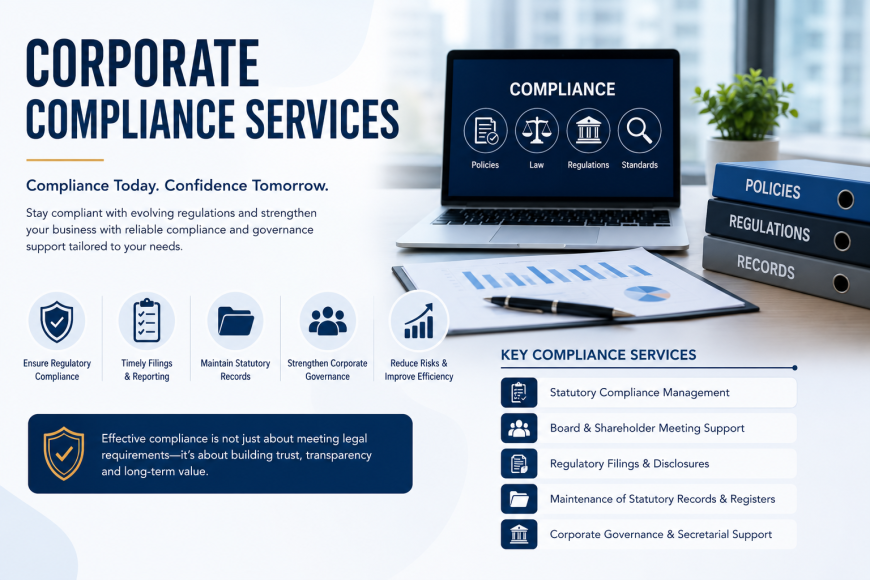
Every organisation operates within a framework of laws, regulations, and governance requirements. As businesses grow, their responsibilities extend beyond daily operations to include maintaining statutory records, fulfilling filing obligations, complying with legal provisions, and ensuring proper corporate governance. Managing these requirements effectively is essential for maintaining business continuity and stakeholder confidence.
In this environment, corporate compliance services play an important role in helping businesses establish structured processes to meet their regulatory obligations. Compliance is no longer viewed as a periodic exercise; it has become an integral part of responsible business management and sustainable growth.
Understanding Corporate Compliance
Corporate compliance refers to a company's adherence to applicable legal, regulatory, and governance requirements. It encompasses various activities aimed at ensuring that an organisation operates within the framework established by relevant laws and regulations.
Compliance responsibilities may vary depending on the nature, size, and structure of a business. However, the underlying objective remains the same: maintaining transparency, accountability, and adherence to statutory requirements.
A well-organised compliance framework enables businesses to manage obligations systematically while supporting effective governance practices.
Why Compliance Matters in Today's Business Environment
The regulatory landscape continues to evolve as businesses face increasing scrutiny from stakeholders, regulators, and investors. Organisations are expected to demonstrate sound governance practices and maintain accurate records of their corporate activities.
Failure to maintain appropriate compliance processes can result in operational disruptions, administrative challenges, and governance concerns. Conversely, businesses that prioritise compliance often benefit from improved organisational discipline and stronger stakeholder trust.
An effective compliance framework can support:
- Regulatory adherence
- Better governance practices
- Improved record management
- Organisational transparency
- Risk mitigation
- Sustainable business operations
Corporate Compliance as a Governance Tool
Many organisations mistakenly view compliance as a checklist-driven function. In reality, compliance serves as an important governance mechanism that supports accountability and oversight.
Corporate governance focuses on how organisations are directed and controlled. Compliance contributes to this framework by ensuring that decisions, processes, and activities align with applicable legal and regulatory requirements.
When governance and compliance work together, organisations can create a more transparent and resilient operating environment.
Key Components of Corporate Compliance Services
Statutory Compliance Monitoring
Businesses are subject to various statutory requirements that must be monitored regularly. These obligations often involve periodic filings, disclosures, and reporting responsibilities.
Maintaining a structured compliance calendar helps organisations track deadlines and manage regulatory requirements efficiently.
Maintenance of Corporate Records
Accurate record-keeping is a fundamental aspect of corporate compliance.
Businesses are generally required to maintain various corporate records, including:
- Statutory registers
- Corporate resolutions
- Meeting records
- Governance documentation
- Regulatory correspondence
Proper maintenance of these records supports transparency and facilitates regulatory reviews when required.
Board and Committee Support
Corporate governance often involves decision-making through boards and committees. Compliance processes support these governance mechanisms through proper documentation and record management.
Activities may include:
- Preparation of meeting notices
- Drafting agendas
- Recording minutes
- Maintaining decision records
- Documenting resolutions
These practices help ensure that corporate decisions are appropriately documented and preserved.
Regulatory Filings and Disclosures
Many organisations are required to submit periodic filings to regulatory authorities.
Timely and accurate filings contribute to:
- Compliance management
- Organised governance processes
- Reduced administrative risks
- Improved regulatory transparency
Managing these obligations systematically helps organisations remain compliant while reducing operational pressures.
Challenges Businesses Commonly Face
As organisations expand, compliance requirements often become more complex. Businesses may encounter challenges such as:
Managing Multiple Deadlines
Different regulatory requirements often involve varying reporting schedules and filing obligations. Monitoring these deadlines requires careful planning and coordination.
Regulatory Changes
Laws and regulations evolve over time. Keeping track of amendments and new requirements can be challenging without a structured compliance framework.
Documentation Management
Maintaining accurate and updated records across multiple departments and functions requires consistent processes and oversight.
Resource Constraints
Many organisations, particularly growing businesses, may find it difficult to allocate sufficient internal resources to manage compliance responsibilities effectively.
These challenges highlight the importance of adopting organised compliance management practices.
Benefits of Professional Corporate Compliance Services
Structured Compliance Processes
Professional support can help organisations establish systematic approaches for monitoring and managing compliance obligations.
Improved Documentation Practices
Well-maintained records contribute to transparency, governance, and operational efficiency.
Enhanced Governance Standards
Compliance services support governance frameworks by helping businesses maintain organised processes and documentation.
Risk Reduction
Regular monitoring and review of compliance requirements can assist organisations in identifying potential gaps and addressing them proactively.
Management Focus
By streamlining compliance activities, organisations can dedicate more attention to strategic and operational priorities.
Compliance and Business Growth
As businesses expand into new markets, launch new products, or undergo organisational changes, compliance requirements often increase.
Growth initiatives may involve additional reporting obligations, governance requirements, and documentation responsibilities. Organisations that establish strong compliance foundations early are often better equipped to manage expansion efficiently.
A proactive compliance approach can help businesses navigate change while maintaining operational stability and governance standards.
Building a Culture of Compliance
Successful compliance frameworks extend beyond policies and procedures. They require participation from leadership, management, and employees across the organisation.
A strong compliance culture is built through:
- Clear communication
- Defined responsibilities
- Consistent documentation practices
- Ongoing monitoring
- Commitment to ethical conduct
When compliance becomes part of everyday business operations, organisations are better positioned to manage risks and support long-term objectives.
Conclusion
In an increasingly regulated business environment, effective compliance management has become a critical component of organisational success. Beyond meeting legal requirements, compliance supports governance, transparency, accountability, and operational efficiency.
Professional corporate compliance services can assist businesses in managing statutory obligations, maintaining corporate records, supporting governance processes, and establishing structured compliance frameworks.
Organisations that view compliance as a strategic business function rather than an administrative obligation are often better prepared to navigate regulatory changes, strengthen stakeholder confidence, and support sustainable growth.