What Makes Position Sensors Critical for Intelligent Motion, Automation, and Industrial Accuracy?
Learn what position sensors are, how they work, key types, applications, and benefits for accurate motion control, automation, robotics, and industrial systems.
 joddie25
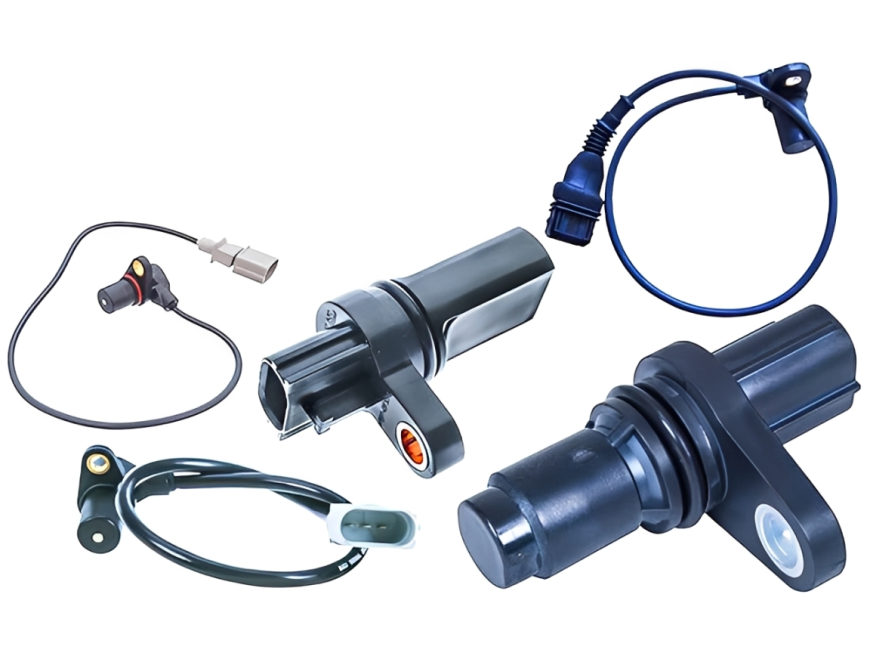
Position sensors are essential components in systems where movement must be measured, controlled, or verified with confidence. They help machines understand the exact location of moving parts, whether that movement is linear, rotary, angular, short-range, or long-distance. In modern engineering, this feedback is vital because automation, robotics, vehicles, medical devices, smart equipment, and industrial machinery all depend on accurate position information.
A position sensor gives a system the ability to know where an object is, how far it has moved, and whether it has reached the correct point. This makes machines more accurate, safer, faster, and more reliable. Without position feedback, many systems would depend on timing assumptions or manual checks, which can lead to errors, downtime, product damage, and unsafe operation.
Understanding Position Sensors from a Practical View
A position sensor detects the physical location or movement of an object and converts it into an electrical signal. This signal is then used by a controller, PLC, drive, microcontroller, or monitoring system to make decisions.
In real applications, position sensors help detect:
- The position of a piston inside a cylinder
- The angle of a motor shaft
- The travel distance of a linear actuator
- The opening level of a valve
- The location of a product on a conveyor
- The movement of a robotic joint
- The alignment of a machine part
- The position of a pedal, lever, door, or tool head
This makes position sensors highly useful in both simple control tasks and advanced automated systems.
Why Position Sensors Are Important for Accurate Feedback
Every motion-based system needs feedback to operate correctly. If a machine sends power to a motor or actuator but cannot confirm the actual movement, it cannot guarantee accuracy. Position sensors solve this by sending real-time position information back to the control system.
This feedback helps improve:
- Motion control accuracy
- Machine repeatability
- Safety monitoring
- Process timing
- Product quality
- Equipment protection
- Control response
- Fault detection
- Operational efficiency
For example, in an automated filling machine, a position sensor can confirm that a container is properly aligned before filling begins. In a robotic arm, the sensor confirms joint position so the robot can move smoothly and place objects accurately.
How Position Sensors Support Intelligent Automation
Modern automation depends on machines that can respond to changing conditions. Position sensors allow machines to detect movement and adjust instantly.
They support intelligent automation by helping systems:
- Confirm correct part placement
- Stop movement at safe limits
- Adjust speed based on position
- Control actuator travel
- Detect missing or misaligned objects
- Improve robotic movement paths
- Reduce manual inspection
- Enable automatic correction
- Provide data for maintenance analysis
This makes position sensors a key part of smart factories, automated production lines, machine vision systems, servo controls, and industrial robotics.
Main Working Principles of Position Sensors
Position sensors may use different sensing methods depending on the application. Each method detects movement in a different way.
Common sensing principles include:
- Magnetic field detection
- Light-based optical detection
- Electrical resistance change
- Electromagnetic induction
- Capacitance variation
- Ultrasonic distance measurement
- Laser displacement measurement
- Mechanical contact movement
- Digital pulse counting
The choice of working principle depends on the required accuracy, sensing distance, environment, cost, and installation conditions.
Linear Position Sensors for Straight-Line Movement
Linear position sensors measure movement along a straight path. These sensors are used where a machine part extends, retracts, slides, lifts, or travels along a rail.
They are commonly used in:
- Pneumatic cylinders
- Hydraulic cylinders
- Linear actuators
- Industrial presses
- Machine slides
- Packaging equipment
- Lifting platforms
- Automated doors
- Material handling systems
- Cutting and forming machinery
Linear sensors are important when the system must know the exact stroke, travel distance, or displacement of a moving part.
Rotary Position Sensors for Shaft and Motor Feedback
Rotary position sensors measure turning movement around an axis. They are used when a system needs to know the angular position of a shaft, wheel, motor, knob, or rotating mechanism.
Common applications include:
- Servo motors
- Brushless DC motors
- Gearboxes
- Rotary encoders
- Steering systems
- Valve actuators
- Control knobs
- Robotic joints
- Industrial drives
- Rotating platforms
Rotary position feedback allows machines to control angle, direction, speed, and movement sequence with better accuracy.
Angular Position Sensors for Controlled Pivoting Movement
Angular position sensors measure the angle of a moving part. They are useful when a component does not rotate continuously but moves through a controlled arc or pivot range.
They are often used in:
- Pedal position monitoring
- Steering angle systems
- Robotic arms
- Aerospace control surfaces
- Construction equipment
- Agricultural machinery
- Adjustable platforms
- Lever control systems
- Industrial safety mechanisms
Angular sensors are especially useful where a small change in angle can affect performance, safety, or control response.
Contact Position Sensors for Simple Measurement
Contact position sensors detect movement through direct physical contact with the target or moving component. They are often easy to install and cost-effective.
Typical contact sensor options include:
- Potentiometers
- Mechanical limit switches
- Linear displacement probes
- Sliding contact sensors
- Rotary resistive sensors
Contact sensors can work well in clean, low-speed, and cost-sensitive applications. However, because they rely on physical contact, they may wear over time in high-cycle or harsh environments.
Non-Contact Position Sensors for Long-Term Reliability
Non-contact position sensors detect movement without touching the moving object. This reduces friction, wear, and maintenance needs.
Common non-contact sensor technologies include:
- Hall effect sensors
- Magnetic encoders
- Optical encoders
- Inductive sensors
- Capacitive sensors
- Ultrasonic sensors
- Laser displacement sensors
- Magnetostrictive sensors
Non-contact sensors are preferred in applications where long service life, fast movement, contamination resistance, or high reliability is important.
Magnetic Position Sensors
Magnetic position sensors use magnetic fields to detect linear, rotary, or angular movement. They are widely used because they can operate without physical contact and can perform well in challenging environments.
They are suitable for:
- Automotive controls
- Motor feedback
- Door and lid position sensing
- Gear selection systems
- Industrial automation
- Robotics
- Compact electronic assemblies
- Harsh or high-vibration environments
Magnetic sensors are valued for durability, compact size, and stable operation where dust or moisture may be present.
Optical Position Sensors
Optical position sensors use light to detect movement or position changes. They are commonly used in applications that require high resolution and accurate feedback.
They are suitable for:
- Precision encoders
- CNC machines
- Robotics
- Medical equipment
- Printers
- Servo control systems
- Laboratory automation
- Measuring instruments
Optical sensors can deliver excellent accuracy, but they may need protection from dirt, oil, and heavy contamination.
Inductive Position Sensors
Inductive position sensors detect metallic targets using electromagnetic fields. They are strong, reliable, and commonly used in industrial environments.
They are useful for:
- Metal object detection
- Machine position monitoring
- Conveyor automation
- End-of-travel detection
- Equipment alignment
- Factory machinery feedback
- Harsh production areas
Inductive sensors are often selected when the target is metal and the environment contains oil, dust, vibration, or moisture.
Capacitive Position Sensors
Capacitive sensors detect position by measuring changes in capacitance. They can detect both metallic and non-metallic objects, making them suitable for specific industrial and electronic applications.
They are used for:
- Short-range displacement sensing
- Touch-sensitive systems
- Liquid level-related detection
- Plastic and glass object sensing
- Compact electronic devices
- Material presence detection
- Precision small-movement measurement
Capacitive sensors are sensitive, but they must be chosen carefully when the environment includes moisture, dust, or changing material conditions.
LVDT Position Sensors
LVDT sensors are used for highly accurate linear displacement measurement. They are known for precision, repeatability, and stable performance in demanding applications.
They are commonly used in:
- Aerospace systems
- Hydraulic control
- Turbine monitoring
- Testing machines
- Industrial measurement
- Laboratory equipment
- Precision automation
LVDT sensors are a strong choice when the application needs accurate, stable, and repeatable linear feedback.
Magnetostrictive Position Sensors
Magnetostrictive position sensors provide non-contact linear measurement, often over longer distances. They are widely used in heavy-duty applications where durability and accuracy are both important.
They are suitable for:
- Hydraulic cylinders
- Injection moulding machines
- Industrial presses
- Steel processing equipment
- Mobile machinery
- Long-stroke automation
- Heavy equipment control
Their non-contact design helps reduce wear and supports long service life in demanding environments.
Encoder-Based Position Sensors
Encoders are widely used where precise motion feedback is required. They convert movement into digital signals that can be used by drives, controllers, and automation systems.
Encoders are commonly found in:
- Servo motors
- CNC machines
- Industrial robots
- Automated assembly lines
- Conveyor control systems
- Printing machines
- Packaging equipment
Incremental encoders measure changes in position, while absolute encoders provide the actual position value even after power interruption.
Position Sensors in Industrial Automation
Industrial automation is one of the largest application areas for position sensors. In production lines, these sensors help machines perform accurate, repeatable, and safe operations.
They support:
- Product positioning
- Part alignment
- Conveyor tracking
- Robotic pick-and-place tasks
- Press stroke monitoring
- Packaging control
- Sorting systems
- Cutting and machining processes
- Automated inspection
By providing position feedback, sensors help reduce waste, avoid misalignment, and improve production consistency.
Position Sensors in Robotics
Robots require accurate position feedback to move correctly. Position sensors help robotic systems monitor joints, arms, end-effectors, wheels, and tool positions.
They improve robotic performance by supporting:
- Smooth movement
- Accurate path following
- Repeatable positioning
- Collision prevention
- Load stability
- Tool alignment
- Joint angle control
- Safe operating limits
In advanced robotics, position sensors are essential for both precision and safety.
Position Sensors in Vehicles and Electric Mobility
Vehicles use many position sensors to control movement-related systems. These sensors help improve safety, comfort, efficiency, and driving performance.
They are commonly used for:
- Accelerator pedal sensing
- Brake pedal sensing
- Steering angle detection
- Suspension height monitoring
- Gear selector position
- Seat position adjustment
- Throttle control
- Electric motor feedback
- Transmission monitoring
In electric vehicles, accurate position sensing is especially important for motor control, powertrain performance, and efficient energy use.
Position Sensors in Medical and Laboratory Equipment
Medical and laboratory devices require smooth and controlled movement. Position sensors help ensure that equipment moves safely and accurately.
They are used in:
- Imaging systems
- Surgical robotics
- Diagnostic equipment
- Laboratory analysers
- Patient positioning systems
- Infusion equipment
- Rehabilitation machines
- Adjustable hospital beds
Reliable position feedback supports patient safety, accurate testing, and dependable medical device performance.
Position Sensors in Aerospace and Defence Systems
Aerospace and defence applications require sensors that can perform under demanding conditions. Position feedback is often used in systems where reliability is critical.
These sensors support:
- Flight surface monitoring
- Landing gear position detection
- Actuator feedback
- Engine control systems
- Cabin mechanisms
- Test equipment
- Navigation-related movement systems
Sensors in these applications must often withstand vibration, temperature variation, pressure changes, and strict safety requirements.
What to Consider When Choosing a Position Sensor
Selecting the correct position sensor requires a clear understanding of the application. A sensor should match the movement type, environment, accuracy requirement, and control system.
Important selection factors include:
- Linear, rotary, or angular movement
- Measurement range
- Required accuracy
- Resolution level
- Repeatability
- Response speed
- Contact or non-contact operation
- Operating temperature
- Exposure to water, oil, dust, or chemicals
- Shock and vibration levels
- Electrical noise conditions
- Output signal type
- Power supply compatibility
- Mounting space
- Cable and connector requirements
- Maintenance access
- Expected service life
- Total operating cost
Choosing based only on price can lead to poor performance. The best position sensor is the one that performs reliably in the actual working environment.
Understanding Sensor Output Signals
Position sensors provide different output signals depending on the design and application.
Common output types include:
- Analogue voltage
- Analogue current
- Digital switching output
- Pulse output
- PWM signal
- Incremental encoder output
- Absolute position output
- Serial communication
- Industrial network output
Simple systems may use analogue output, while advanced automation often requires digital feedback, encoder signals, or communication-based outputs.
Common Problems Caused by Poor Sensor Selection
Incorrect sensor selection can create operational problems that affect accuracy, safety, and machine uptime.
Common issues include:
- Inaccurate position readings
- Signal instability
- Poor repeatability
- Early sensor wear
- Unexpected machine stops
- Incorrect actuator control
- Environmental damage
- Electrical noise interference
- Misalignment during operation
- Higher maintenance costs
These problems can usually be avoided by understanding the application before selecting the sensor.
Installation Practices That Improve Sensor Performance
Correct installation is essential for stable and accurate position sensing. Even a high-quality sensor can perform poorly if it is mounted incorrectly.
Useful installation practices include:
- Keep the sensor aligned with the target
- Confirm the correct sensing range
- Avoid mechanical stress on the sensor body
- Protect wiring from sharp bends and moving parts
- Use shielded cables in electrically noisy areas
- Keep optical sensing areas clean
- Secure connectors properly
- Test sensor response during commissioning
- Avoid mounting near excessive heat sources
- Follow manufacturer installation guidance
Good installation helps improve signal quality, reliability, and long-term performance.
How Position Sensors Help with Predictive Maintenance
Position sensors can support predictive maintenance by tracking movement behaviour over time. If a machine begins to move differently from normal, sensor data can help identify early signs of a problem.
Position feedback may reveal:
- Slower actuator movement
- Position drift
- Irregular travel
- Misalignment
- Mechanical looseness
- Repeated overtravel
- Unstable motion
- Wear in moving components
This allows maintenance teams to act before a small issue becomes a major failure.
Future of Position Sensors in Smart Systems
As industries move toward connected factories, robotics, electric vehicles, and intelligent equipment, position sensors are becoming more advanced.
Future trends include:
- Smaller sensor packages
- Higher measurement accuracy
- Improved digital communication
- Lower power consumption
- Built-in diagnostics
- Stronger environmental protection
- Better integration with automation networks
- More reliable non-contact sensing
- Smarter condition monitoring
- Greater use in robotics and electric mobility
Position sensors will continue to be important as machines become more connected, autonomous, and data-driven.
Final Thoughts
Position sensors are critical for systems that need accurate movement detection, reliable feedback, and safe operation. They help machines understand where parts are, how they are moving, and when action is required.
From factory automation and robotics to vehicles, medical devices, aerospace equipment, and smart electronics, position sensors provide the information needed for intelligent control. By selecting the right sensor type, matching it to the environment, and installing it correctly, engineers can improve accuracy, reduce downtime, and build systems that operate with greater confidence.