What Are Containerized Laboratories and How Do They Transform Modern Research Facilities?
 gemcontainers
Science needs space. It needs tools. It needs safety. Labs help ideas grow into real results. But building a full lab from scratch takes time, money, and land. Not every project can wait for years.
This is why containerized laboratories are gaining attention. These labs use shipping containers as strong shells. Inside, they hold real lab tools, clean rooms, and power systems. They work like regular labs, but they arrive faster and cost less.
Now let’s break it down in simple words.
What Are Containerized Laboratories?
Containerized laboratories are labs built inside steel shipping containers. Think of a big metal box. Now picture it filled with lab benches, sinks, lights, and test machines.
They are not rough or basic. They are:
l Fully insulated
l Climate controlled
l Fitted with lab-grade flooring
l Built with safety systems
l Equipped with water and power lines
These labs follow strict safety rules. Engineers design them for research, testing, and medical use. They can support biology labs, chemical labs, clean rooms, and even vaccine production units.
In short, they are real labs inside smart boxes.
How Do They Work?
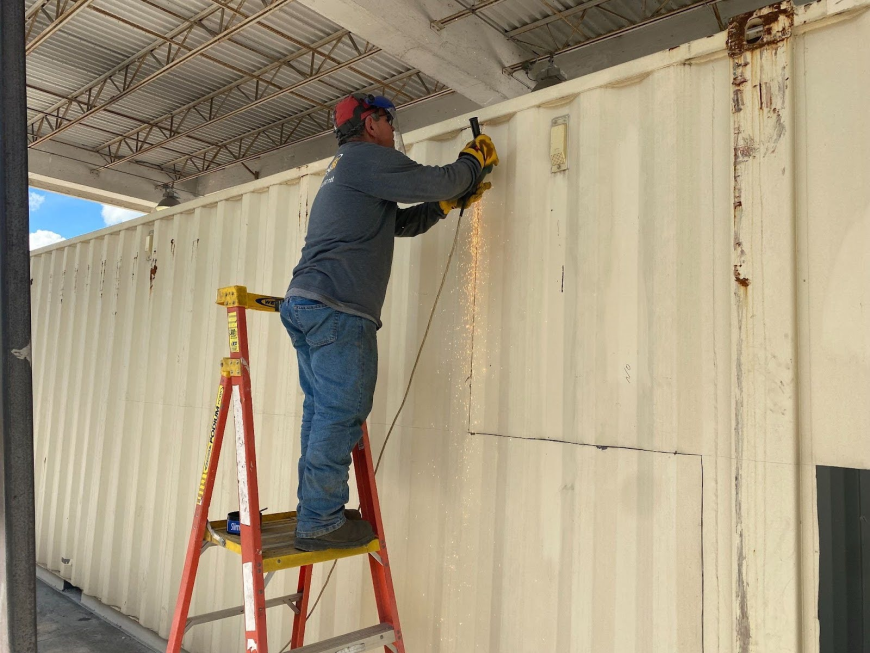
The idea is simple. Builders take a steel container. Then they cut, fit, and install all lab systems inside. After testing, the unit is shipped to the site.
Once it arrives, teams connect it to:
l Electricity
l Water supply
l Waste systems
l Internet lines
Then the lab is ready to use.
Some units stand alone. Others connect together to form large research blocks. This makes them flexible. You can start small. Then grow as your work grows.
Why Modern Research Needs Flexible Labs?
Research moves fast. One day, you study water. Next month, you test soil or viruses. A fixed building can slow things down. It takes months to expand or remodel.
Here is where mobile laboratories bring big change:
They can move to remote areas.
They can support field research.
They can reach disaster zones.
They can help during disease outbreaks.
For example, during health emergencies, governments use mobile laboratories to test samples near affected areas. This cuts travel time and speeds up results. Speed saves lives. So flexibility matters.
Key Benefits of Containerized Laboratories
Let us look at the main reasons research centers choose them.
1. Fast Setup
Traditional lab construction may take years. Containerized laboratories can be ready in weeks or months. Since most work happens in a factory, weather delays do not slow the process.
2. Lower Cost
Building walls, roofing, plumbing, and power lines from scratch costs a lot. These units reduce labor and material costs. So research groups with tight budgets get a smart option.
3. Easy Transport
Steel containers are built for shipping. Trucks, ships, and trains can move them with ease. This makes them perfect for:
l Rural research sites
l Mining locations
l Oil and gas fields
l Border testing zones
4. Scalability
Need more space? Add another unit. Join two or three containers together. Research grows in stages. So your lab can grow in stages, too.
5. Strong and Durable
Shipping containers handle harsh weather at sea. So they stand strong in rain, heat, and wind. With proper insulation and coating, they last for years.
Common Uses in Modern Research
Containerized laboratories serve many industries. They are not limited to one field.
Here are common uses:
l Medical testing labs
l Pharmaceutical research
l Food safety testing
l Environmental monitoring
l University research labs
l Military field labs
In remote regions, mobile laboratories help scientists test water quality, soil samples, and disease spread without waiting for central lab access.
They bring science closer to the problem.
Safety and Compliance
Safety is a top concern in research. These labs follow global standards. Designers include:
l Fire alarms
l Emergency exits
l Ventilation systems
l Air filtration units
l Chemical storage cabinets
Airflow control helps prevent contamination. Clean room designs protect sensitive work. Before delivery, engineers test every system. This ensures safe performance from day one.
Environmental Impact
Sustainability also plays a role. Reusing shipping containers reduces steel waste. Some units include solar panels and energy-saving lights.
Since factory-built structures reduce on-site construction waste, the carbon footprint drops. Shorter build times also cut fuel use.
Research groups looking for green solutions often choose containerized laboratories for this reason.
Challenges to Consider
No solution is perfect. There are limits. Space inside a single container can feel tight. Complex research may need larger custom builds. Also, local rules may require permits before installation.
Still, most challenges can be solved with smart planning and expert design.
The Future of Research Infrastructure
The world faces new health threats, climate issues, and energy problems. Research must move fast. Fixed buildings alone cannot meet every demand.
Flexible lab systems help fill the gap. Mobile laboratories and modular units support rapid response. They allow scientists to act where help is needed most.
As technology improves, these labs will become even smarter. Automation, remote monitoring, and AI tools will fit inside these compact spaces. Science will not slow down. So, lab design should not slow it down either.
Final Thought
Research shapes the future. It solves real problems. It saves lives. But progress needs the right tools and space.
Containerized laboratories give modern research teams speed, strength, and flexibility. They lower costs. They move with ease. They expand without stress.
For universities, health agencies, and private firms, this approach offers a smart path forward. In a world where time matters, portable lab solutions help science stay one step ahead.